
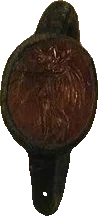
Syrian, Dura-Europos, Greco-Roman · Find
Bronze Ring
This object was really found at Dura-Europos by the Yale-French Excavations at Dura-Europos. Today it is in Yale University Art Gallery in New Haven.
What is it?
Ring. Rings were worn as jewelry, and some carried a seal to sign with. Metal and stone rings survive well in the ground. Source
Metal. Gold, silver, copper or bronze.
Museum record
- Object
- Jewelry
- Culture
- Syrian, Dura-Europos, Greco-Roman
- Date
- 2nd century A.D.
- Material
- Bronze and carnelian
- Findspot
- Excavated by the Yale-French Excavations at Dura-Europos (block E7 W17, Temple of Azzanathkona, Praetorium), present-day Syria, 1928–37
- Size
- ring: 2.54 × 2.7 cm (1 × 1 1/16 in.) intaglio: 1.43 × 1.11 cm (9/16 × 7/16 in.)
- Museum
- Yale University Art Gallery, New Haven
- Number
- 1938.2341
- Credit
- Yale-French Excavations at Dura-Europos
Photo and record: Yale University Art Gallery (public domain), copied 2026-11-12. Background removed from the photo. Region: Syria and Jordan.
More from Dura-Europos
 Alabaster Jarca. 323 B.C.–A.D. 256
 Altar with Eagle Holding Ram's Headca. 323 B.C.–A.D. 256
 Hematite Weightca. 113 B.C.–A.D. 256
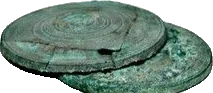 Mirror and coverca. 2nd–3rd century A.D.
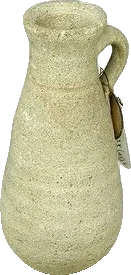 Periform Jugca. 323 B.C.–A.D. 256
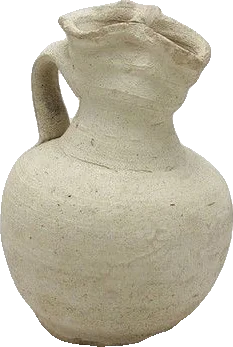 Pinch spouted jugca. 323 B.C.–A.D. 256
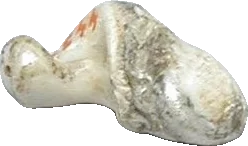 Shell Pendantca. 323 B.C.–A.D. 256
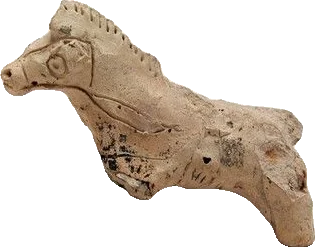 Terracotta horse figurineca.323 B.C.–A.D.256