
Egypt, Roman Period · Find
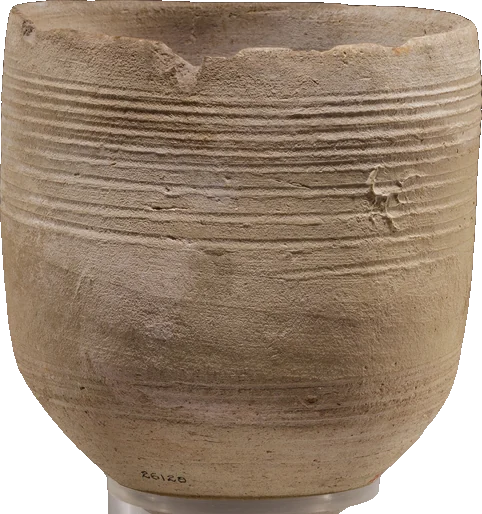
Cup
This object was really found at Deir el-Bahri by The Metropolitan Museum of Art's expedition. Today it is in The Metropolitan Museum of Art in New York.
What is it?
Cup and beaker. A drinking vessel. Beakers have no handle; cups often have one or two. Their shape and decoration often tell archaeologists when and where they were made. Source
Pottery. Clay shaped by hand or on a wheel, then fired.
Museum record
- Object
- Cup
- Culture
- Egypt, Roman Period
- Date
- 1st–2nd century CE
- Material
- Pottery
- Findspot
- MMA excavations, 1922–23, Tomb of Nespakashuty (TT 312, MMA 509a), Deir el-Bahri, Upper Egypt, Thebes, Egypt
- Size
- H. 14 × Diam. 12 cm (5 1/2 × 4 3/4 in.)
- Museum
- The Metropolitan Museum of Art, New York
- Number
- 26.3.188
- Credit
- Rogers Fund, 1926
Photo and record: The Metropolitan Museum of Art, Open Access (public domain, CC0), copied 2026-11-12. Background removed from the photo. Region: Nile Valley.
More from Deir el-Bahri
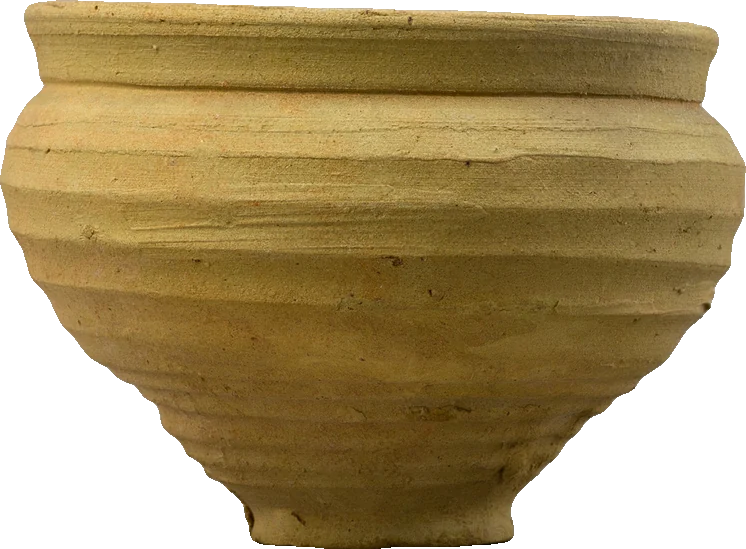 Bowl1–100 CE
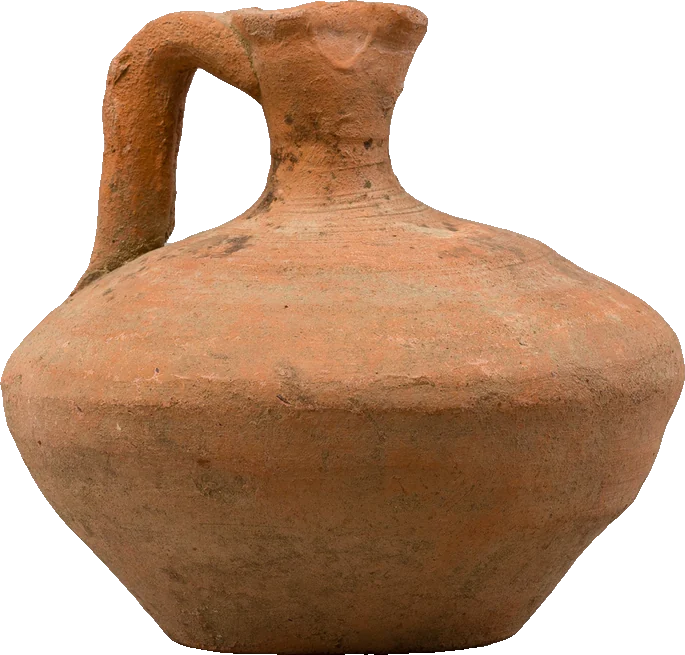 Jug with pinched trefoil rim1st–2nd century CE
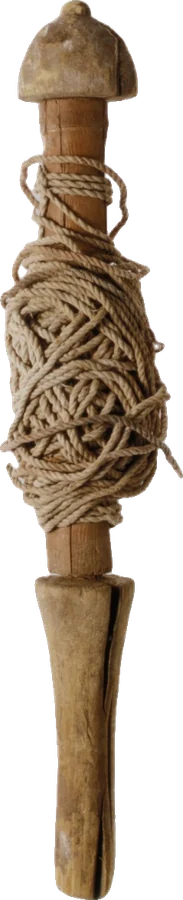 Builder's reel and cordca. 2124–1504 B.C.
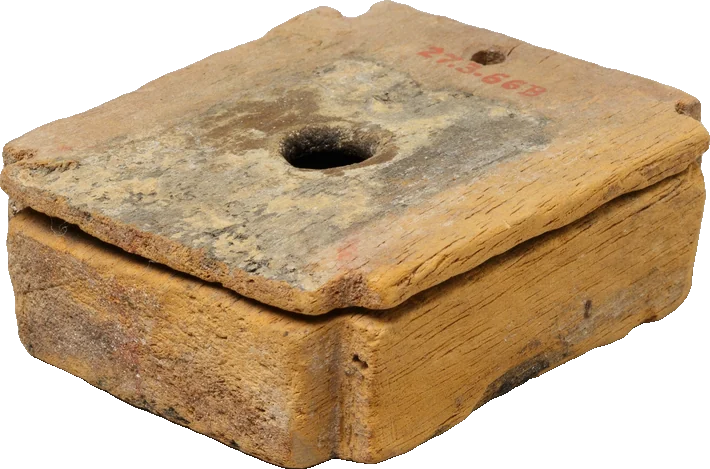 Inkwellca. 2124–1504 B.C.
 Trowelca. 2124–1504 B.C.
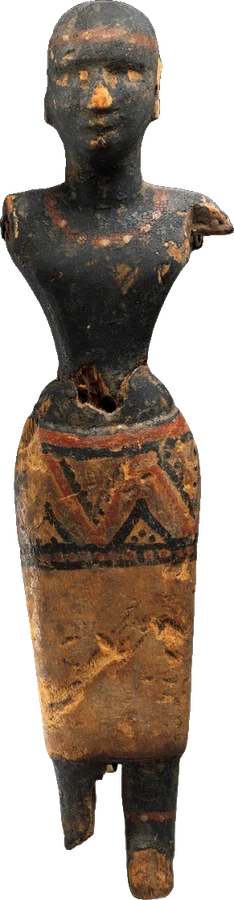 Figure of a Woman of Nubian Descentca. 2030–1981 B.C.
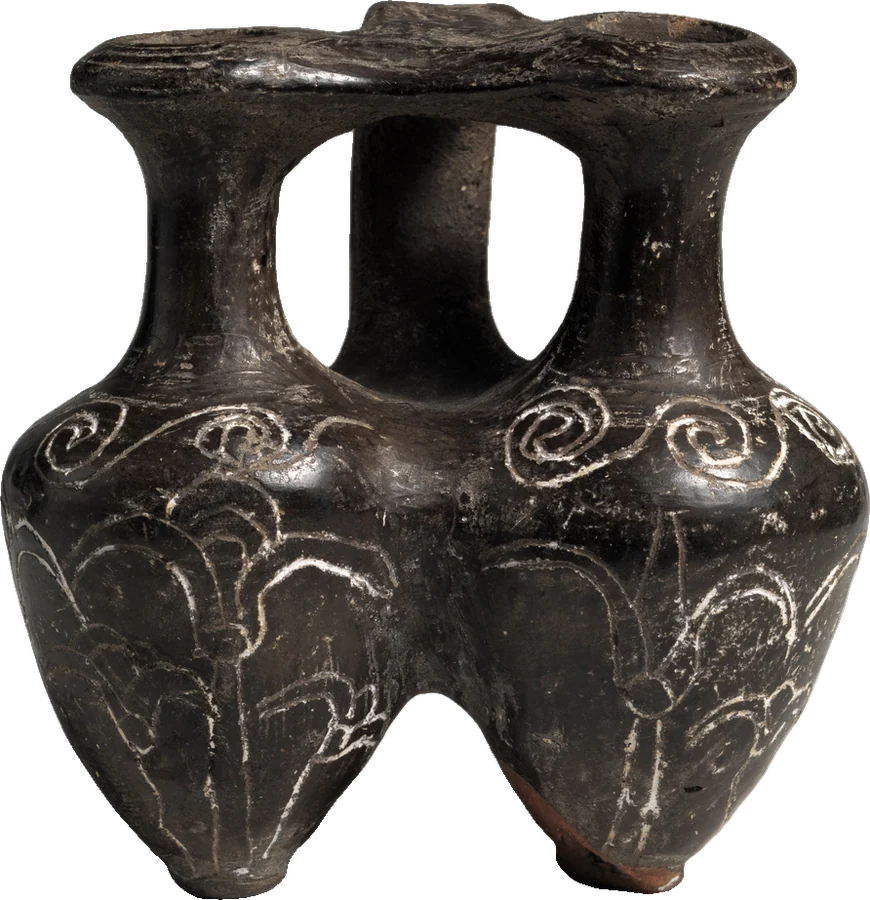 Double "Tell el-Yahudiya" Vase with Incised Lotus Flowers, probably manufactured in Egyptca. 1640–1575 BCE
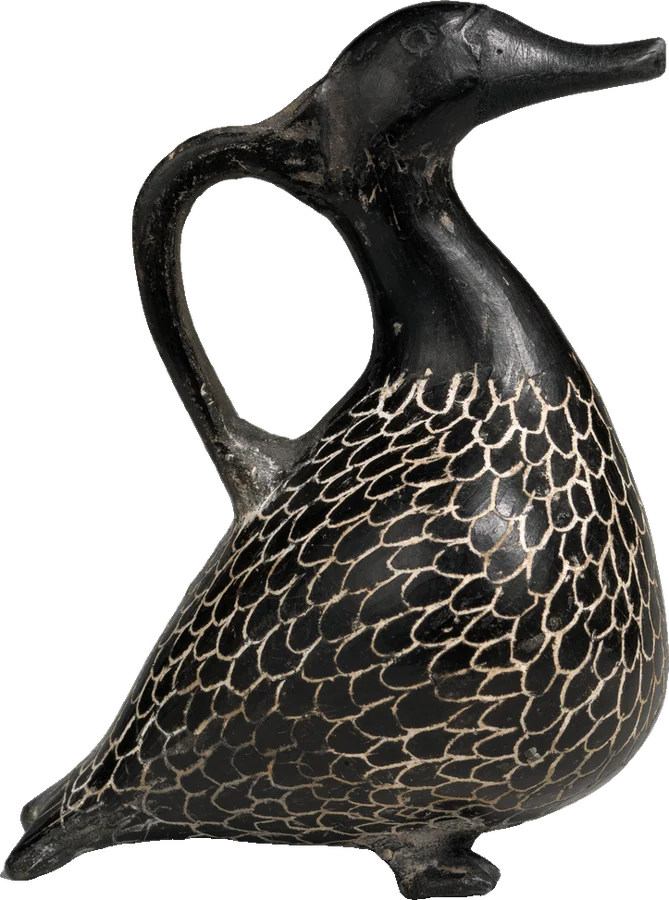 "Tell el-Yahudiya" Vase in the Shape of a Duckca. 1700 B.C.