
Online exhibition · November 2026
Light after dark: fifteen lamps from Nimrud to Nishapur
Before candles were common, most homes were lit with oil lamps: a small container of olive or other oil, with a wick in a spout. Lamps were cheap, broke often and changed shape over time, so they are among the most common finds on any dig, and archaeologists use them to help date the layers they come from.
This first Digopolis exhibition brings together the lamps and lamp fittings in the game: fifteen objects from seven excavation sites in Iraq, Syria, Jordan, Iran and the Netherlands. By the dates in their museum records they span more than two thousand years, from a clay lamp of the 8th to 7th century BCE at Nimrud to a glazed lamp of the 13th to 14th century at Qasr-i Abu Nasr. Everything said about each object below comes from its museum record or from the site history linked on the site page. Where a record is unsure, we say so, because the uncertainty is part of the story.
Clay in the hand: Nimrud and Dura-Europos
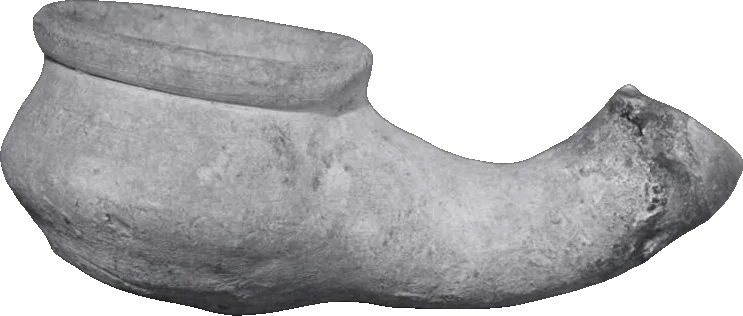
The oldest lamp here is a plain ceramic lamp from Nimrud, the ancient city of Kalhu on the Tigris, which was the capital of the Assyrian empire in the 9th and 8th centuries BCE. The Met dates it to about the 8th to 7th century BCE and measures it at 6 inches (15.24 cm). It came to New York because The Met helped pay for several seasons of the British School of Archaeology in Iraq and received a share of the finds.
From Dura-Europos, on a cliff above the Euphrates in eastern Syria, comes a terracotta lamp whose Yale record carries a title that says a lot in four words: "One of sixteen lamps." It was dug by the Yale-French excavations of 1928 to 1937. Its date, about 113 B.C. to A.D. 256, is very wide, and the end of the range is not chance: in 256 or 257 CE the Sasanian Persians took Dura and the city was abandoned.
On the Rhine frontier: two lamps from Nijmegen
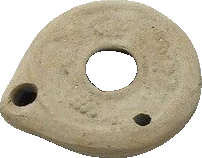
Nijmegen lies on the Waal, the main branch of the Rhine, where the Romans built an army camp in the first century BCE; the town beside it received Roman city rights in 98 CE. The Rijksmuseum van Oudheden in Leiden keeps two lamps from there, both dated A.D. 1 to 300, and its Dutch records are unusually frank.
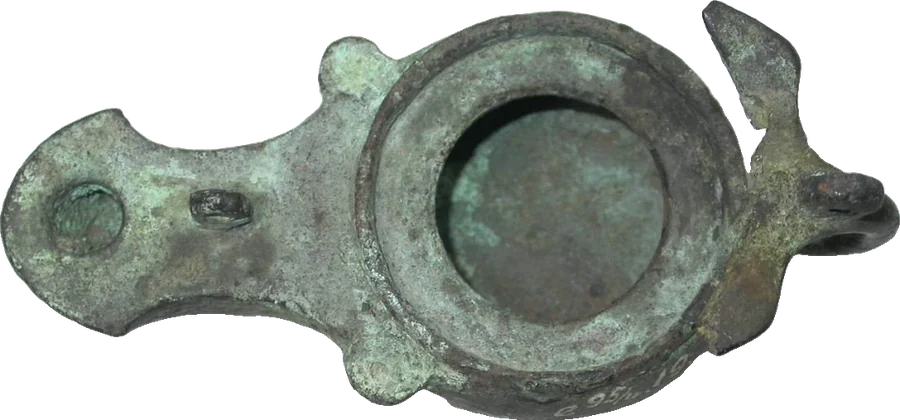
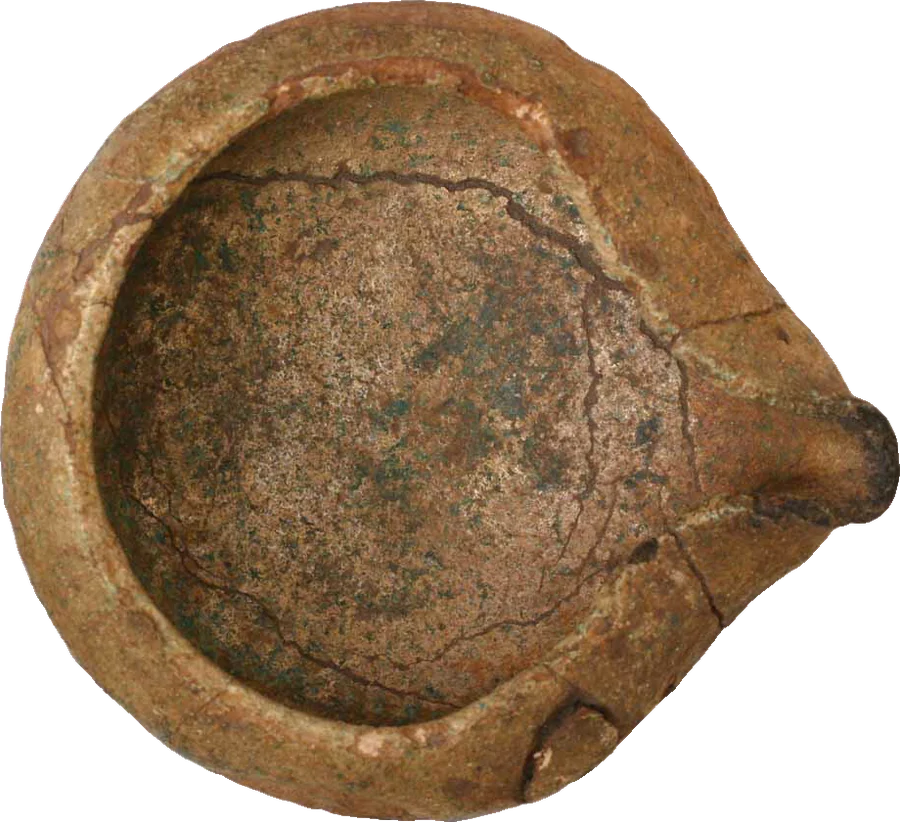
The open clay lamp, 12 by 7 by 4.4 cm, found at Hees, is described as a Roman lamp of light brown earthenware with a flat, open shape and an upright rim. The record adds that the shape was borrowed from iron or lead lamps, calls it rough, coarse work, and ends: "Op zichzelf niet juist dateerbaar", not datable precisely on its own. The second lamp, found on the Hunnerberg, is a small bronze lamp, 10.3 cm long, that was originally fixed to little chains, of which three fragments survive.
Sasanian Iran and Iraq: lamps and a lamp stand
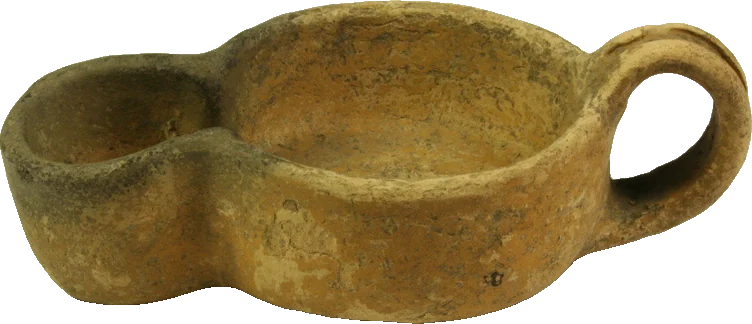
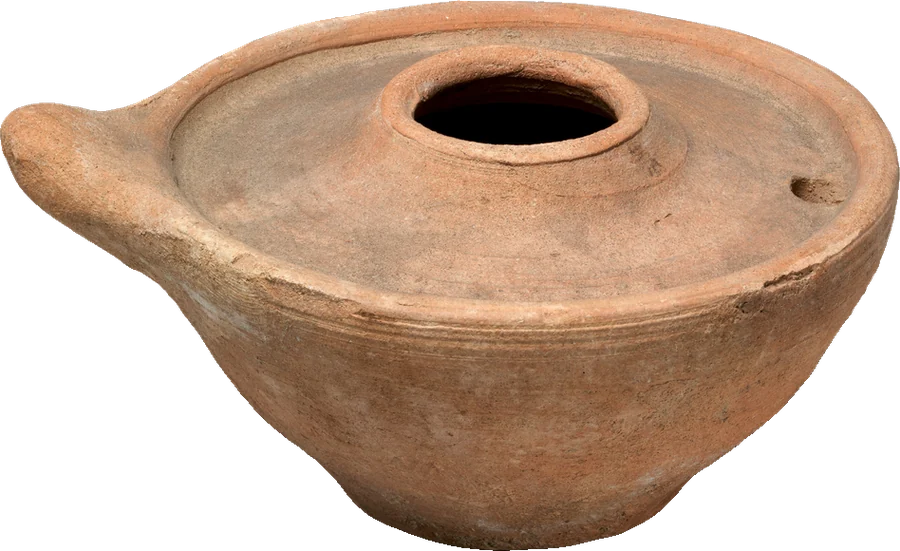
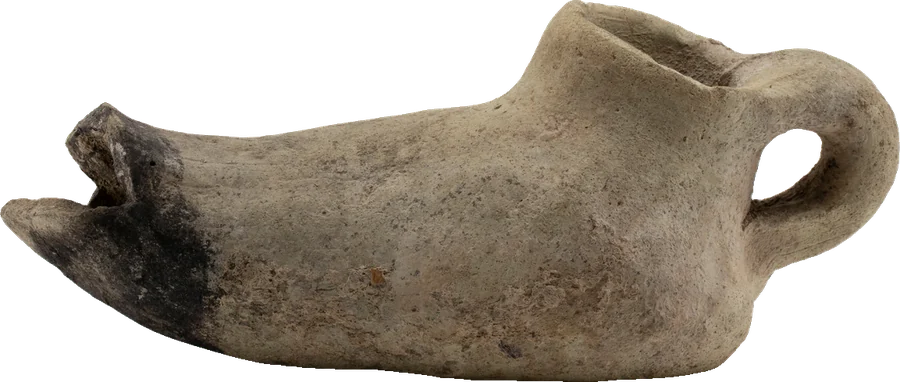
Ctesiphon, on the Tigris south of Baghdad, was a capital of the Parthian and then the Sasanian kings. The Met and the Berlin State Museums dug there together for one season in 1931 and 1932, and two ceramic lamps from that work are in the game. Both are dated about the 3rd to 7th century CE, the whole Sasanian period. One measures 5.9 by 10.6 cm; the other is 16.51 cm long, 15.24 cm wide and 5.41 cm high, with a rim 4.14 cm across.
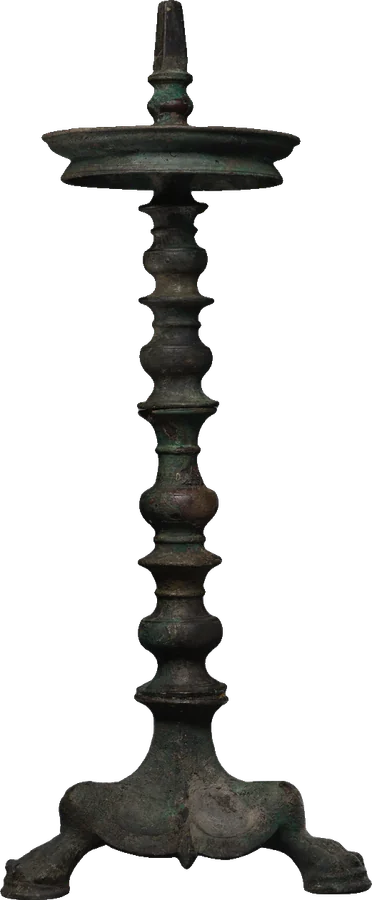
The tallest object in the exhibition is not a lamp at all but what held one: a bronze lamp stand from Qasr-i Abu Nasr near Shiraz, 41.91 cm (16.5 inches) high, with a top 12.07 cm across. The Met dates it to about the 6th to 7th century CE, the time of the late Sasanian fortress on the hill, which The Met excavated from 1932 to 1935.
Gerasa: late Roman and Byzantine lamps
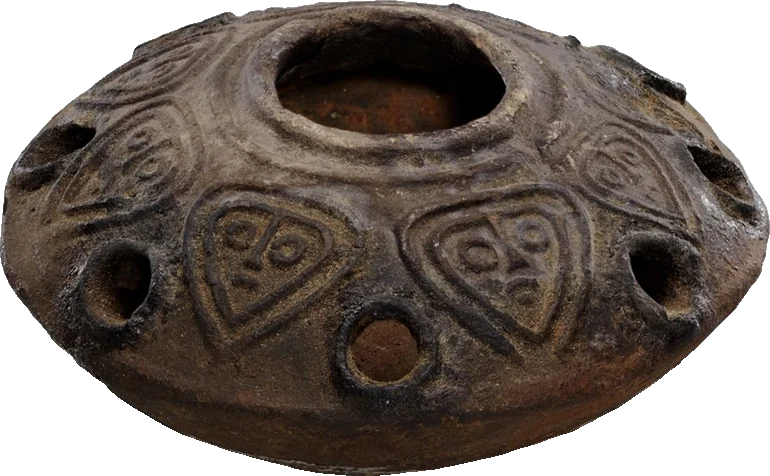
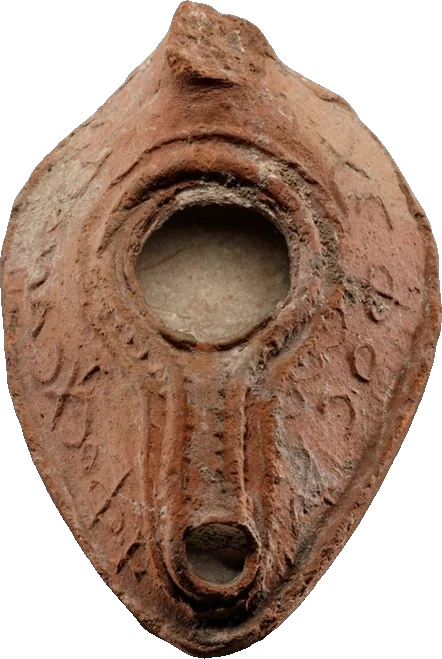
Gerasa, today Jerash in northern Jordan, flourished in Roman and Byzantine times, until an earthquake in 749 CE destroyed much of it. Yale and the British School of Archaeology in Jerusalem dug there from 1928 to 1934. The Yale records give two terracotta lamps: a round lamp of the 5th to 6th century A.D., measured at 4 inches (10.16 cm), whose title counts eight holes, and a small oil lamp of the 4th to 6th century, 4.9 by 6.1 by 9.4 cm, that the record calls Byzantine. The record does not say what the holes were for.
Nishapur and after: stone, bronze and glaze
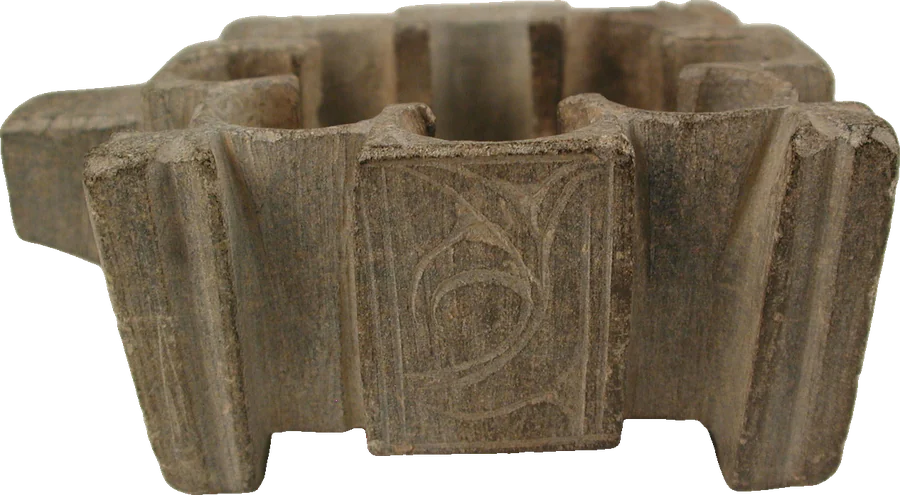
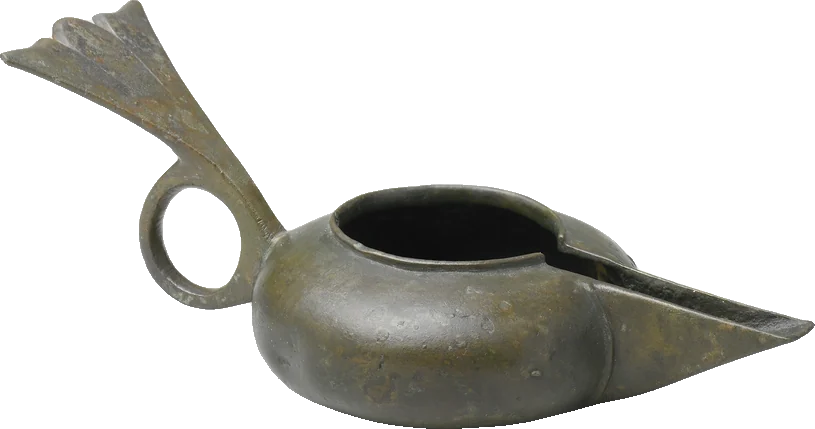
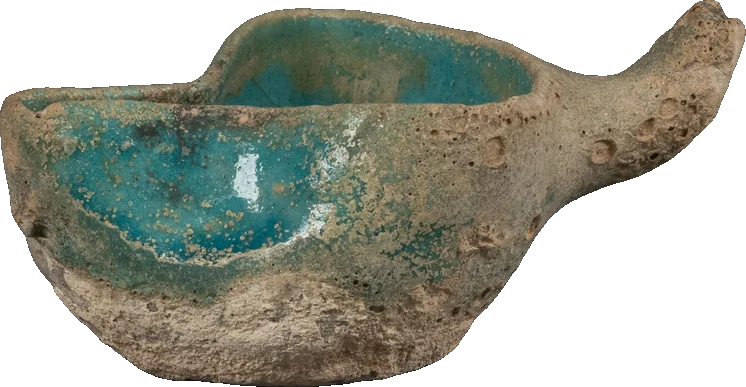
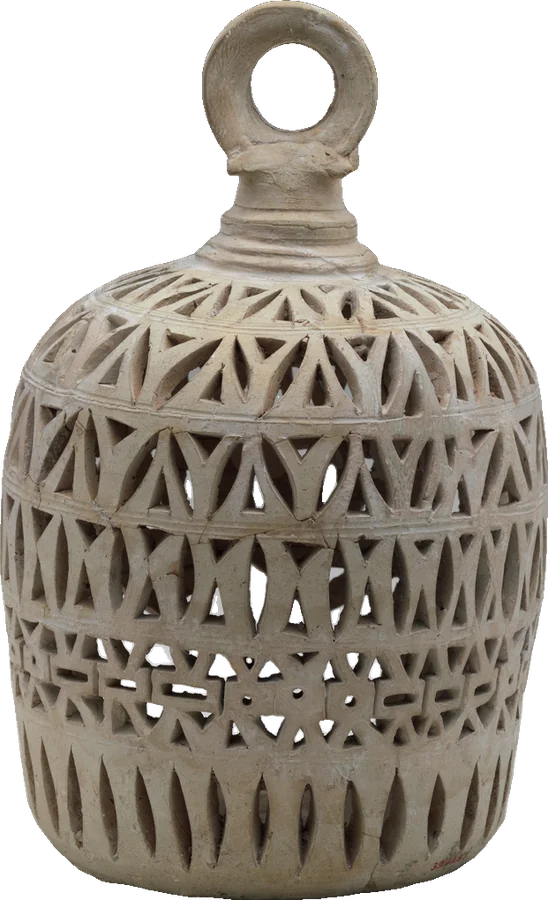
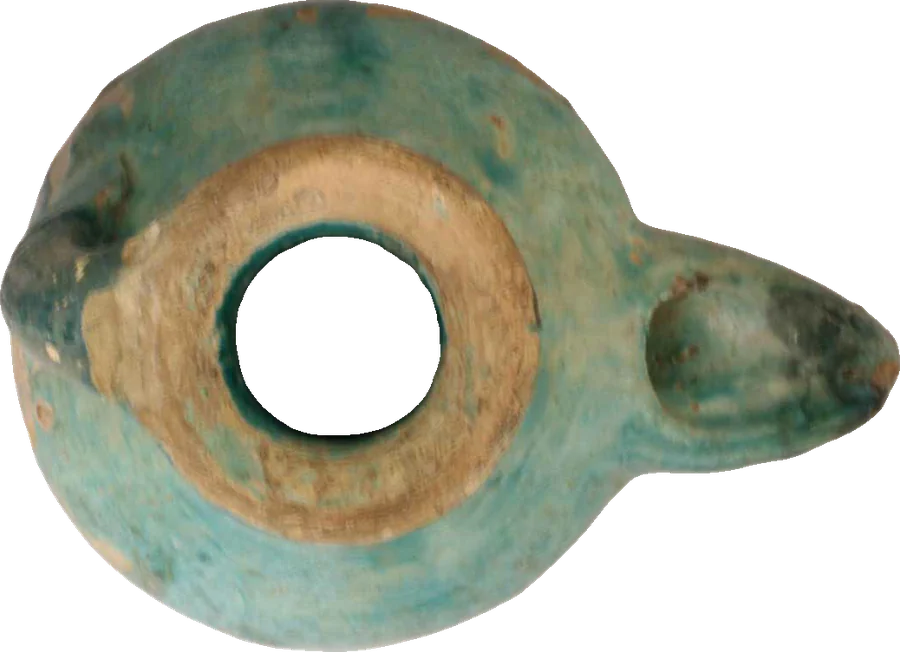
The richest group comes from Nishapur in northeastern Iran, which in the 10th century was one of the wealthiest cities of the region and famous for its glazed pottery. Four objects from Nishapur show four different ways of making light: a steatite lamp, carved and incised, only 4.4 cm high; a cast bronze oil lamp of the 9th century, made of joined parts; a small earthenware lamp with white slip under a turquoise glaze; and an unglazed earthenware lantern with carved decoration, 24.5 cm high, made to hold a lamp. All four are dated to the 9th or 9th to 10th century.
Two glazed earthenware lamps from Qasr-i Abu Nasr close the exhibition. People lived on that hill on and off for many centuries, and the records show it: one lamp is dated to the 9th to 11th century, the other to the 13th to 14th century, the youngest object here, some two thousand years after the lamp from Nimrud.
Reading the records
Read together, the records show what lamps can and cannot tell us. A plain clay lamp may be dated only to a whole period of four centuries, as at Ctesiphon, or to the life of a whole city, as at Dura-Europos. A careful museum writes, as Leiden did, that a lamp cannot be dated precisely on its own: it is the layer it lies in, and the other finds around it, that narrow the date.
All fifteen objects are in Digopolis. In the game you can dig them up at their own sites, take them to the lab, and put them on display in your own museum.
Every caption is copied from the museum record; each object page links to it. Site histories come from the sources on the site pages; general background: Oil lamp (Wikipedia). Object photos: The Metropolitan Museum of Art, Open Access (public domain, CC0); Yale University Art Gallery (public domain); Rijksmuseum van Oudheden, Leiden, CC BY 4.0 (record translated from Dutch).
Dig these lamps up yourself at their own sites, then put them on display in your museum.
Play Digopolis