
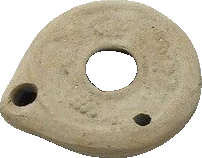
Syrian, Dura-Europos, Greco-Roman or Parthian · Find
One of sixteen lamps
This object was really found at Dura-Europos by the Yale-French Excavations at Dura-Europos. Today it is in Yale University Art Gallery in New Haven.
What is it?
Lamp. Ancient lamps burned olive oil or other oil through a wick. Small clay lamps were cheap, and so common that they help date layers. Source
Pottery. Clay shaped by hand or on a wheel, then fired.
Museum record
- Object
- Lighting Devices
- Culture
- Syrian, Dura-Europos, Greco-Roman or Parthian
- Date
- ca. 113 B.C.–A.D. 256
- Material
- Terracotta
- Findspot
- Excavated by the Yale-French Excavations at Dura-Europos, present-day Syria, 1928–37
- Museum
- Yale University Art Gallery, New Haven
- Number
- 1929.310
- Credit
- Yale-French Excavations at Dura-Europos
Photo and record: Yale University Art Gallery (public domain), copied 2026-11-12. Background removed from the photo. Region: Syria and Jordan.
More from Dura-Europos
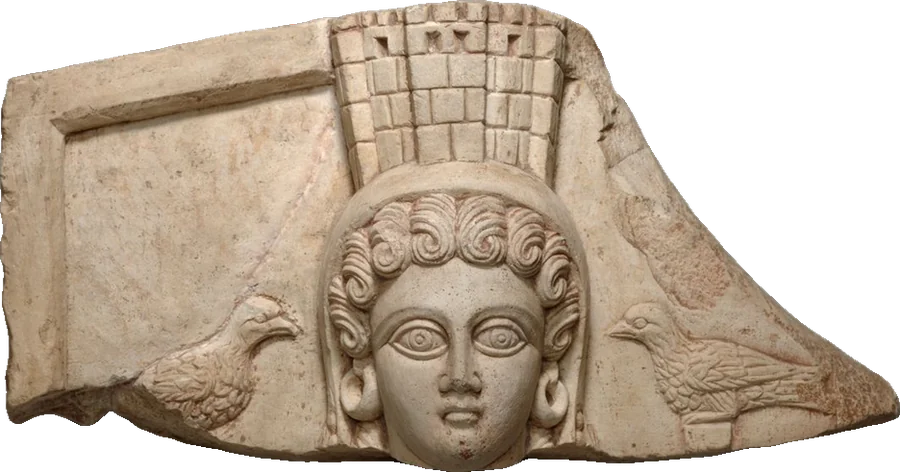 Head of Atargatis or Tyche with doves1st century A.D.
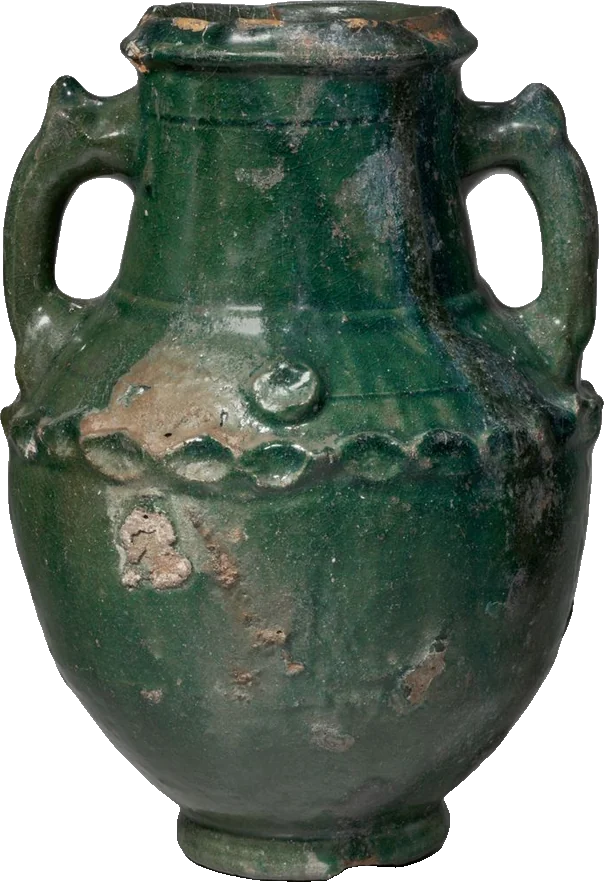 Large green-glazed amphora1st–2nd century A.D.
 Patella Cup1st century A.D.
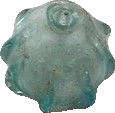 Ribbed Fin flask1st–3rd century A.D.
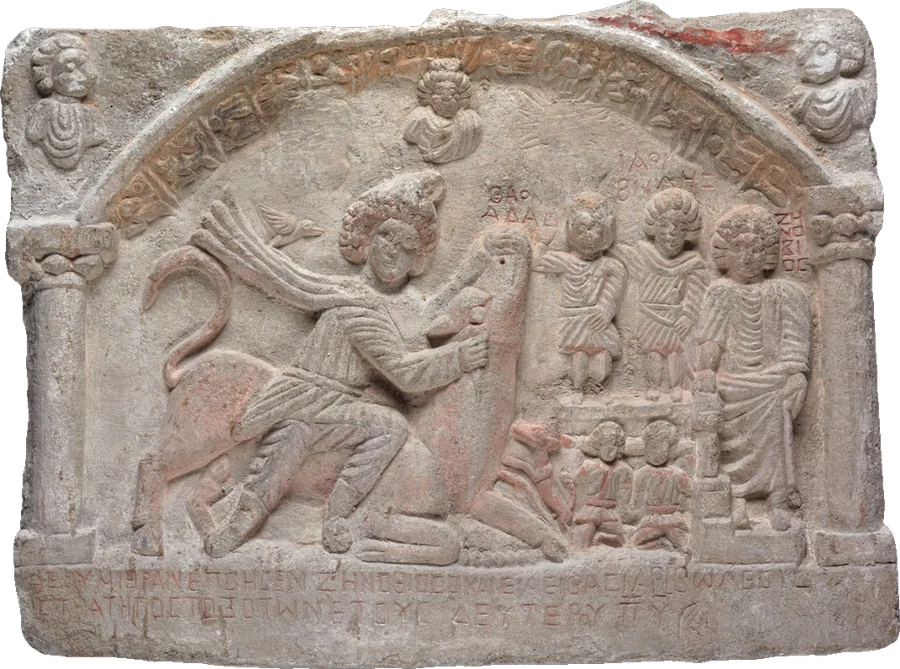 Cult Relief of Mithras Slaying the Bull (Tauroctony)ca. A.D. 170–71
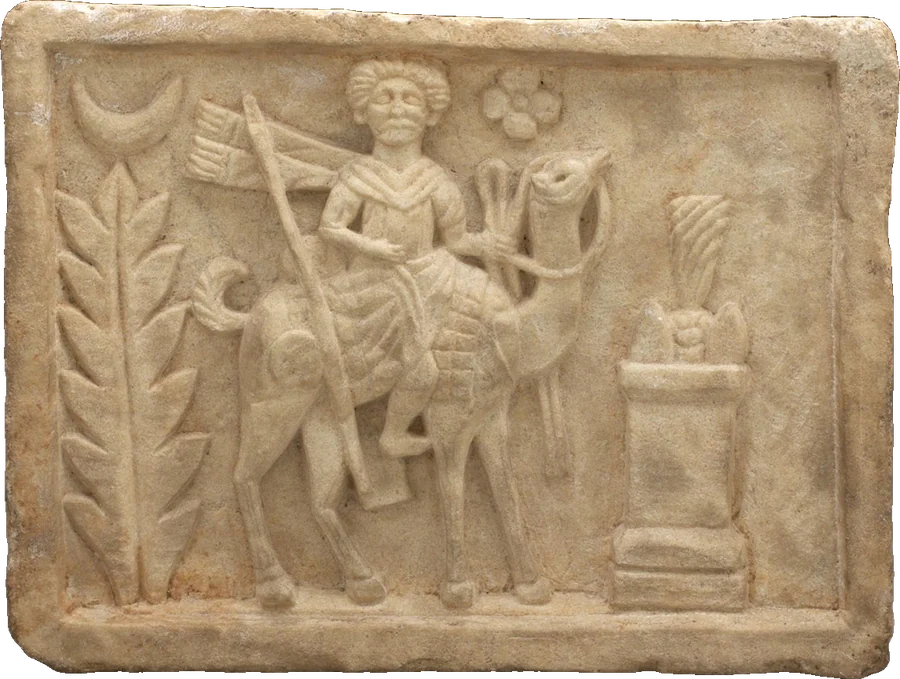 Arsu Riding a Camelca. 2nd century A.D.
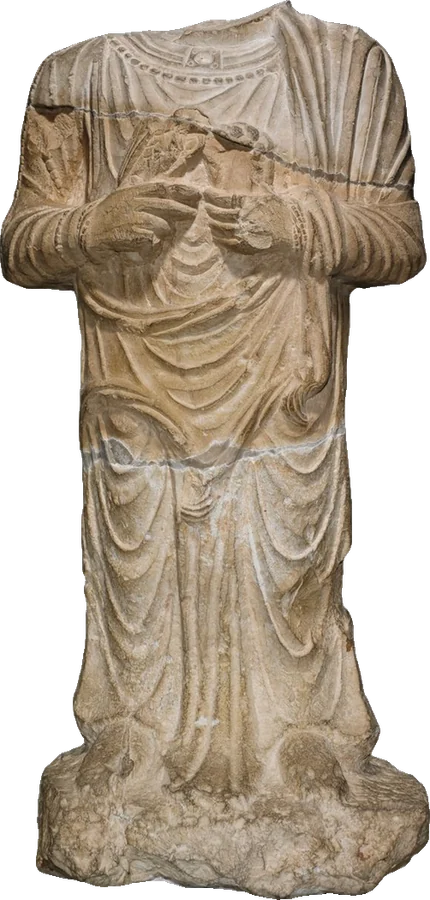 Statue of Palmyrene Childca. A.D. 100–150
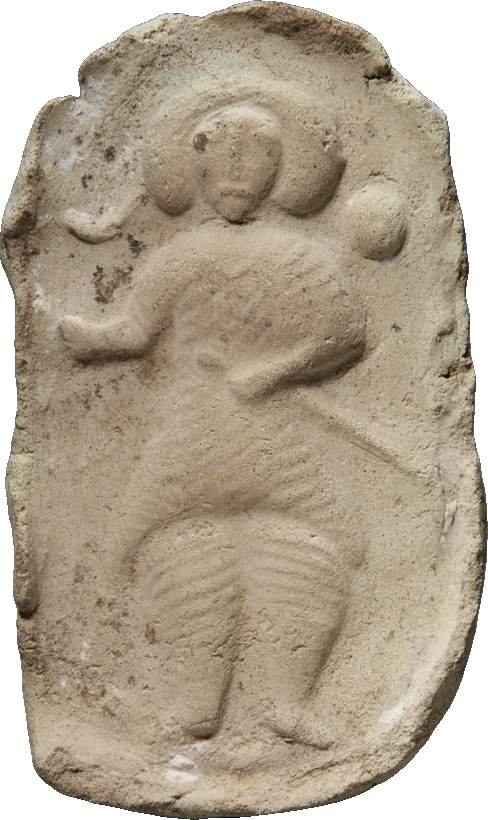 Plaque showing a warriorca. A.D. 100–256