
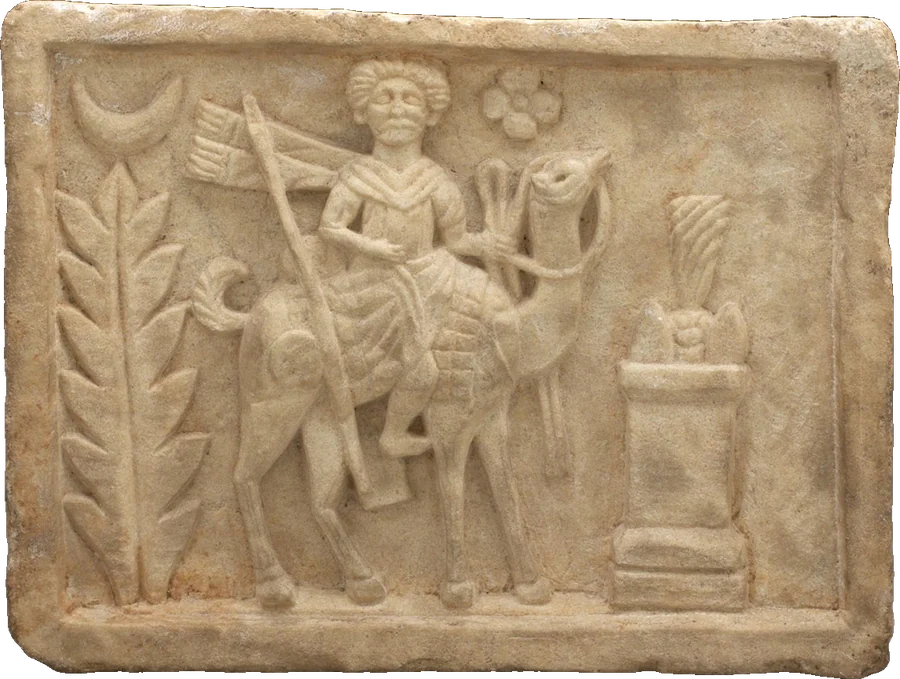
Syrian, Dura-Europos, Parthian or Roman, 2nd century A.D. · Important find
Arsu Riding a Camel
This object was really found at Dura-Europos by the Yale-French Excavations at Dura-Europos. Today it is in Yale University Art Gallery in New Haven.
What is it?
Statue. Statues stood in temples, tombs and public places. Many were meant to hold the spirit of a god, a king or the dead person they show. Source
Stone. Carved or polished stone, from soft travertine to hard gemstones.
Museum record
- Object
- Sculpture
- Culture
- Syrian, Dura-Europos, Parthian or Roman, 2nd century A.D.
- Date
- ca. 2nd century A.D.
- Material
- Limestone
- Findspot
- Excavated by the Yale-French Excavations at Dura-Europos (block L5 42, Temple of Adonis), present-day Syria, 1928–37
- Size
- 13 × 17 1/2 × 2 3/4 in. (33 × 44.5 × 7 cm)
- Museum
- Yale University Art Gallery, New Haven
- Number
- 1935.44
- Credit
- Yale-French Excavations at Dura-Europos
Photo and record: Yale University Art Gallery (public domain), copied 2026-11-12. Background removed from the photo. Region: Syria and Jordan.
More about this object
Culture
Parthian, Roman: more objects from the same culture or period, with what we know about it.
More from Dura-Europos
 Statue of Palmyrene Childca. A.D. 100–150
 Plaque showing a warriorca. A.D. 100–256
 Thymiaterion Green-Glazed Altarmid-2nd to mid-3rd century A.D.
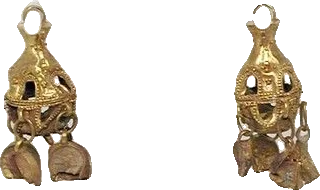 Gold Earringsca. A.D. 165–256
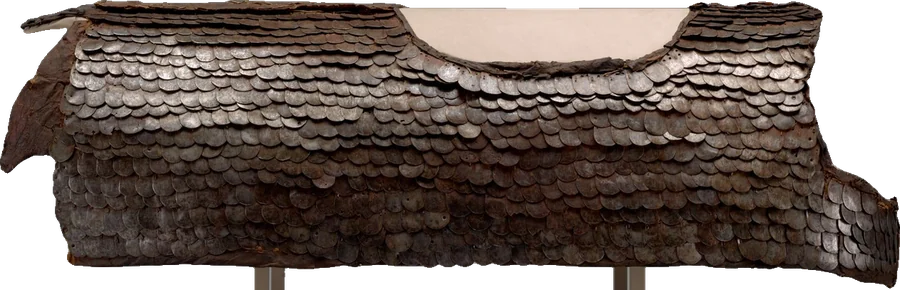 Horse Armorca. A.D. 165–256
 Small jugA.D. 165–256
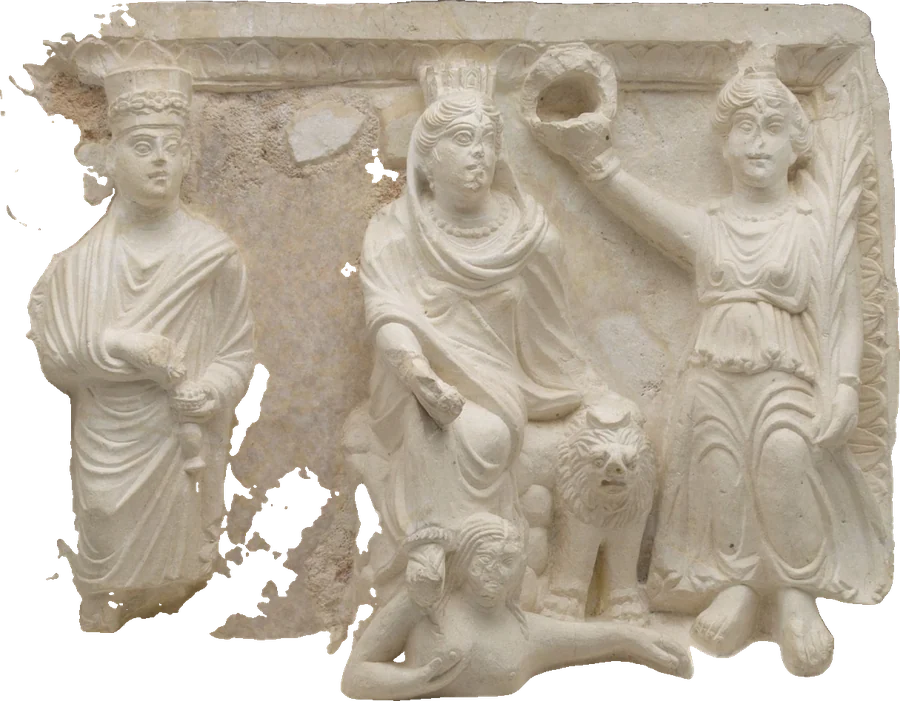 Cult relief of the Gad (Fortune) of Palmyra, from the Temple of the GaddeA.D. 159
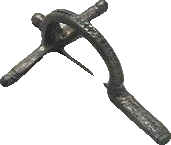 Bronze Crossbow FibulaA.D. 200–256