Syrian, Dura-Europos, Greco-Roman or Parthian · Important find
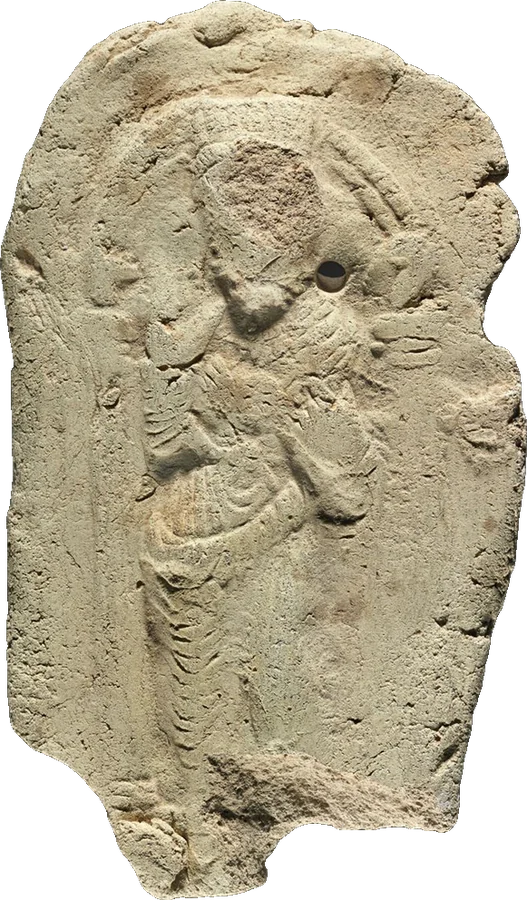
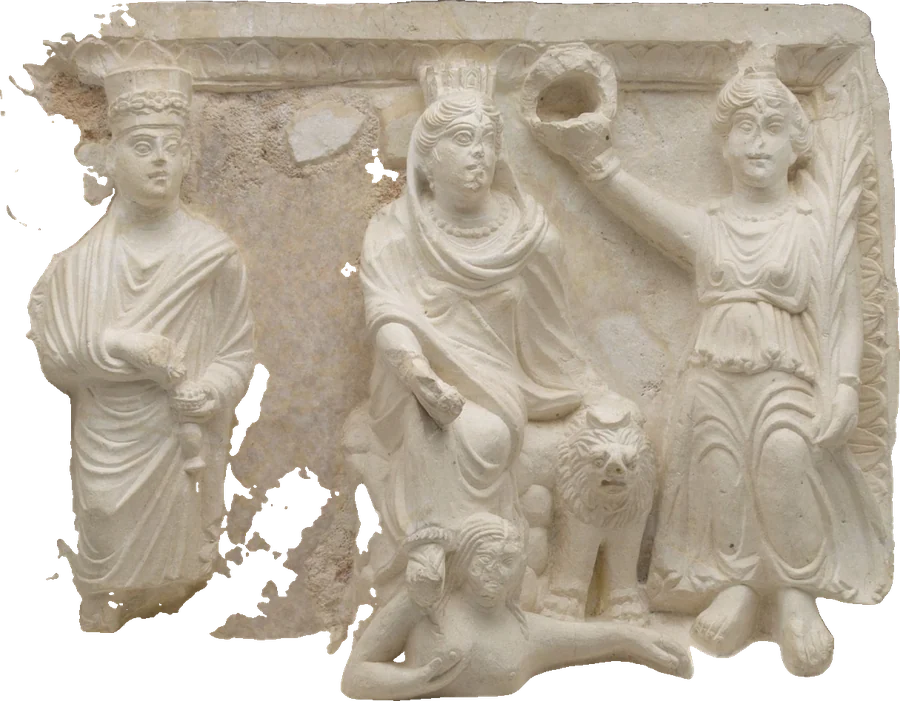
Cult relief of the Gad (Fortune) of Palmyra, from the Temple of the Gadde
This object was really found at Dura-Europos by the Yale-French Excavations at Dura-Europos. Today it is in Yale University Art Gallery in New Haven.
What is it?
Relief. A relief is a carving that stands out from a flat background. Temples, palaces and tombs were covered with them, often painted. Source
Stone. Carved or polished stone, from soft travertine to hard gemstones.
Museum record
- Object
- Sculpture
- Culture
- Syrian, Dura-Europos, Greco-Roman or Parthian
- Date
- A.D. 159
- Material
- Palmyrene limestone
- Findspot
- Excavated by the Yale-French Excavations at Dura-Europos (block H1, Temple of the Gadde), present-day Syria, 1928–37
- Size
- 18 1/2 × 22 7/16 × 4 1/2 in. (47 × 57 × 11.4 cm)
- Museum
- Yale University Art Gallery, New Haven
- Number
- 1938.5313
- Credit
- Yale-French Excavations at Dura-Europos
Photo and record: Yale University Art Gallery (public domain), copied 2026-11-12. Background removed from the photo. Region: Syria and Jordan.
More about this object
A clue in the mystery of Dura-Europos
Why did the busy city of Dura-Europos empty out all at once? In chapter 2, "A city of many peoples and gods", this object is the clue: The record calls it the cult relief of the Gad (Fortune) of Palmyra from the Temple of the Gadde, dated A.D. 159. Read the mystery
Culture
Parthian, Roman: more objects from the same culture or period, with what we know about it.