
The mystery of Dura-Europos · Syria and Jordan
Why did the busy city of Dura-Europos empty out all at once?
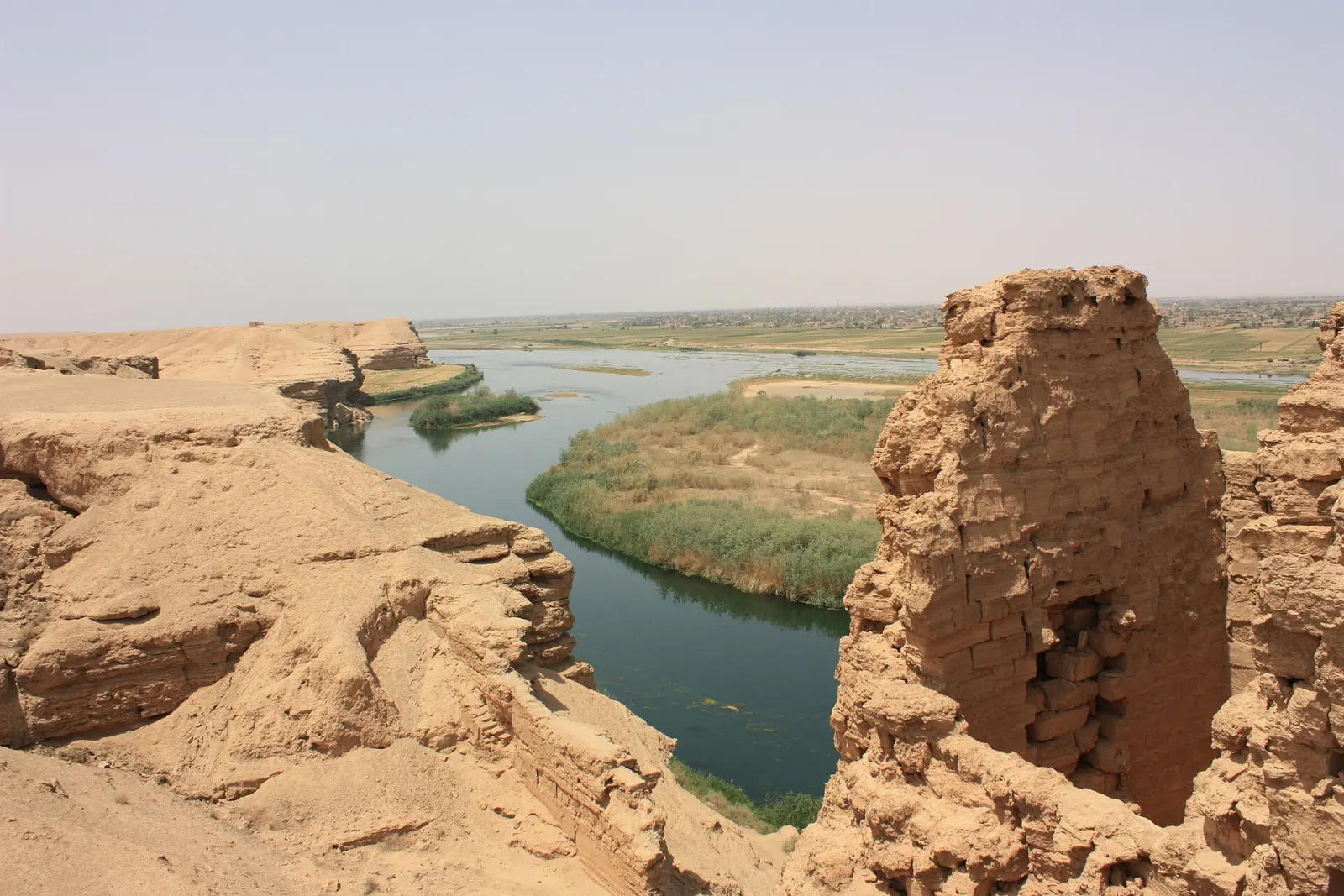
Dura-Europos stood on a cliff above the Euphrates River in eastern Syria. Seleucus I, one of the generals of Alexander the Great, founded it around 300 BCE. Later it belonged to the Parthians and, from 165 CE, to Rome. In 256 or 257 CE the Sasanian Persians besieged and took the city; its people were taken away and it was abandoned. Sand buried its houses, temples and painted walls. From 1928 to 1937 Yale University and the French Academy of Inscriptions and Letters dug here, and Yale received a share of the finds. Source
- 1. A fortress on a cliff
- 2. A city of many peoples and gods
- 3. Rome's farthest stronghold
- 4. Burying a street to save a wall
- 5. The answer: a siege and a forced move
Chapter 1
A fortress on a cliff
Dura-Europos stood on a cliff about 90 meters (300 feet) above the Euphrates River, in what is now Syria. Seleucus I, one of the successors of Alexander the Great, founded it around 300 BCE. Its name Dura means "fortress" in Aramaic, and it sat where an east-west trade route met the route along the river.
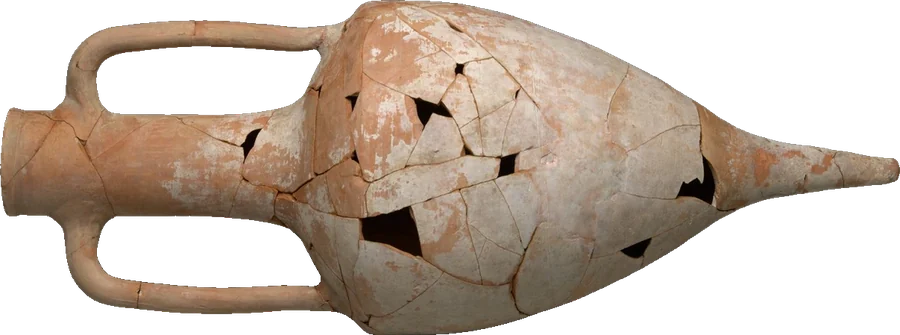
The clue
Amphora (stamped), 3rd–2nd century B.C.. Its record dates this amphora to the 3rd to 2nd century B.C., the city's earliest centuries. It was found in the Necropolis, Tomb 17.
Sources for this chapter (2)
- en.wikipedia.org: "Dura-Europos was a Hellenistic, Parthian, and Roman border city built on an escarpment 90 metres (300 feet) above the southwestern bank of the Euphrates river."
- en.wikipedia.org: "Dura-Europos was founded around 300 BC by Seleucus I Nicator"
Chapter 2
A city of many peoples and gods
The Parthians took Dura in 113 BCE. Newcomers with Semitic and Iranian names lived alongside the descendants of the first Macedonian settlers, and people wrote in Greek, Latin, Hebrew, Aramaic and other languages. One double temple honored the protector gods of Dura and of Palmyra, a trading city in the Syrian desert.
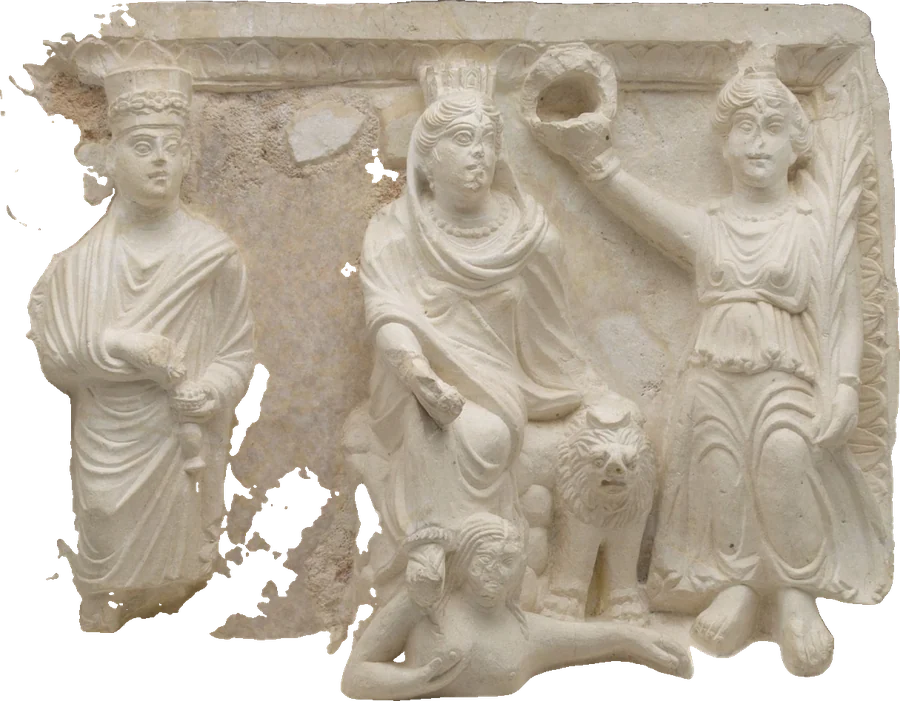
The clue
Cult relief of the Gad (Fortune) of Palmyra, from the Temple of the Gadde, A.D. 159. The record calls it the cult relief of the Gad (Fortune) of Palmyra from the Temple of the Gadde, dated A.D. 159.
Sources for this chapter (2)
- en.wikipedia.org: "In 113 BC, the Parthian Empire conquered Dura-Europos"
- en.wikipedia.org: "The Temple of the Gadde was a double temple dedicated to the patron deities (gaddē) of the city and of Palmyra."
Chapter 3
Rome's farthest stronghold
Rome captured Dura for good in 165 CE and made it its easternmost stronghold in Mesopotamia. Later a Roman army camp filled the northern part of the city, and soldiers lived among the townspeople. The earliest traces of the shrine to the god Mithras date to 168 to 171 CE, when Roman troops arrived.
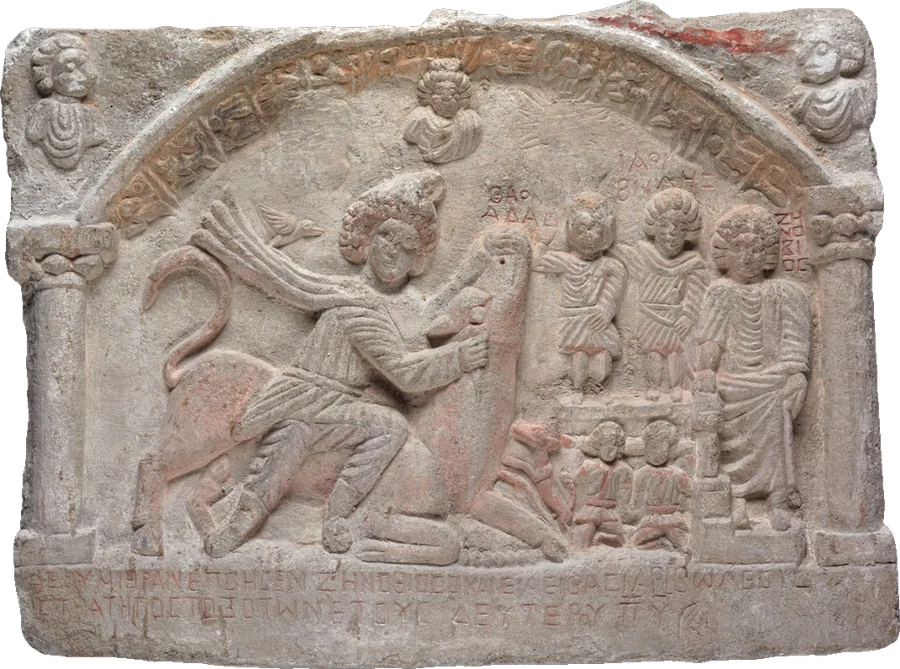
The clue
Cult Relief of Mithras Slaying the Bull (Tauroctony), ca. A.D. 170–71. Its record dates it to about A.D. 170 to 171 and places it in the Mithraeum, the shrine whose first phase matches the arrival of Roman troops.
Sources for this chapter (2)
- en.wikipedia.org: "The Romans decisively captured Dura-Europos in 165 AD and greatly enlarged it as their easternmost stronghold in Mesopotamia"
- en.wikipedia.org: "The earliest archaeological traces found within the temple are from between 168 and 171 AD"
Chapter 4
Burying a street to save a wall
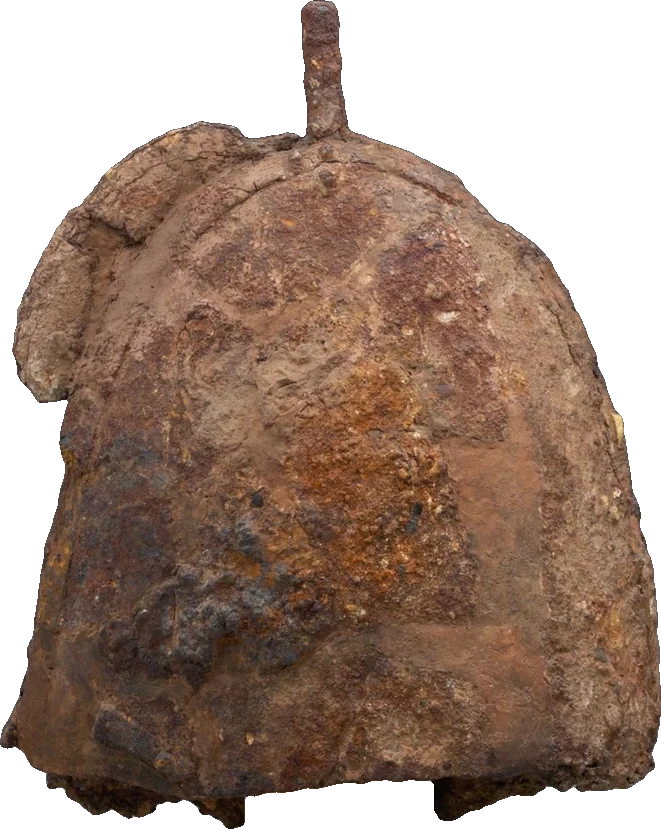
The Roman soldiers feared Persian diggers would tunnel under the walls, so they filled the street and buildings along the west wall with rubble and earth. The shrine of Mithras was filled in too. In 256 CE the Sasanian Persian king Shapur I besieged the city, and his engineers tunneled toward Tower 19 while the Romans dug a tunnel of their own to stop them.
The clue
Sasanian helmet, 3rd century A.D.. The record calls it a Sasanian helmet and gives its findspot as the Tower 19 mine, the siege tunnel.
Sources for this chapter (2)
- en.wikipedia.org: "As a countermeasure, the Roman garrison decided to sacrifice the street and the buildings along the wall by filling them with rubble"
- en.wikipedia.org: "Shapur set his engineers to undermine what archaeologists called Tower 19"
Chapter 5
The answer: a siege and a forced move
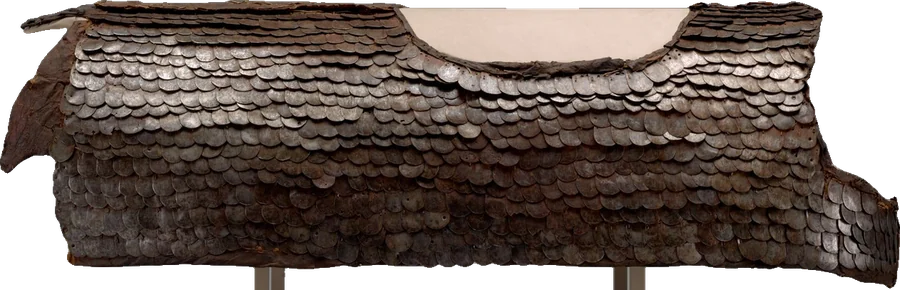
In the end the Persians built a ramp against the wall and dug a tunnel under it, and the city fell in 256 or 257 CE. Its people were deported, nobody rebuilt the city, and sand and mud slowly covered it. That is why so much survived, like the armor buried when Tower 19 partly collapsed.
The clue
Horse Armor, ca. A.D. 165–256. Its record dates this iron horse armor to about A.D. 165 to 256 and gives its findspot as Tower 19, where siege damage buried and preserved the finds.
Sources for this chapter (2)
- en.wikipedia.org: "Its population was deported, and the abandoned city eventually became covered by sand and mud and disappeared from sight."
- en.wikipedia.org: "Since Tower 19 was partially destroyed during a siege, sediment settled on the items inside the tower, which ended up preserving them well"
Every sentence above is checked against the quoted source. Spotted a mistake? Tell us. More about the site, its finds and who dug there: Dura-Europos.
Next mystery: How did grand Gerasa, a city of temples, end up in ruins?
In the game the chapters of this mystery open as you dig up the objects of Dura-Europos.
Dig at Dura-Europos