
The mystery of Gerasa · Syria and Jordan
How did grand Gerasa, a city of temples, end up in ruins?
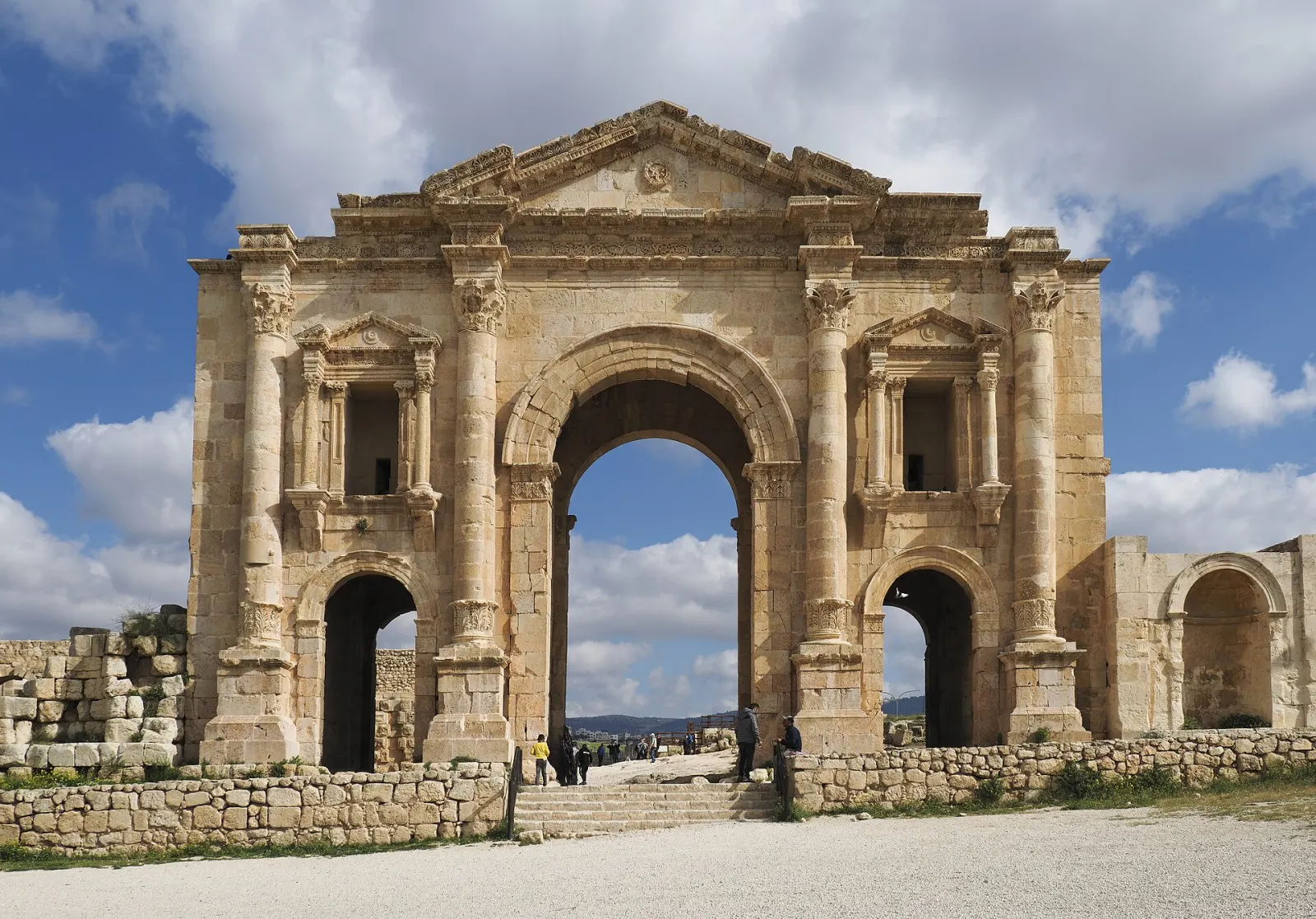
Gerasa, today the town of Jerash in northern Jordan, was one of the cities of the Decapolis. It flourished in Hellenistic, Roman and Byzantine times, until an earthquake in 749 CE destroyed much of it. With its colonnaded streets, theaters and temples it is one of the best preserved Greco-Roman cities. From 1928 to 1934 Yale University and the British School of Archaeology in Jerusalem dug here, and Yale received a share of the finds. Source
- 1. A Greek-style city joins Rome
- 2. A golden age of building
- 3. From temples to churches
- 4. New rulers, busy workshops
- 5. The answer: earthquakes
Chapter 1
A Greek-style city joins Rome
Gerasa, today Jerash in northern Jordan, came under Rome in 63 BCE. Pompey added it to the Decapolis, a league of Greek-style cities that ran much of their own affairs under Roman protection. The city's own inscriptions said Alexander the Great founded it, but other sources point to later kings.
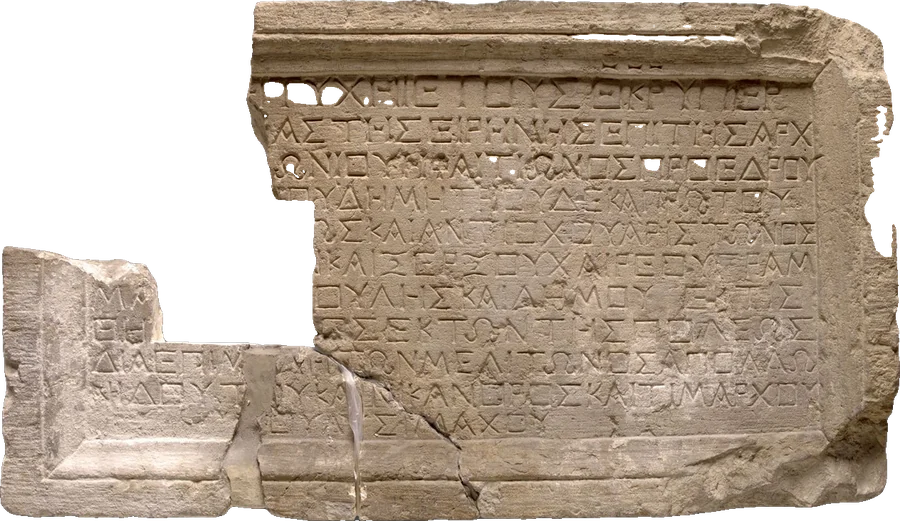
The clue
Inscription, A.D. 66–67. A limestone inscription from the Forum, dated by its record to A.D. 66 to 67, a written piece of Roman-era Gerasa.
Sources for this chapter (2)
- en.wikipedia.org: "Pompey attached the city to the Decapolis, a league of Hellenistic cities that enjoyed considerable autonomy under Roman protection."
- en.wikipedia.org: "Ancient Greek inscriptions from the city support that the city was founded by Alexander the Great"
Chapter 2
A golden age of building
Gerasa grew rich in the late 1st century CE and joined the Roman province of Arabia in 106 CE. Emperor Hadrian visited in 129 to 130 CE, and an arch was built in his honor. After 136 CE work began on a huge new sanctuary for Artemis, the city's patron goddess, but her temple was never finished.
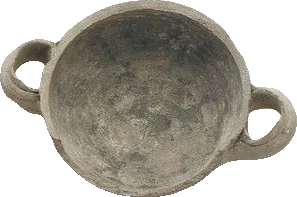
The clue
Votive Cup, 2nd–3rd century A.D.. A votive cup from the Temple of Artemis, dated by its record to the 2nd to 3rd century A.D., when the sanctuary was being built and used.
Sources for this chapter (2)
- en.wikipedia.org: "Emperor Hadrian visited Gerasa in AD 129"
- en.wikipedia.org: "The construction of a new wider sanctuary was started after the Bar Kokhba revolt (AD 136)."
Chapter 3
From temples to churches
A large Christian community grew in Gerasa: a cathedral went up in the 4th century, the first of at least 14 churches, many with beautiful mosaic floors. At the end of the 4th century the emperors banned the old pagan cults. The Temple of Artemis was stripped of its marble and turned into a public hall with a mosaic floor.
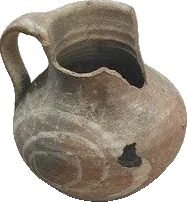
The clue
Jar, 5th–6th century A.D.. Its record calls it Byzantine, dates it to the 5th to 6th century A.D. and places it in the Temple of Artemis, so people still used the temple long after the pagan cults ended.
Sources for this chapter (2)
- en.wikipedia.org: "A large cathedral was built in the city in the 4th century, the first of at least 14 churches built between the 4th and the 7th-century, many with superb mosaic floors."
- en.wikipedia.org: "The cella was paved with a polychrome mosaic floor and converted into a public reception hall."
Chapter 4
New rulers, busy workshops
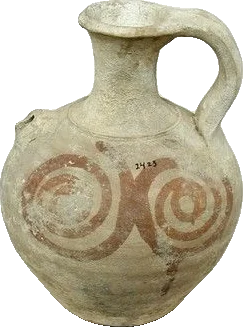
In the 6th century the temple's roof fell in, and the building became a fortified home in a quarter full of workshops. Persian Sasanians invaded in 614 CE, and after the Battle of Yarmuk in 636 CE the region came under Muslim rule. Under the Umayyads Gerasa thrived, with shops, its own coins, a large mosque and churches still in use.
The clue
Jug, 6–7th Century A.D.. A jug from the Baths of Placcus, dated by its record to the 6th to 7th century A.D., the years of these changes.
Sources for this chapter (2)
- en.wikipedia.org: "In the 6th century, the roof of the cella collapsed"
- en.wikipedia.org: "The city flourished during the Umayyad Caliphate. It had numerous shops and issued coins with the mint named "Jerash" in Arabic."
Chapter 5
The answer: earthquakes
No army wiped Gerasa out: in 749 CE a terrible earthquake destroyed much of the city, and later earthquakes did more damage. The Temple of Artemis survived the 749 quake but was slowly left empty, filled with sand and trash, and partly brought down by another earthquake in the 12th or 13th century. By 1838 Jerash was described as a ruin.
Sources for this chapter (3)
- en.wikipedia.org: "the 749 Galilee earthquake destroyed large parts of it, and subsequent earthquakes contributed to additional destruction."
- en.wikipedia.org: "The structures of the temple withstood the earthquake in AD 749."
- en.wikipedia.org: "In 1838 Jerash was described as a ruin."
Every sentence above is checked against the quoted source. Spotted a mistake? Tell us. More about the site, its finds and who dug there: Gerasa.
Next mystery: Why is Nijmegen called the oldest city in the Netherlands?
In the game the chapters of this mystery open as you dig up the objects of Gerasa.
Dig at Gerasa