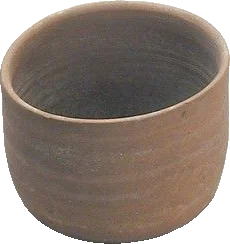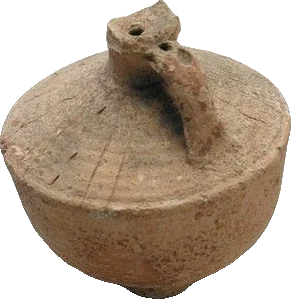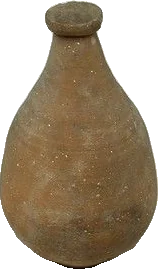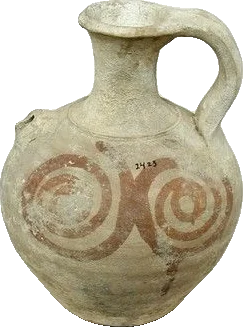
Gerasa (Jordan), Byzantine · Rare find
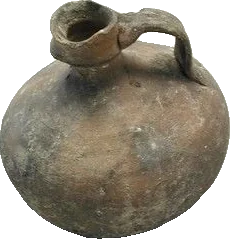
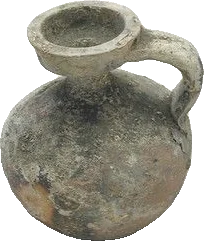
Jug
This object was really found at Gerasa by the Yale-British School Excavations at Gerasa. Today it is in Yale University Art Gallery in New Haven.
What is it?
Jug. A jug has a handle and a spout or lip for pouring. Ewers and pitchers held water or wine at the table. Source
Pottery. Clay shaped by hand or on a wheel, then fired.
Museum record
- Object
- Containers - Ceramics
- Culture
- Gerasa (Jordan), Byzantine
- Date
- 6–7th Century A.D.
- Material
- Terracotta
- Findspot
- Excavated by the Yale-British School Excavations at Gerasa (Baths of Placcus, room A51), present-day Jordan, 1928–34
- Size
- 8 3/4 in. (22.2 cm)
- Museum
- Yale University Art Gallery, New Haven
- Number
- 1935.279
- Credit
- The Yale-British School Excavations at Gerasa
Photo and record: Yale University Art Gallery (public domain), copied 2026-11-12. Background removed from the photo. Region: Syria and Jordan.
More about this object
A clue in the mystery of Gerasa
How did grand Gerasa, a city of temples, end up in ruins? In chapter 4, "New rulers, busy workshops", this object is the clue: A jug from the Baths of Placcus, dated by its record to the 6th to 7th century A.D., the years of these changes. Read the mystery
Culture
Byzantine: more objects from the same culture or period, with what we know about it.