
The mystery of Nijmegen · Netherlands
Why is Nijmegen called the oldest city in the Netherlands?
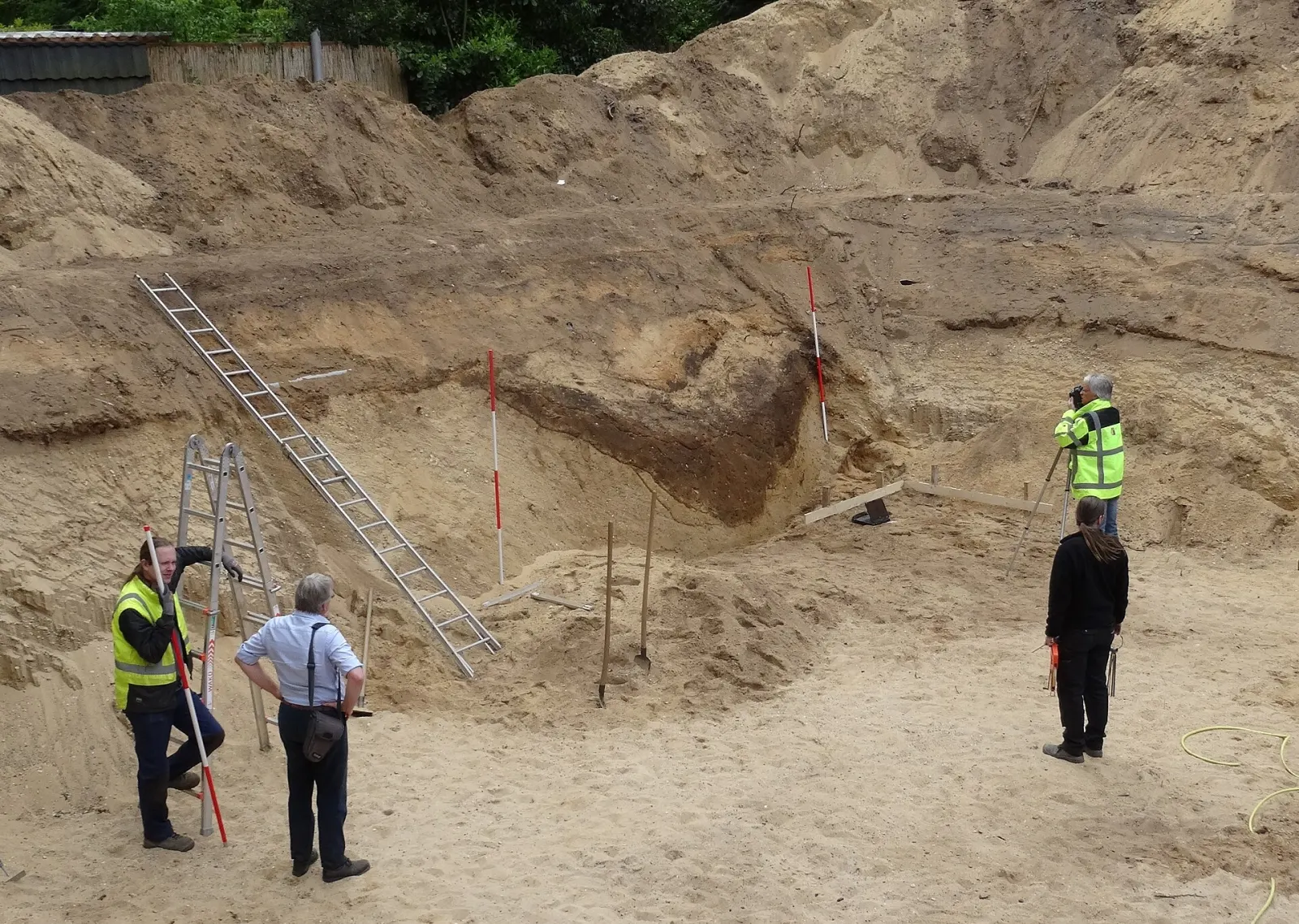
Nijmegen, on the Waal River, the main branch of the Rhine, is the oldest city in the Netherlands. In the first century BCE the Romans built an army camp on the hills here, with a view over the river. A Batavian town grew beside it and was destroyed in the Batavian revolt of 69 CE. Afterwards the Tenth Legion was stationed in a new fortress, and in 98 CE the town received Roman city rights. Emperor Trajan renamed it Ulpia Noviomagus Batavorum. Source
- 1. People were here before Rome
- 2. A Roman camp on the hills
- 3. A Batavian town and a revolt
- 4. The Tenth Legion moves in
- 5. The answer: the first Roman city
Chapter 1
People were here before Rome
People lived along the Waal River long before the Romans came. During building work north of the river, archaeologists found the remains of a sauna about 3,600 years old. In 2022 it was identified as the first of its kind on mainland Europe.
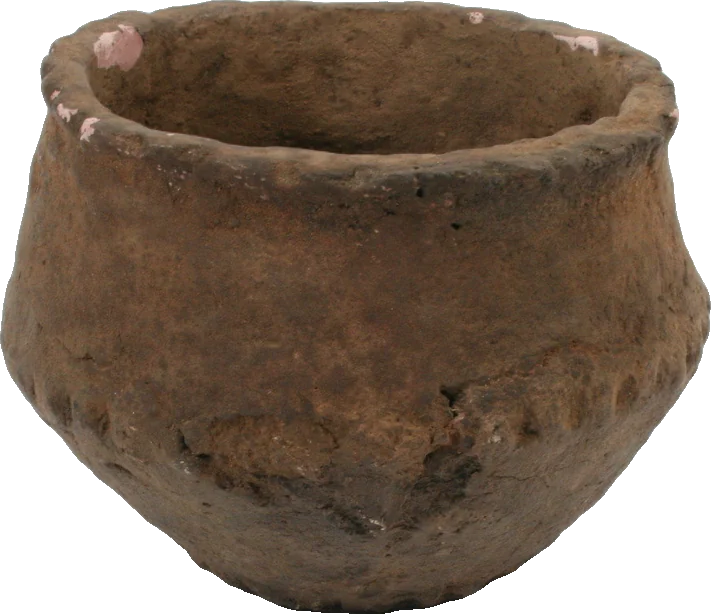
The clue
Small pot decorated with fingernail marks, 1200–800 B.C.. Its record dates this small pot from Nijmegen to 1200 to 800 B.C., long before the Romans arrived.
Sources for this chapter (1)
- en.wikipedia.org: "This 3,600 year-old sauna is the first of its kind in mainland Europe."
Chapter 2
A Roman camp on the hills
Nijmegen first appears in history in the 1st century BCE, when the Romans built an army camp here. The spot mattered because its hills gave a good view over the Waal and the Rhine valley.
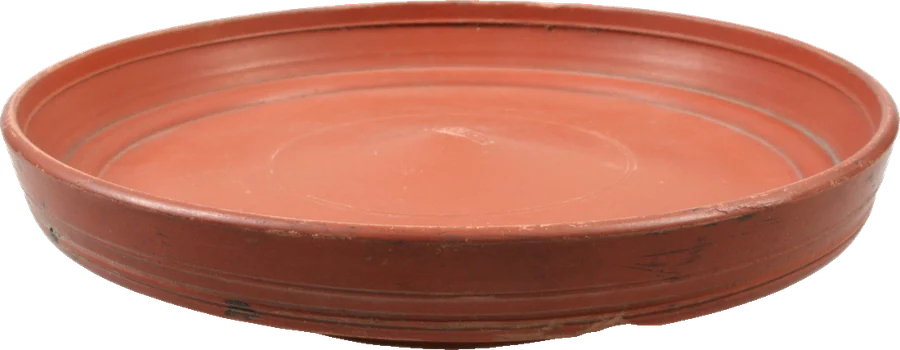
The clue
Terra sigillata plate stamped by Testius, A.D. 20–40. A Roman terra sigillata plate stamped by Testius, dated by its record to A.D. 20 to 40, in Nijmegen's early Roman decades.
Sources for this chapter (1)
- en.wikipedia.org: "The first mention of Nijmegen in history is in the first century BC, when the Romans built a military camp"
Chapter 3
A Batavian town and a revolt
The Batavi, a Germanic people, lived between the Old Rhine and the Waal, and their town Oppidum Batavorum grew beside the Roman camp. In 69 CE they rose against Rome under their prince Julius Civilis. The town was destroyed, and after the peace its people had to rebuild a few kilometers downstream.
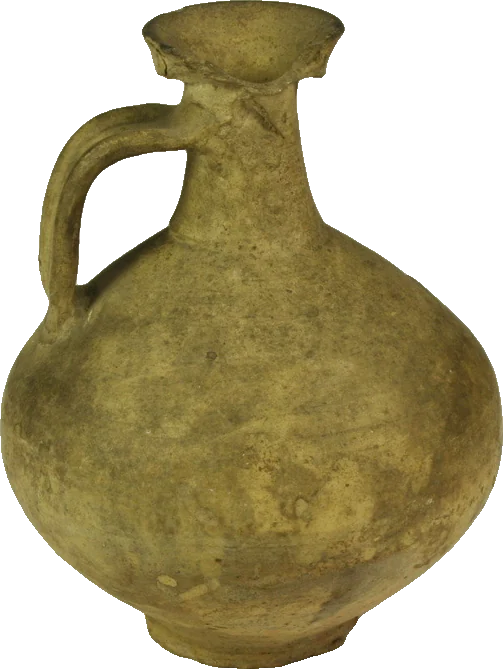
The clue
Pipeclay jug, ca. A.D. 50. A Roman pipeclay jug from Nijmegen, dated by its record to about A.D. 50, before the revolt of 69.
Sources for this chapter (2)
- en.wikipedia.org: "a village called Oppidum Batavorum had formed near the Roman camp. This village was destroyed in the revolt"
- en.wikipedia.org: "The Batavian capital of Nijmegen was destroyed and its inhabitants ordered to rebuild it a few kilometers downstream"
Chapter 4
The Tenth Legion moves in
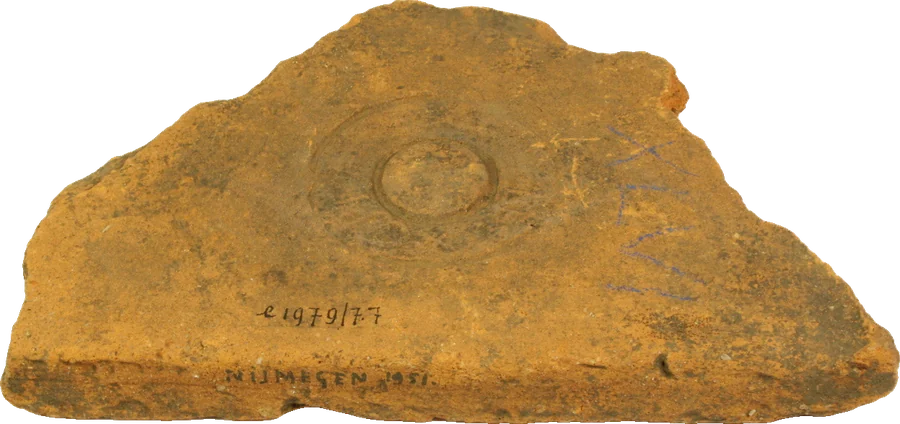
After the revolt Rome built a bigger camp, and the Tenth Legion (Legio X Gemina) was stationed there from 71 to 103 CE. A new village soon grew around the camp. In 103 CE the legion left for the Danube, a blow to the village's economy.
The clue
Roof tile stamped by the Tenth Legion, A.D. 89–300. The record calls it a roof tile stamped by the Tenth Legion, found in Nijmegen.
Sources for this chapter (2)
- en.wikipedia.org: "From 71 to 103, the legion was stationed at the base built by II Adiutrix near Oppidum Batavorum"
- en.wikipedia.org: "In 103, the X Gemina was restationed in Vindobona, now Vienna, which may have been a major blow to the economy of the village around the camp"
Chapter 5
The answer: the first Roman city
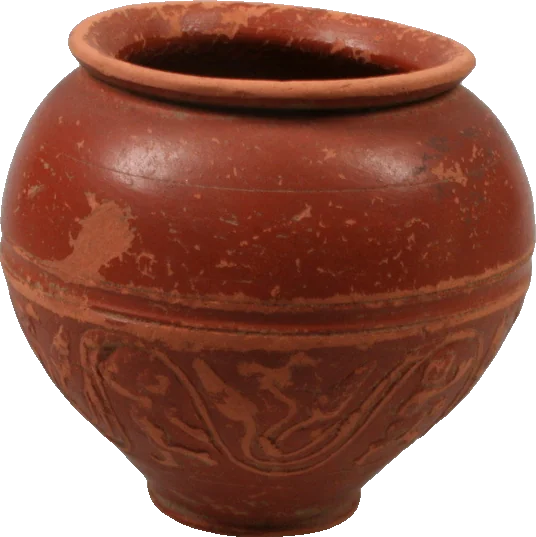
In 98 CE Nijmegen was the first of only two places in today's Netherlands to receive Roman city rights. Emperor Trajan renamed it Ulpia Noviomagus Batavorum, and "Noviomagus" is where the name Nijmegen comes from. In 2005 the city celebrated 2,000 years of existence.
The clue
Terra sigillata pot with relief decoration, A.D. 100–120. A terra sigillata pot from Nijmegen, dated by its record to A.D. 100 to 120, the years right after the town became a Roman city.
Sources for this chapter (2)
- en.wikipedia.org: "In 98, Nijmegen was the first of two settlements in what is now the Kingdom of the Netherlands to receive Roman city rights."
- en.wikipedia.org: "In 2005, it celebrated 2,000 years of existence."
Every sentence above is checked against the quoted source. Spotted a mistake? Tell us. More about the site, its finds and who dug there: Nijmegen.
Next mystery: Why did Rome build a fort in the wet ground at Valkenburg?
In the game the chapters of this mystery open as you dig up the objects of Nijmegen.
Dig at Nijmegen