
The mystery of Valkenburg · Netherlands
Why did Rome build a fort in the wet ground at Valkenburg?
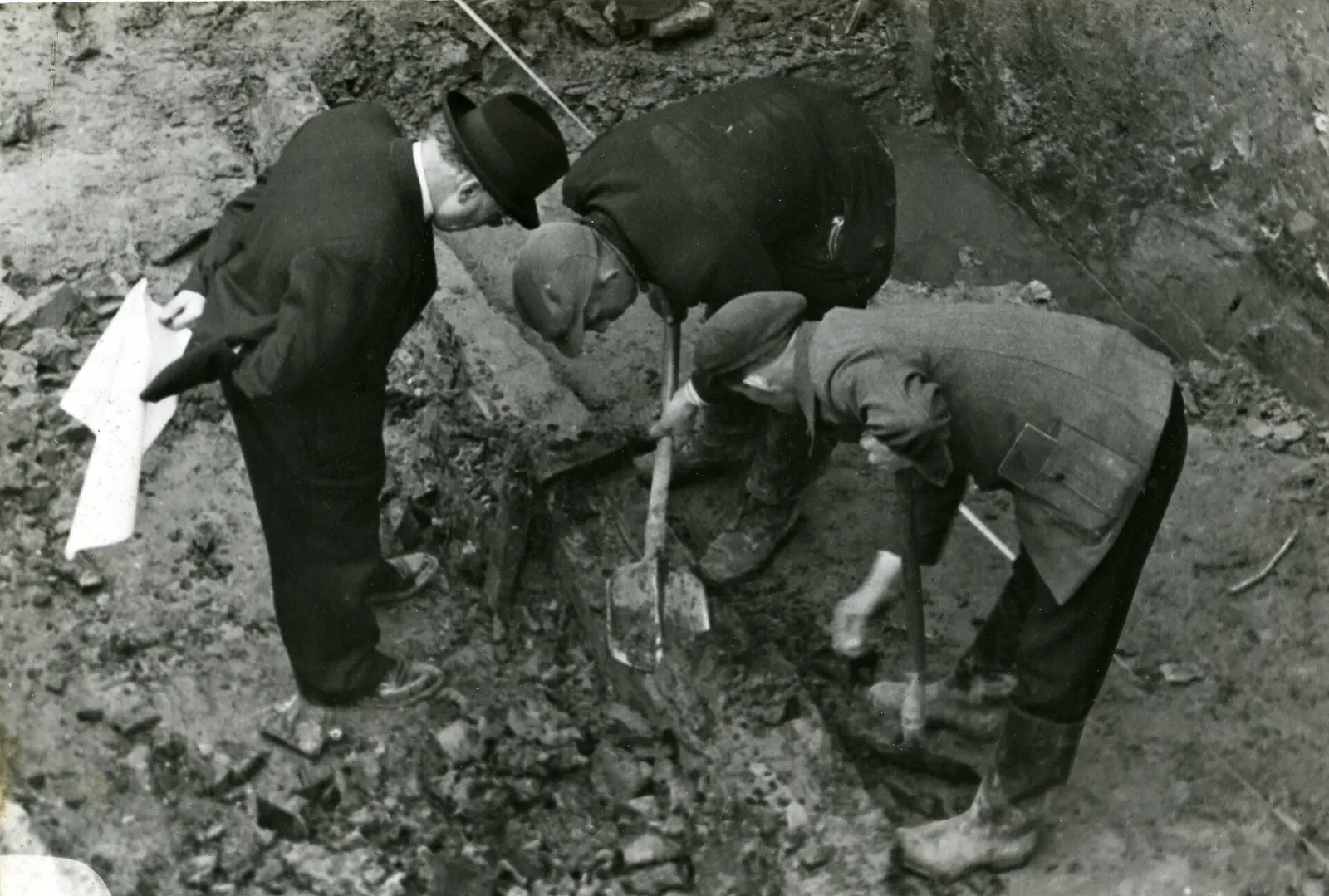
Valkenburg, near Leiden, stands on the Roman fort of Praetorium Agrippinae, on the Old Rhine, then the main branch of the river. The fort was probably built around 40 CE, when Emperor Caligula was in the area: a wine barrel from his own vineyards was found here. Local tribes razed it in the Batavian revolt of 69 CE; it was rebuilt, enlarged in stone around 180 CE and abandoned around 275 CE. Albert Egges van Giffen led the main excavations from 1941 to 1953. Below the groundwater the soil kept wood, leather and rope. Source
- 1. A fort in the river delta
- 2. The river was the border
- 3. An emperor's visit and a name
- 4. Soldiers, horses, fire and stone
- 5. The answer: guarding a border and a road
Chapter 1
A fort in the river delta
Under the village of Valkenburg, near Leiden, lies the Roman fort of Praetorium Agrippinae, in the land of the Cananefates tribe. It stood on the Old Rhine, which was then the main branch of the river. Its remains lie below the groundwater, so wood, food, leather and rope survived.
Sources for this chapter (2)
- en.wikipedia.org: "It was an army encampment (Lat.: castellum) on the Old Rhine (at the time the major branch of the river Rhine)"
- en.wikipedia.org: "since the remains of the castellum were found below groundwater level, they were very well preserved"
Chapter 2
The river was the border
Here the edge of the Roman Empire was not a wall but the Rhine itself, guarded by a chain of forts. Around 16 CE Rome decided not to conquer the lands east of the Rhine, and the river became a fixed frontier.
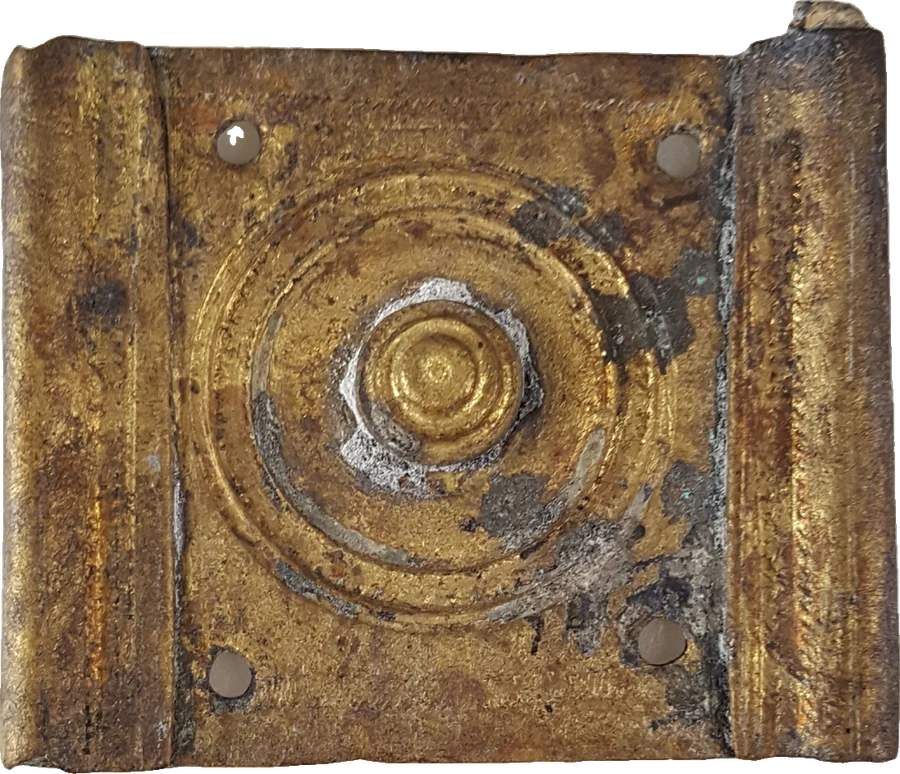
The clue
Bronze plate from a soldier's belt, A.D. 40–250. The record calls it a bronze plate from a soldier's belt, found at Valkenburg and dated A.D. 40 to 250, the fort's lifetime.
Sources for this chapter (2)
- en.wikipedia.org: "The Rhine Line was guarded by a chain of castra for auxiliary troops."
- en.wikipedia.org: "The decision not to conquer the regions east of the Rhine in 16 AD made the Rhine into a fixed frontier of the Roman Empire."
Chapter 3
An emperor's visit and a name
Emperor Caligula almost certainly came here in 39 or 40 CE: a wine barrel from his own vineyards was dug up at Valkenburg. He was probably preparing an invasion of Britain that never happened, and the fort may have been built for it. Its name means "Headquarters of Agrippina," after his mother.
Sources for this chapter (2)
- en.wikipedia.org: "It is almost certain that Caligula stayed in the area in 39 or 40 AD, since a wine barrel from his personal vineyards was found during excavations at Valkenburg."
- en.wikipedia.org: "Praetorium Agrippinae takes its name from the mother of the emperor Caligula"
Chapter 4
Soldiers, horses, fire and stone
At first the fort held legionaries and cavalry from a unit of Gauls. In the Batavian revolt of 69 to 70 CE local tribes razed it, and afterwards a unit from Thrace moved in. Around 180 CE the Romans enlarged the fort and rebuilt it in stone, one of seven building phases.
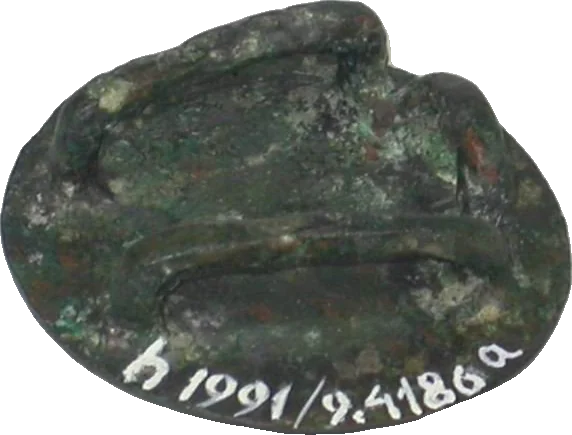
The clue
Round bronze harness mount, A.D. 40–250. The record calls it a round bronze harness mount, a fitting for horse gear, found at Valkenburg and dated A.D. 40 to 250, when cavalry served at the fort.
Sources for this chapter (2)
- en.wikipedia.org: "After the Revolt of the Batavi (69"
- en.wikipedia.org: "Around 180 AD the Romans enlarged the fort and rebuilt it in stone. In total, seven building phases have been distinguished."
Chapter 5
The answer: guarding a border and a road
Valkenburg guarded the Rhine, which was both the empire's northern border and a main supply route to the North Sea and Britain. Like the other Dutch forts, it was left empty when the frontier collapsed around 275 CE. Later Rome built a granary here to ship grain to Britain.
Sources for this chapter (3)
- en.wikipedia.org: "The river itself was a crucial means of transport through the region, and became a major supply route to the North Sea and Britain"
- en.wikipedia.org: "Like all other forts on the Dutch limes, Valkenburg was deserted after the collapse of the Roman border defense around 275 AD."
- en.wikipedia.org: "a granary was constructed here for the shipment of grain to Britannia."
Every sentence above is checked against the quoted source. Spotted a mistake? Tell us. More about the site, its finds and who dug there: Valkenburg.
Next mystery: Why did a king build his pyramid at Lisht, far from the old capital at Thebes?
In the game the chapters of this mystery open as you dig up the objects of Valkenburg.
Dig at Valkenburg