
The mystery of Lisht · Egypt
Why did a king build his pyramid at Lisht, far from the old capital at Thebes?
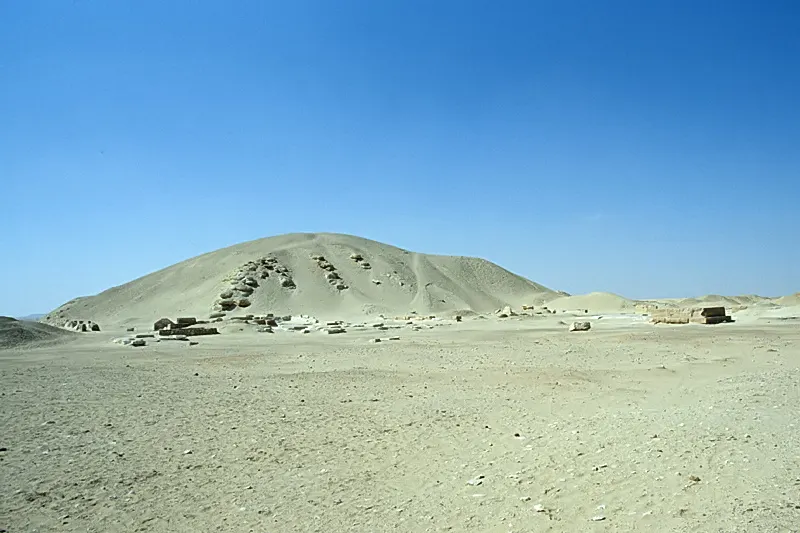
Lisht is the burial ground of the first two kings of Egypt's 12th Dynasty, Amenemhat I and his son Senwosret I. They built pyramids here, near their new capital Itjtawy, and officials and royal family members were buried in tombs and small pyramids around them. The Metropolitan Museum of Art's Egyptian Expedition excavated at Lisht from 1906 to 1934. Source
- 1. Who was the new king?
- 2. Leaving Thebes behind
- 3. Why this spot on the Nile?
- 4. A pyramid built from older pyramids
- 5. The answer: a capital that lasted
Chapter 1
Who was the new king?
Amenemhat I, the first king of the 12th Dynasty, was not born into the royal family. He was probably the same man as a vizier, a top official, named Amenemhat who served the king before him. Scholars think texts like the Teaching of Amenemhat were written to show he was the rightful king.
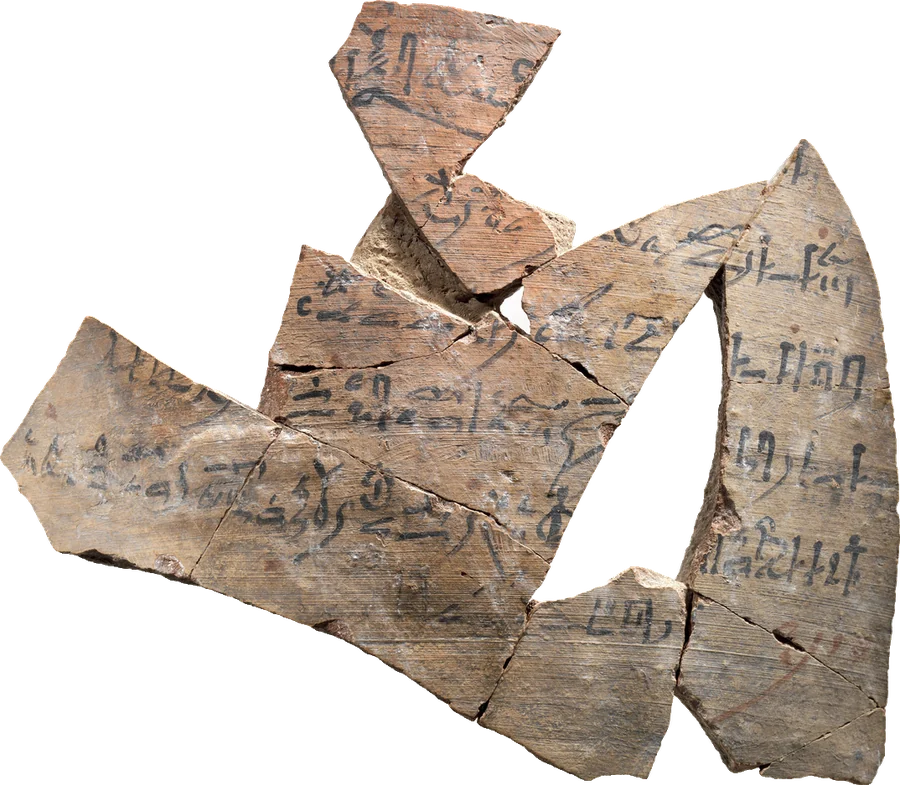
The clue
Hieratic copy of the Teaching of Amenemhat I, ca. 1300–1080 BCE. A copy of the Teaching of Amenemhat I written on pottery, found at Lisht South and dated about 1300 to 1080 BCE: people were still copying this text centuries later.
Sources for this chapter (3)
- en.wikipedia.org: "Amenemhat I was not of royal lineage"
- en.wikipedia.org: "Amenemhat I was probably the same as the vizier named Amenemhat"
- en.wikipedia.org: "are often considered to have been attempts at legitimizing his rule."
Chapter 2
Leaving Thebes behind
Before Amenemhat I, during the 11th Dynasty, Egypt's capital was Thebes in the south. Amenemhat moved the capital to a new royal city near Lisht. It was called Amenemhat-itjtawy, which means "Amenemhat seizes the Two Lands."
Sources for this chapter (2)
- en.wikipedia.org: "moved the capital from Thebes to a city near el-Lisht called Itj-tawy"
- en.wikipedia.org: "also known by its full name Amenemhat-itjtawy ("Amenemhat seizes the Two Lands")"
Chapter 3
Why this spot on the Nile?
The new capital sat near the entrance to the Fayyum, a good place to control both Upper and Lower Egypt. Scholars have suggested other reasons too: the king may have wanted more farmland, or to be closer to the northeast, where attacks came from. The ruins of the city itself have never been found for certain.
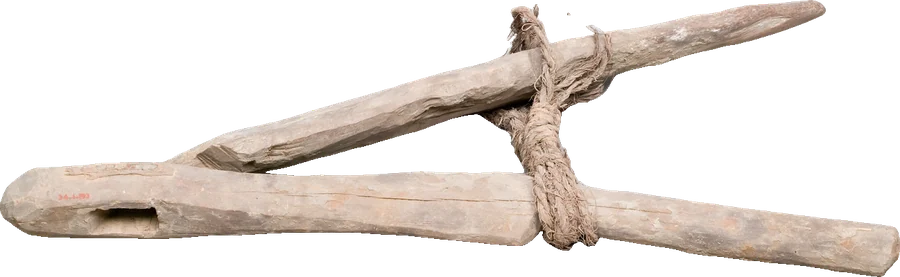
The clue
Hoe, ca. 1961–1917 B.C.. A wooden farming hoe of Dynasty 12 (about 1961 to 1917 BCE) found at Lisht South, the kind of tool used in the fields around the new capital.
Sources for this chapter (3)
- en.wikipedia.org: "because it was close to the mouth of the Fayyum, and well situated to control the 'Two Lands' of Upper and Lower Egypt."
- en.wikipedia.org: "may have been chosen for its proximity to the source of Asiatic incursions into Egypt"
- en.wikipedia.org: "The ruins of Itj-Tawy have never been conclusively identified"
Chapter 4
A pyramid built from older pyramids
Amenemhat I's pyramid complex at Lisht reused stones from much older monuments, including those of the famous kings Khufu and Khafre. Reusing them is thought to stand for bringing back the glory of the Old Kingdom. The pyramids would have been seen by people traveling to the capital from the south.
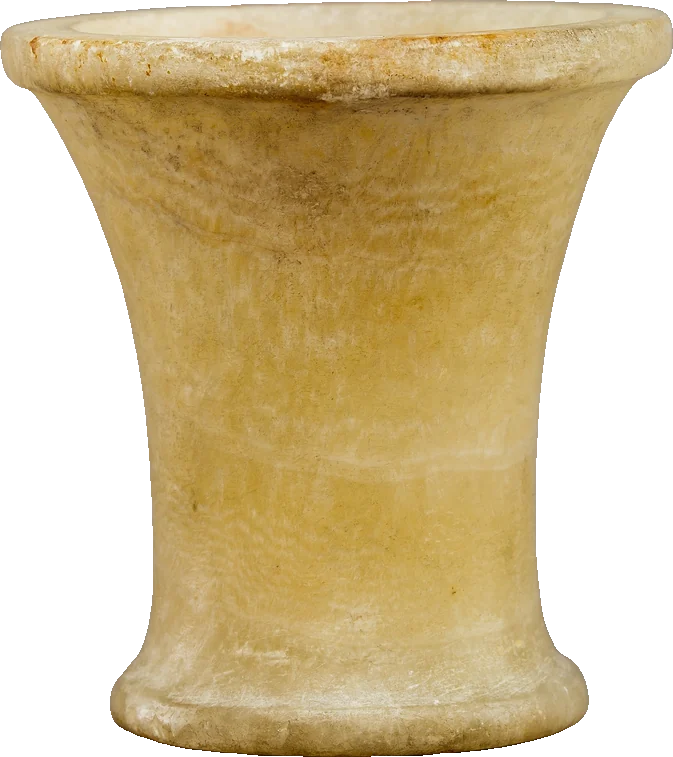
The clue
Ointment jar, ca. 1981–1952 B.C.. A stone ointment jar from a foundation deposit of the Pyramid Temple of Amenemhat I, dated about 1981 to 1952 BCE: it was buried when his temple was built.
Sources for this chapter (3)
- en.wikipedia.org: "Specifically, stones from the monuments of Khufu, Khafre, Unas, and Pepi II"
- en.wikipedia.org: "which is thought to symbolize the restoration of Egypt to its Old Kingdom glory."
- en.wikipedia.org: "These pyramids would have been visible to those traveling to Itj-Tawy from the south."
Chapter 5
The answer: a capital that lasted
Amenemhat I built his pyramid at Lisht because it lay next to his new capital, Itjtawy, chosen as a strong place to rule all of Egypt. His son Senwosret I built his own pyramid at Lisht too, and Itjtawy stayed the capital through the 12th and 13th Dynasties. Scholars think the lost city may lie under the fields east of the two pyramids.
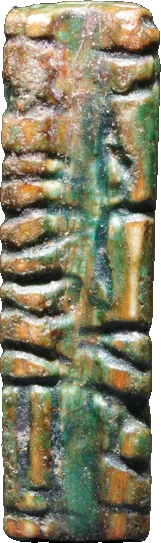
The clue
Cylinder seal of Senwosret III, ca. 1878–1840 B.C.. A cylinder seal naming Senwosret III, a later king of the same dynasty, found in the Lisht North cemetery.
Sources for this chapter (3)
- en.wikipedia.org: "El-Lisht is the necropolis of the first two rulers of Dynasty XII, Amenemhet I and his son and successor Senusret I."
- en.wikipedia.org: "Itjtawy retained its capital status during the 12th and 13th dynasties"
- en.wikipedia.org: "Circumstantial evidence suggests that the site lies beneath cultivated fields east of the pyramids of Amenemhat I and Senusret I at Lisht."
Every sentence above is checked against the quoted source. Spotted a mistake? Tell us. More about the site, its finds and who dug there: Lisht.
Next mystery: Why were Hatshepsut's statues smashed and thrown into pits at Deir el-Bahri?
In the game the chapters of this mystery open as you dig up the objects of Lisht.
Dig at Lisht