Egypt, New Kingdom, Ramesside, Dynasty 19–20 · Important find
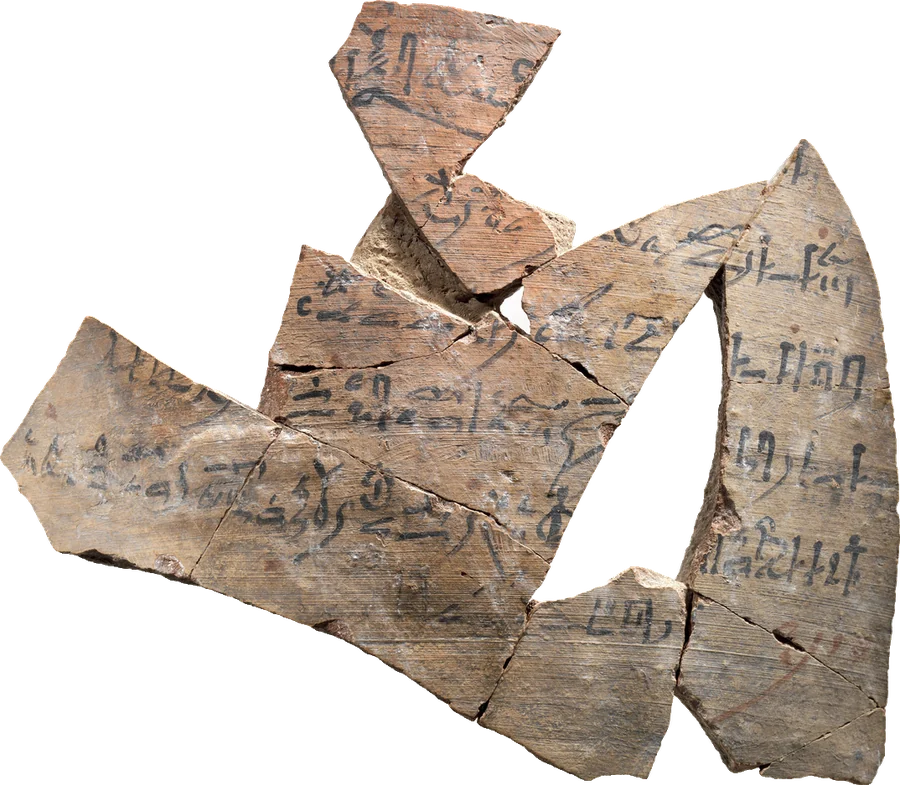
Hieratic copy of the Teaching of Amenemhat I
This object was really found at Lisht by The Metropolitan Museum of Art's expedition. Today it is in The Metropolitan Museum of Art in New York.
What is it?
Inscription. Writing on stone, clay or pottery lets us hear the people of the past in their own words: names, prayers, lists and letters. Source
Pottery. Clay shaped by hand or on a wheel, then fired.
Museum record
- Object
- Ostracon, hieratic, instruction of Amenemhat I
- Culture
- Egypt, New Kingdom, Ramesside, Dynasty 19–20
- Date
- ca. 1300–1080 BCE
- Material
- Pottery, ink
- Findspot
- MMA excavations, 1931–32, Lisht South, Memphite Region, Egypt
- Size
- L. 22.6 cm (8 7/8 in.); W. 19.4 cm (7 5/8 in.); Th. 1 cm (3/8 in.)
- Museum
- The Metropolitan Museum of Art, New York
- Number
- 32.1.119
- Credit
- Rogers Fund, 1932
Photo and record: The Metropolitan Museum of Art, Open Access (public domain, CC0), copied 2026-11-12. Background removed from the photo. Region: Nile Valley.
More about this object
A clue in the mystery of Lisht
Why did a king build his pyramid at Lisht, far from the old capital at Thebes? In chapter 1, "Who was the new king?", this object is the clue: A copy of the Teaching of Amenemhat I written on pottery, found at Lisht South and dated about 1300 to 1080 BCE: people were still copying this text centuries later. Read the mystery
Culture
Egypt, New Kingdom: more objects from the same culture or period, with what we know about it.