
The mystery of Deir el-Bahri · Egypt
Why were Hatshepsut's statues smashed and thrown into pits at Deir el-Bahri?
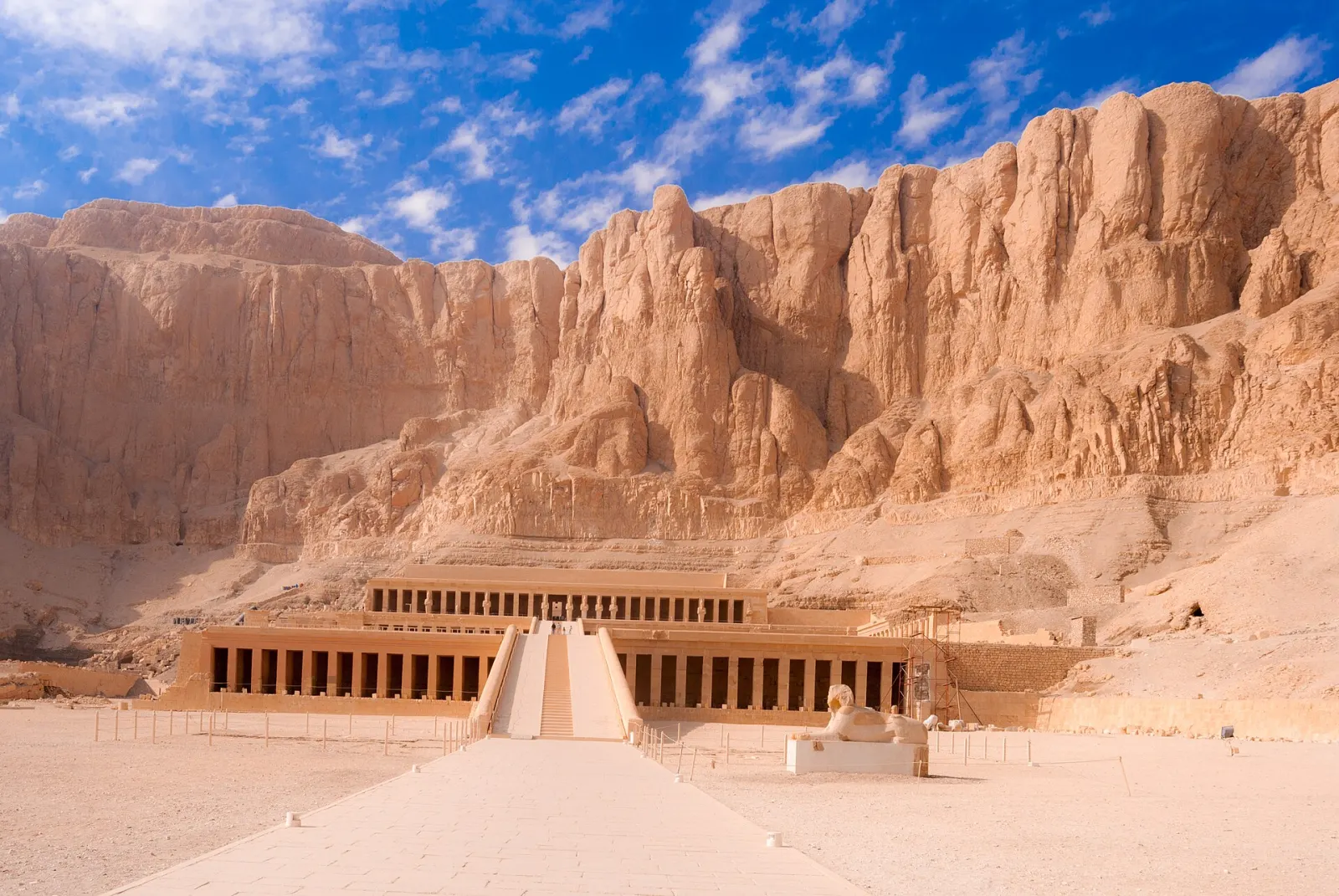
Deir el-Bahri is a bay in the cliffs on the west bank of the Nile, opposite modern Luxor. Here Hatshepsut, a queen who ruled as pharaoh, built her terraced temple beside the older temple of Mentuhotep II. The Metropolitan Museum of Art excavated here from 1911 to 1936 and found statues of Hatshepsut that had been broken in ancient times. Source
- 1. A queen who became king
- 2. A temple beside an older one
- 3. A temple full of her statues
- 4. Broken on purpose
- 5. The answer: a question of who comes next
Chapter 1
A queen who became king
Hatshepsut was the queen of King Thutmose II. When he died, she ruled for her young stepson, Thutmose III. By about 1472 BCE she had become pharaoh herself, ruling beside him until about 1458 BCE.
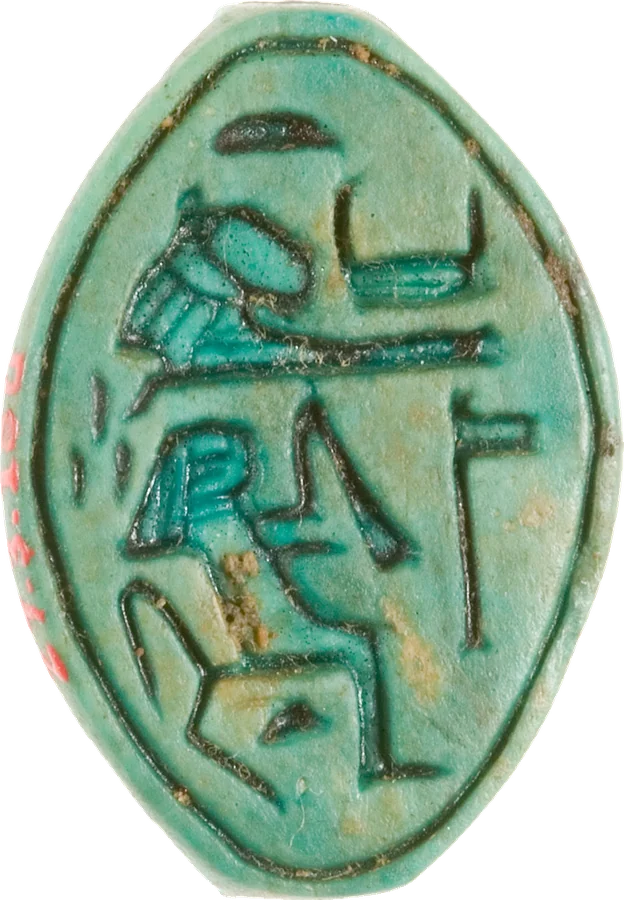
The clue
Cowroid Seal Amulet Inscribed for the God's Wife Hatshepsut, ca. 1473–1458 BCE. A seal amulet inscribed for the "God's Wife Hatshepsut", one of her titles, from a foundation deposit of her temple at Deir el-Bahri.
Sources for this chapter (2)
- en.wikipedia.org: "she had initially ruled as regent to her stepson, Thutmose III"
- en.wikipedia.org: "Hatshepsut eventually assumed the position of pharaoh alongside him by Year 7 of his reign, c. 1472 BC"
Chapter 2
A temple beside an older one
Hatshepsut's temple of three huge terraces was built between the 7th and 20th years of her reign. Its design was inspired by the temple of King Mentuhotep II next door, built about six centuries earlier. Before building began, objects like tools, scarabs and seal amulets were buried in holes around the edge of the temple.
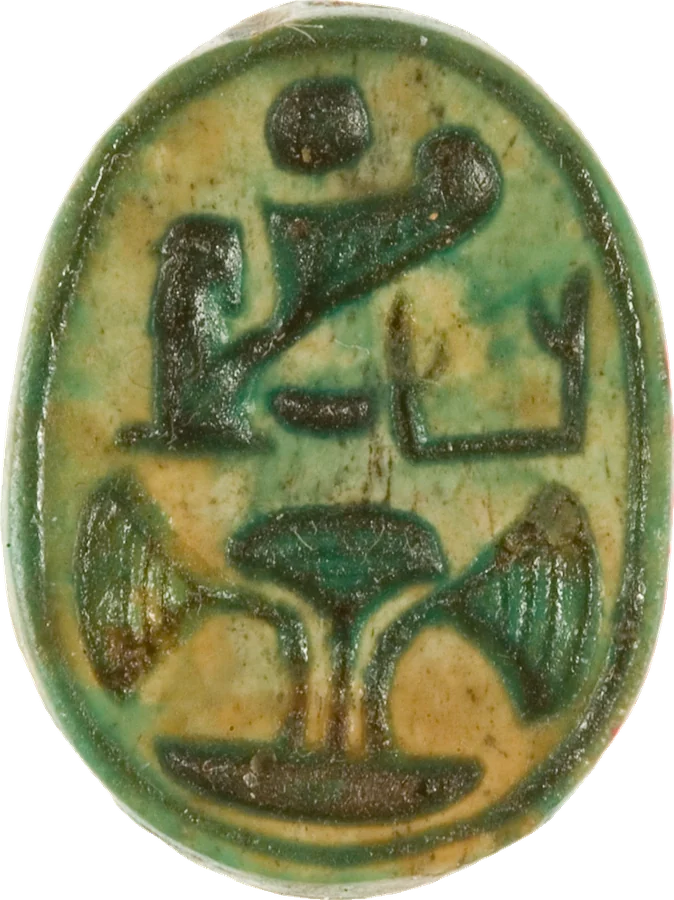
The clue
Scarab Inscribed with the Name Maatkare Over a Papyrus Thicket, ca. 1473–1458 BCE. A scarab inscribed with Maatkare, her name as king, from Foundation Deposit 7 of her temple: one of the objects buried before building.
Sources for this chapter (3)
- en.wikipedia.org: "The terraced temple was constructed between Hatshepsut's seventh and twentieth regnal years"
- en.wikipedia.org: "heavily influenced by the adjacent Temple of Mentuhotep II of the Eleventh Dynasty built six centuries earlier."
- en.wikipedia.org: "tools, scarabs, and seal amulets were deposited into the prepared holes."
Chapter 3
A temple full of her statues
On the upper terrace stood 26 statues of Hatshepsut, each about 17 feet (5.2 m) tall. Niches in the courtyard probably held more statues of her kneeling and standing. A shrine on the middle terrace honored the goddess Hathor, who was closely linked to Hatshepsut.
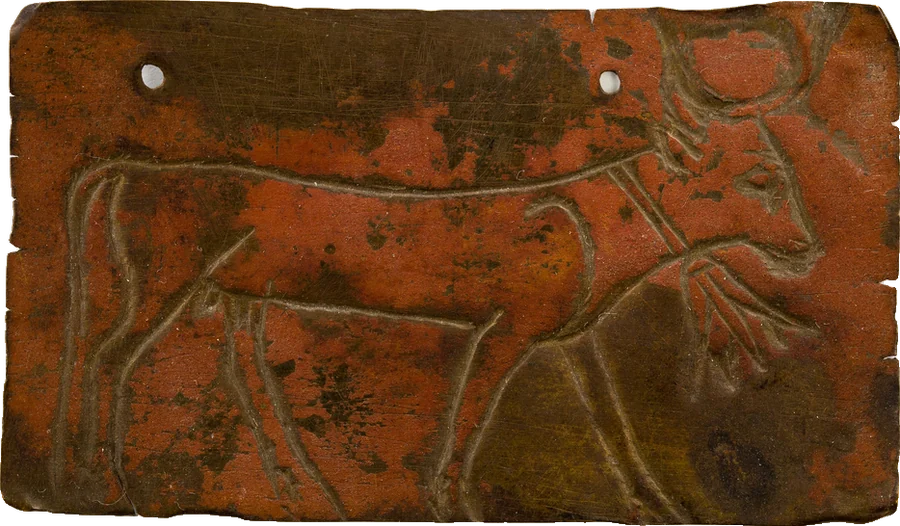
The clue
Cow plaque, ca. 1473–1458 BCE. A small bronze cow plaque from Hatshepsut's reign, found in debris from the Hathor shrine at Deir el-Bahri.
Sources for this chapter (2)
- en.wikipedia.org: "The upper terrace opens to 26 columns each fronted by a 5.2 m (17 ft) tall Osiride statue of Hatshepsut."
- en.wikipedia.org: "these are presumed to have contained kneeling and standing statues of Pharaoh Hatshepsut."
Chapter 4
Broken on purpose
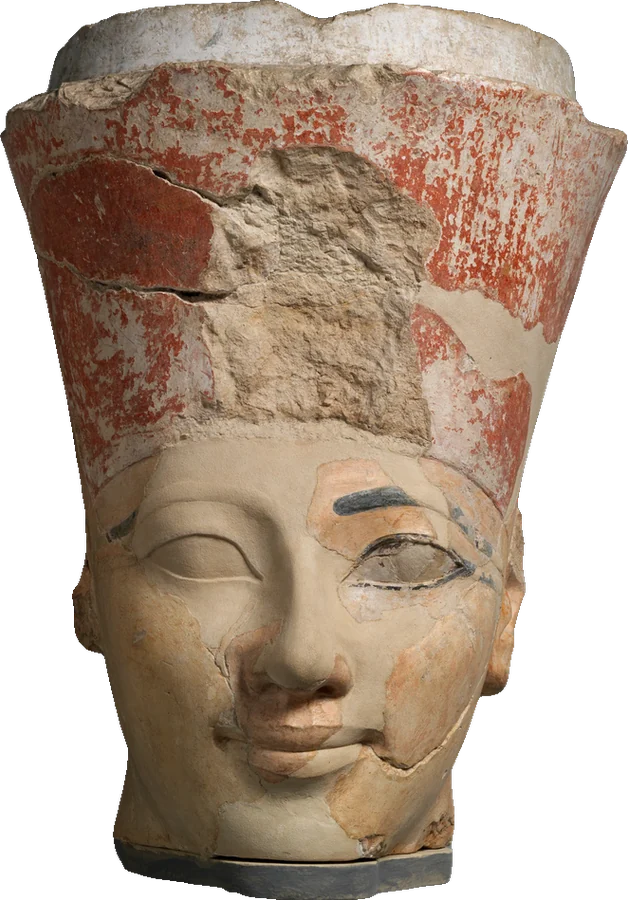
About twenty years after Hatshepsut died, late in Thutmose III's reign, workers began erasing her rule as king. Her statues were dragged out of the temple to a quarry and to a pit now called the Hatshepsut Hole, broken up and dumped. From 1911 to 1936 The Metropolitan Museum of Art dug here and found the pieces.
The clue
Head of an Osiride Statue of Hatshepsut, ca. 1473–1458 BCE. The head of a statue of Hatshepsut, found by the Met in 1926 to 1928 in the Senenmut Quarry, away from the temple terrace where such statues stood.
Sources for this chapter (3)
- en.wikipedia.org: "Two decades after her death, during Thutmose III's forty-second regnal year, he decided that all evidence of her reign as king of Egypt should be erased."
- en.wikipedia.org: "Workers dragged statues from her temple to one of two designated sites"
- en.wikipedia.org: "Further efforts were carried out by Herbert E. Winlock and the Metropolitan Museum of Art (MMA) from 1911 to 1936"
Chapter 5
The answer: a question of who comes next
Revenge looks unlikely: Thutmose III waited about twenty years, kept her officials, and built his own temple right beside hers. Many scholars now think the erasing was meant to make sure his son, Amenhotep II, would become king without trouble. Others think a woman ruling as king may have seemed wrong to the Egyptians, so only her years as king were erased.
Sources for this chapter (3)
- en.wikipedia.org: "He even built his mortuary temple directly next to Hatshepsut's, showing no grudge against her."
- en.wikipedia.org: "the purposeful destruction of the memory of Hatshepsut is seen as an attempt to ensure a smooth succession for Amenhotep II"
- en.wikipedia.org: "The second is that it was a repudiation of the concept of female kingship."
Every sentence above is checked against the quoted source. Spotted a mistake? Tell us. More about the site, its finds and who dug there: Deir el-Bahri.
Next mystery: Why did King Amenhotep III build a whole palace city at Malqata?
In the game the chapters of this mystery open as you dig up the objects of Deir el-Bahri.
Dig at Deir el-Bahri