
Roman, the Netherlands · Rare find
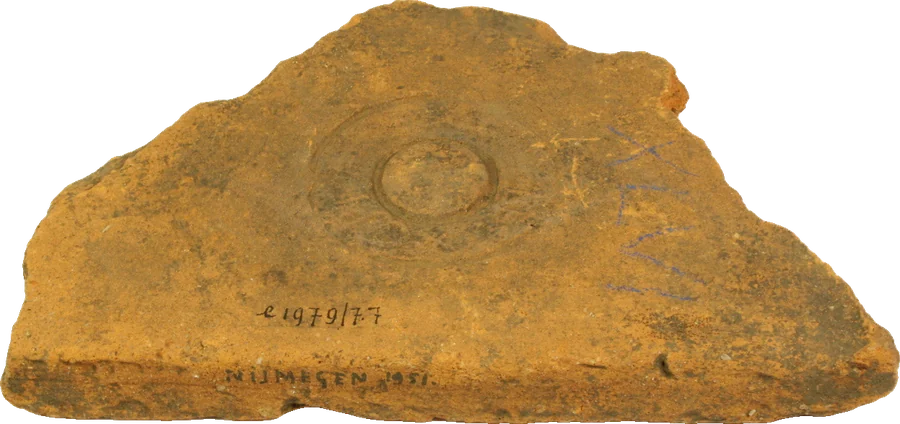
Roof tile stamped by the Tenth Legion
This object was really found at Nijmegen. Today it is in Rijksmuseum van Oudheden (National Museum of Antiquities) in Leiden.
What is it?
Brick and tile. Most houses were built of mudbrick, clay dried in the sun. Fired bricks and roof tiles were stronger and were used for baths, roofs and walls. Source
Pottery. Clay shaped by hand or on a wheel, then fired.
Museum record
- Object
- Roof tile (fragment)
- Culture
- Roman, the Netherlands
- Date
- A.D. 89–300
- Material
- Earthenware, brick
- Findspot
- Nijmegen (Gelderland, the Netherlands)
- Size
- 27.5 × 18.5 × 3.4 cm
- Museum
- Rijksmuseum van Oudheden (National Museum of Antiquities), Leiden
- Number
- e 1979/7.7
- Credit
- Rijksmuseum van Oudheden, Leiden (CC BY 4.0)
- Original title (Dutch)
- dakpan (tegula) ; fragment
- Original description (Dutch)
- Baksteenfragment (tegula) met rond, opliggend stempel: LEG(io) X G(emina) P(ia) F(idelis). Op de onderste helft twee hoorns van overvloed.
Photo and record: Rijksmuseum van Oudheden, Leiden, CC BY 4.0 (record translated from Dutch), copied 2026-11-13. Background removed from the photo. Region: Rhine Frontier.
More about this object
A clue in the mystery of Nijmegen
Why is Nijmegen called the oldest city in the Netherlands? In chapter 4, "The Tenth Legion moves in", this object is the clue: The record calls it a roof tile stamped by the Tenth Legion, found in Nijmegen. Read the mystery
Culture
Roman: more objects from the same culture or period, with what we know about it.
More from Nijmegen
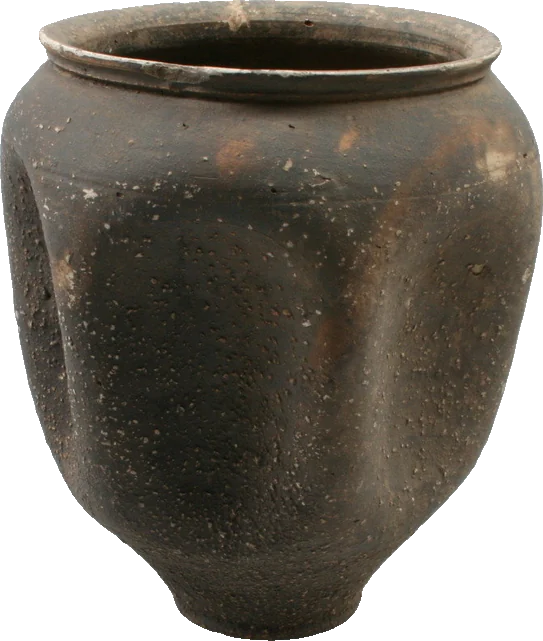 Grey beaker with pinched-in sidesA.D. 100–200
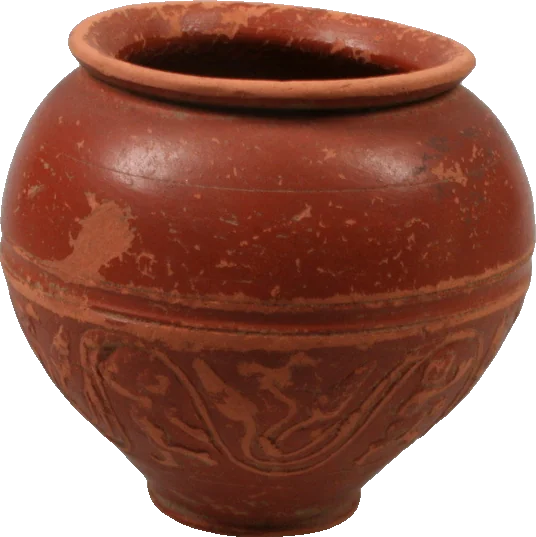 Terra sigillata pot with relief decorationA.D. 100–120
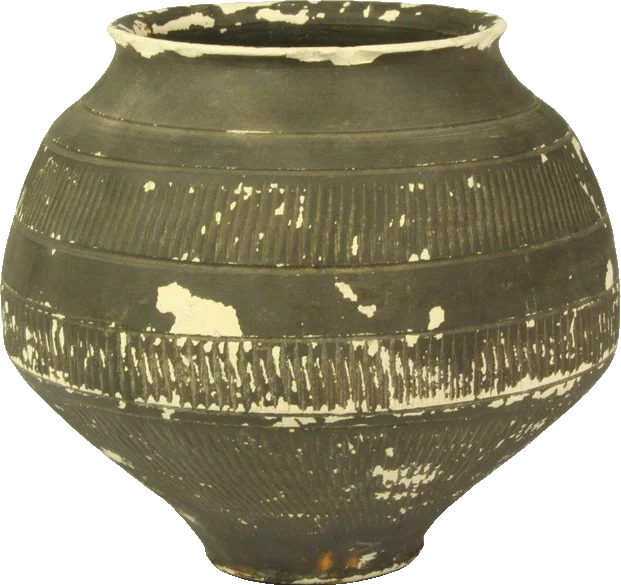 Beaker with a glossy coatA.D. 150–250
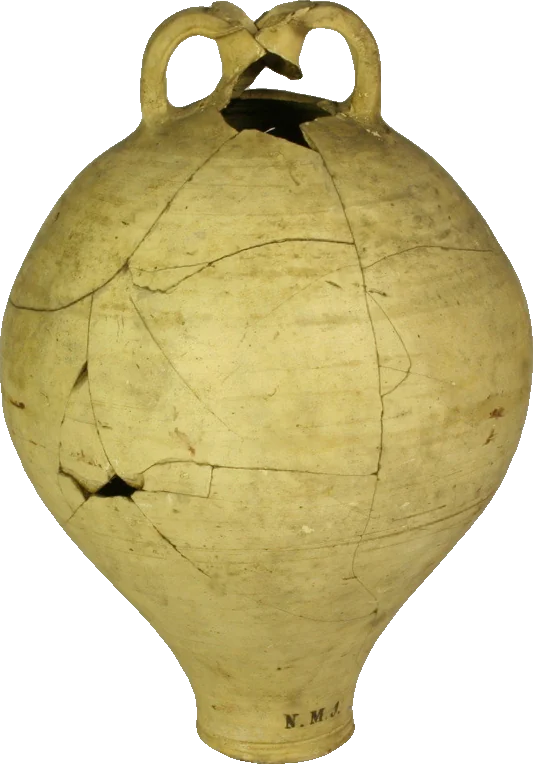 Tall pear-shaped jug-amphoraA.D. 150–200
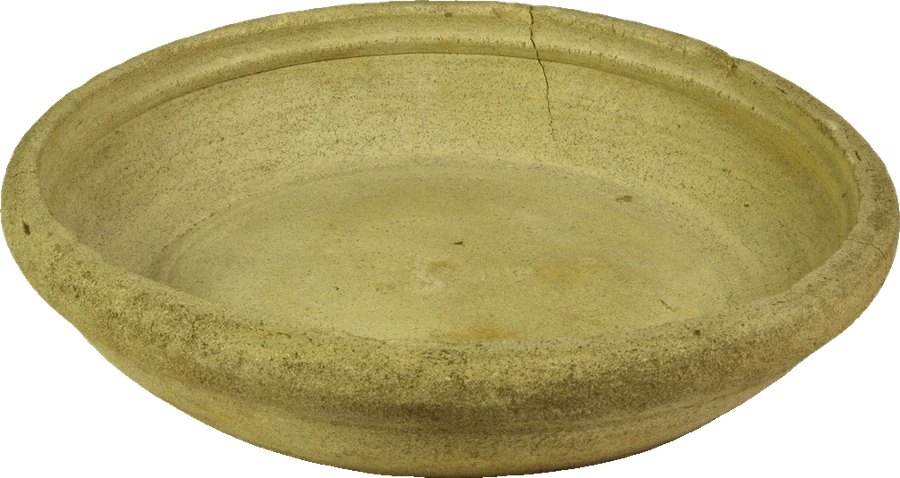 Light grey dishA.D. 175–325
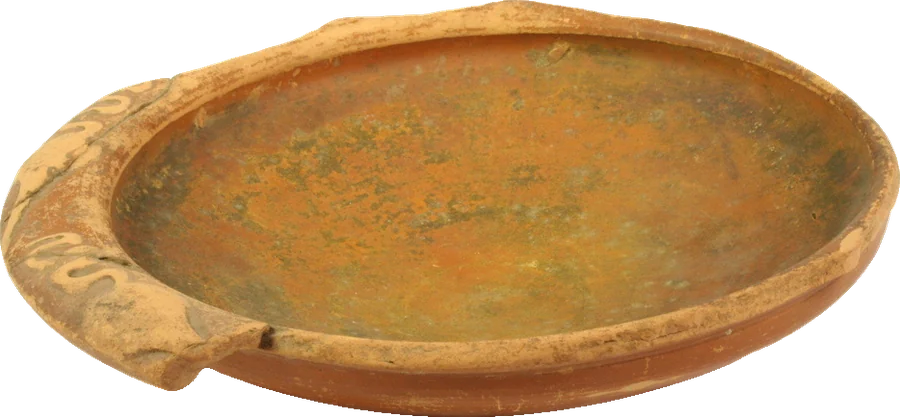 Terra sigillata bowlA.D. 175–200
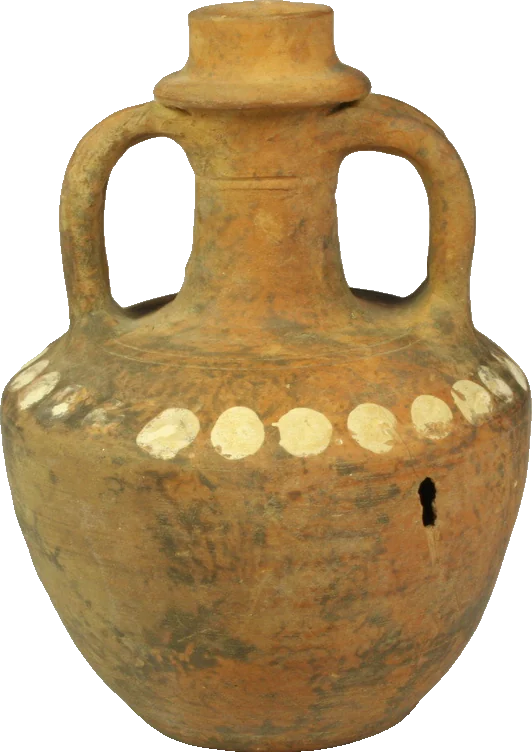 Two-handled jar with a wreath of white spotsA.D. 300–400
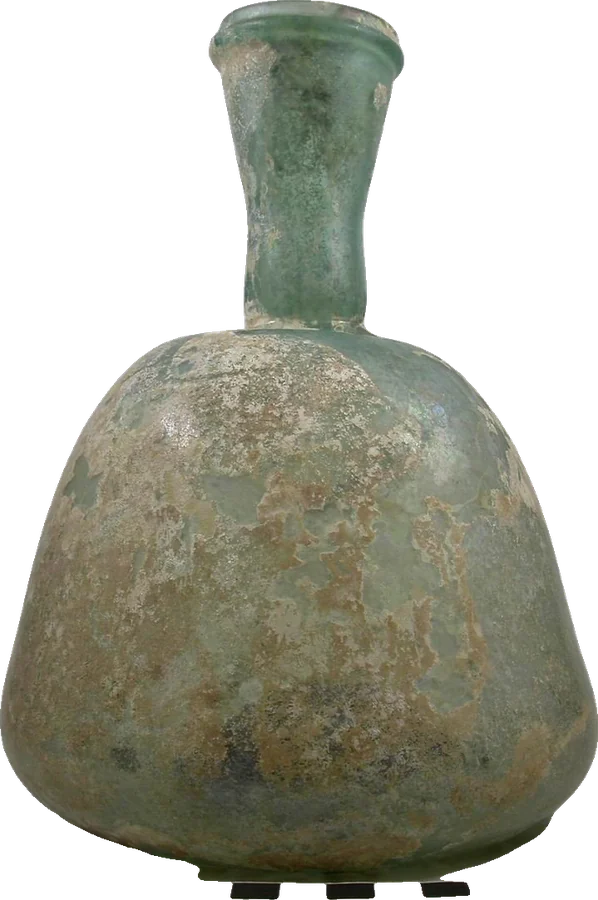 Blown glass bottleA.D. 300–400