Achaemenid · Rare find
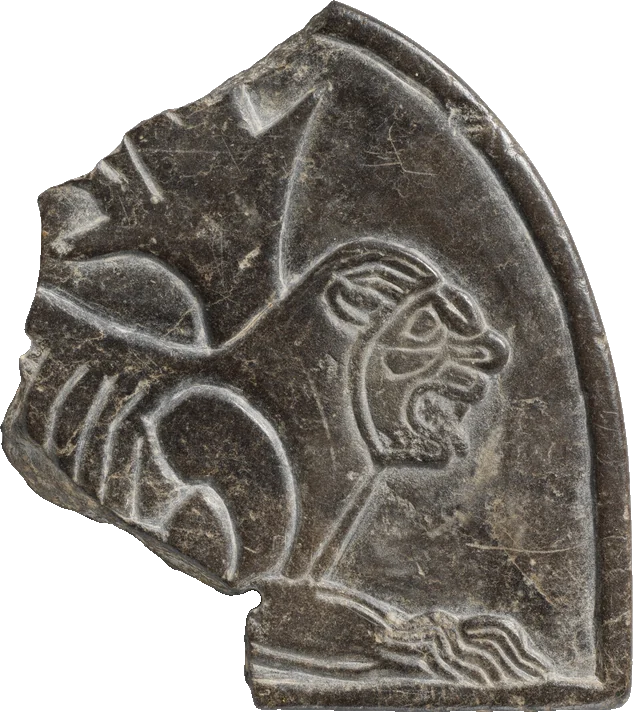
Plaque with the figure of a lion
This object was really found at Qasr-i Abu Nasr by The Metropolitan Museum of Art's expedition. Today it is in The Metropolitan Museum of Art in New York.
What is it?
Relief. A relief is a carving that stands out from a flat background. Temples, palaces and tombs were covered with them, often painted. Source
Stone. Carved or polished stone, from soft travertine to hard gemstones.
Museum record
- Object
- Relief
- Culture
- Achaemenid
- Date
- ca. 6th–5th century BCE
- Material
- Limestone, black
- Findspot
- Qasr-i Abu Nasr, Iran
- Size
- 2 1/2 × 2 3/4 in. (6.4 × 7 cm)
- Museum
- The Metropolitan Museum of Art, New York
- Number
- 34.107.62
- Credit
- Rogers Fund, 1934
Photo and record: The Metropolitan Museum of Art, Open Access (public domain, CC0), copied 2026-11-12. Background removed from the photo. Region: Iran.
More about this object
A clue in the mystery of Qasr-i Abu Nasr
What was the small burned fortress near Shiraz? In chapter 2, "The doorways that fooled the diggers", this object is the clue: An Achaemenid black limestone lion plaque of the 6th to 5th century BCE found at Qasr-i Abu Nasr. Its record does not say whether it came from Persepolis. Read the mystery