
Objects
Seals and sealings
Carved objects pressed into clay to mark ownership or close a container, and the clay they left.
A seal is a small carved object: a stamp, a cylinder rolled across the clay, or the flat base of a scarab. Pressed into soft clay, it left a picture or a name.
Clay lumps with seal impressions, called sealings, closed jars, boxes, doors and documents. Archaeologists find them where goods were stored and sent, and they show who was in charge.
Read more: Cylinder seal on Wikipedia
In the game
Seals turn up at the Egyptian sites, and clay sealings from Qasr-i Abu Nasr in Iran still show the impressions of Sasanian seals.
Real examples from the game
9 objects in Digopolis, each with its museum record. Oldest first.
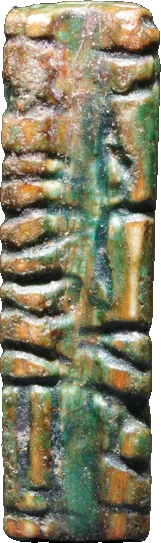 Cylinder seal of Senwosret IIIca. 1878–1840 B.C.
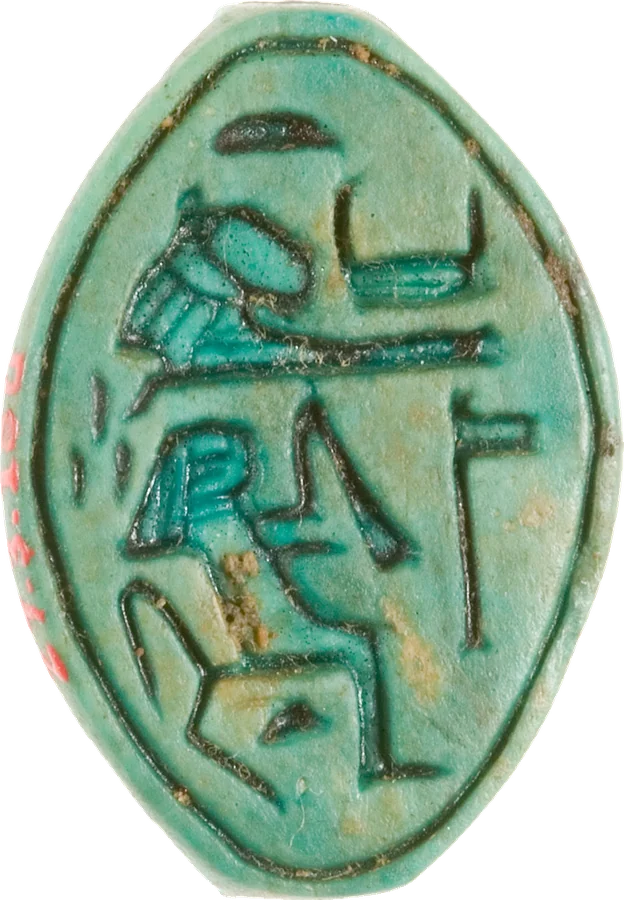 Cowroid Seal Amulet Inscribed for the God's Wife Hatshepsutca. 1473–1458 BCE
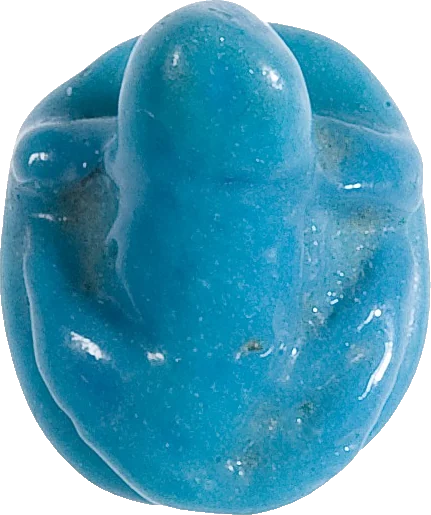 Frog Seal Amulet with a Sa Hieroglyph on the Baseca. 1386–1347 BCE
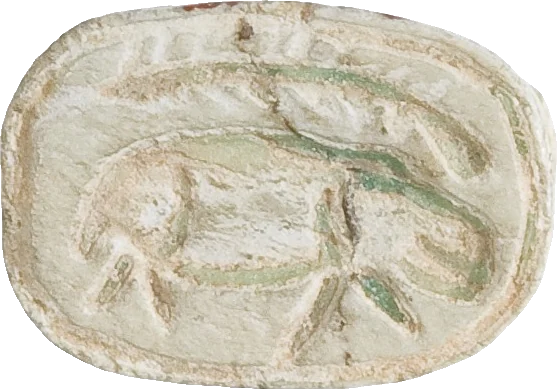 Seal Amulet Decorated with a Hippopotamusca. 1386–1347 BCE
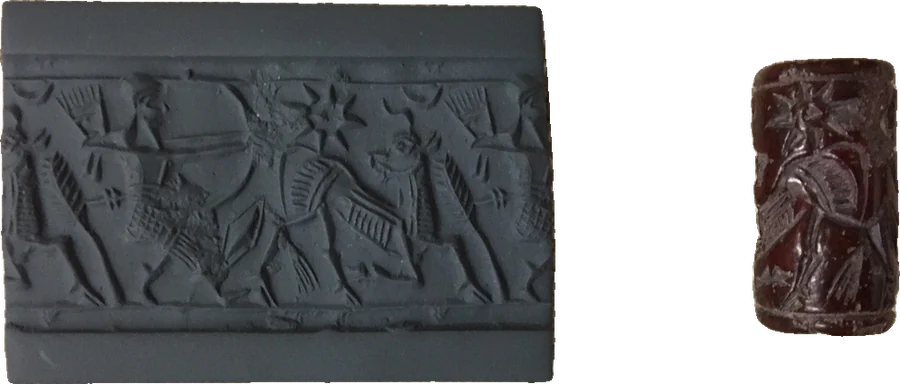 Cylinder seal with hunting sceneca. 9th–8th century BCE
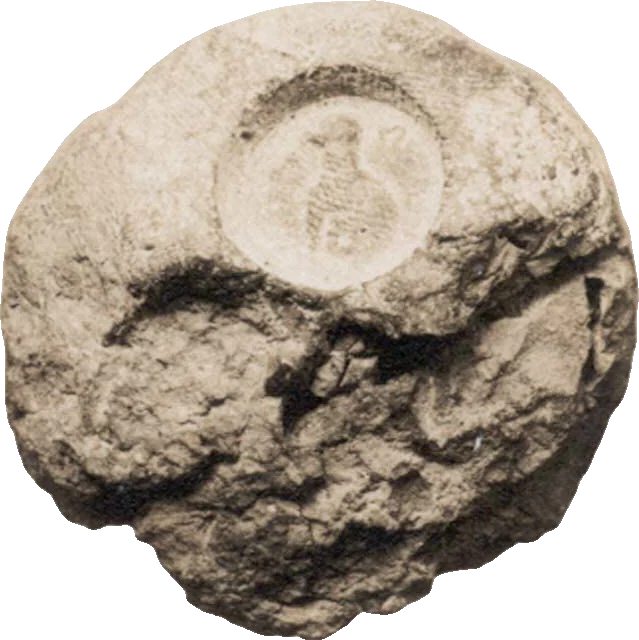 Sealingca. 7th century CE
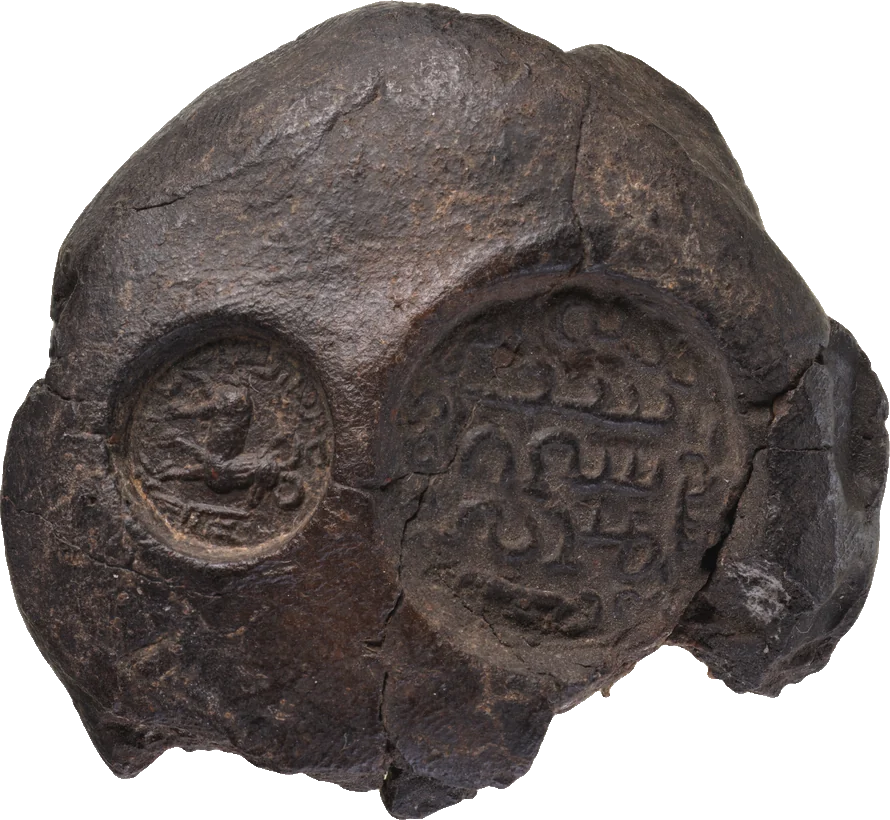 Sealingca. 7th century CE
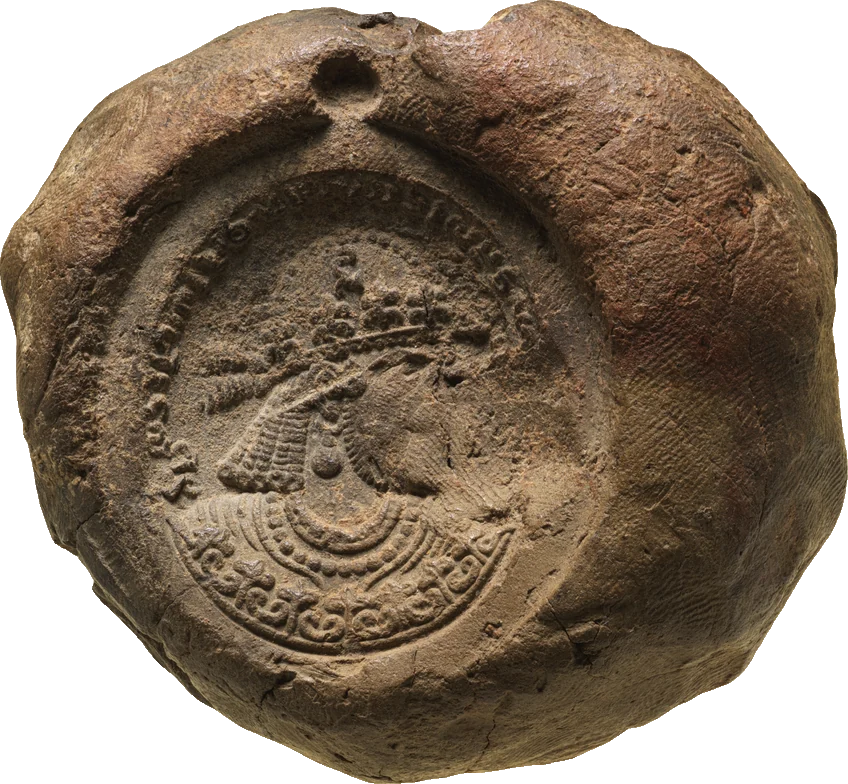 Sealingca. 7th century CE
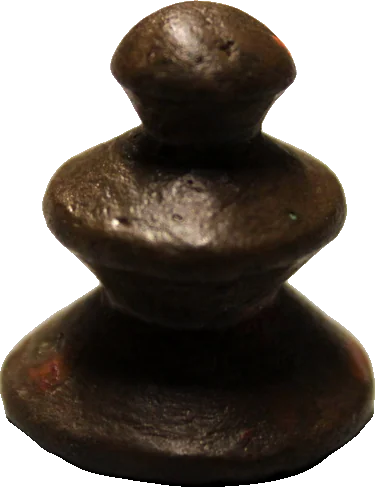 Seal9th–11th century
Related words
Dig real sites layer by layer, sieve the soil, mend and date your finds, and build your own museum.
Play Digopolis