
Objects
Scarab
A small Egyptian object in the shape of a dung beetle, often used as an amulet or a seal.
Ancient Egyptians linked the scarab beetle with the sun god Khepri, because the beetle rolls a ball of dung the way the god was thought to roll the sun across the sky.
Scarabs were carved or molded in stone and faience. The flat underside often carries a name, a title or a design, so many scarabs could be pressed into clay as seals.
Read more: Scarab (artifact) on Wikipedia
In the game
Scarabs are among the first finds at Lisht and Deir el-Bahri. Silhouette Match makes you tell their shapes apart.
Real examples from the game
9 objects in Digopolis, each with its museum record. Oldest first.
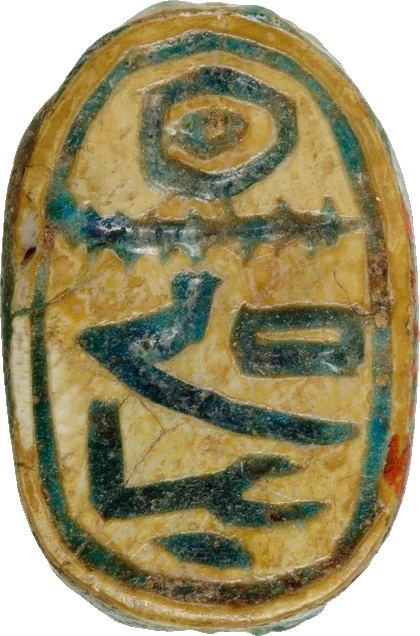 Scarab of Amenemhat IIIca. 1859–1813 B.C.
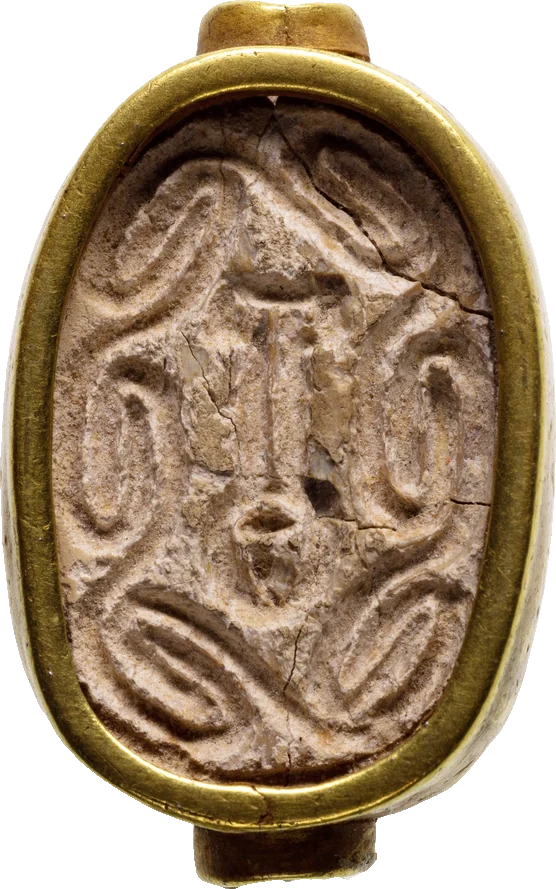 Mounted Scarab Incised with Nefer Sign in Scroll Borderca. 1850–1640 B.C.
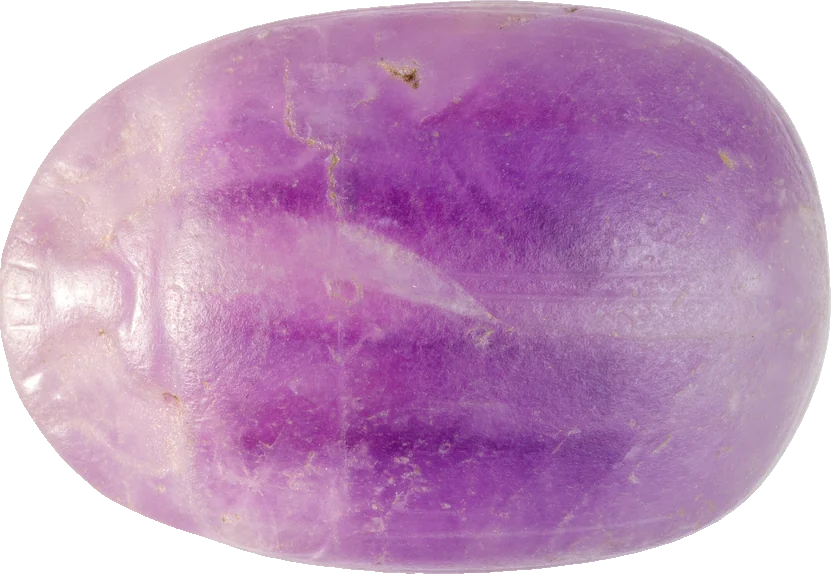 Uninscribed Scarabca. 1850–1700 B.C.
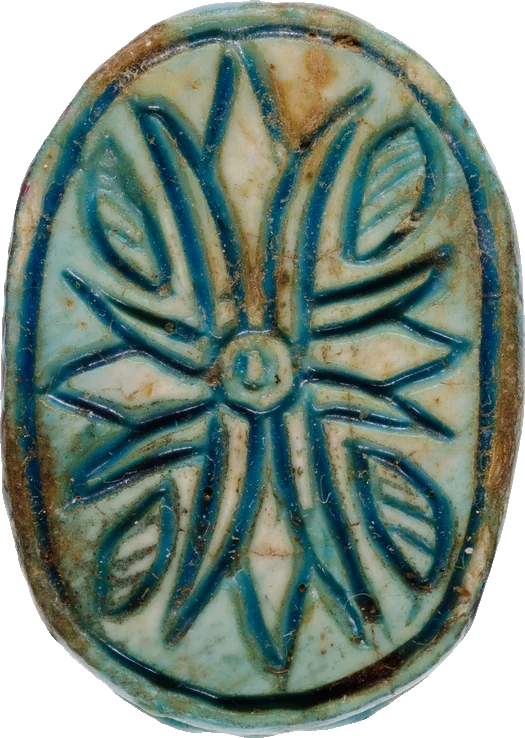 Scarab with Crucifom Lotus Flower Decorationca. 1770–1670 B.C.
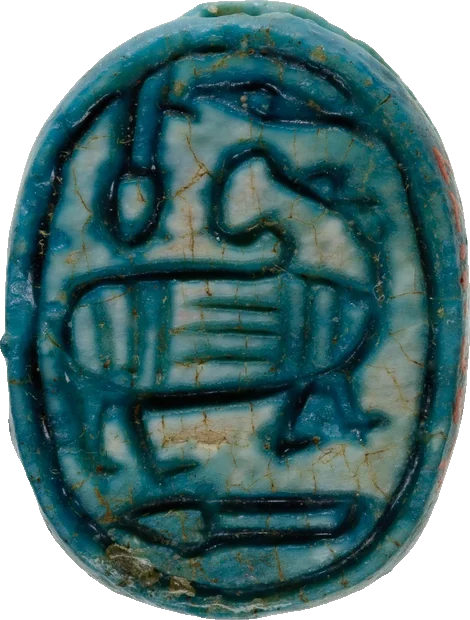 Scarab with the Representation of a Hippoca. 1740–1640 B.C.
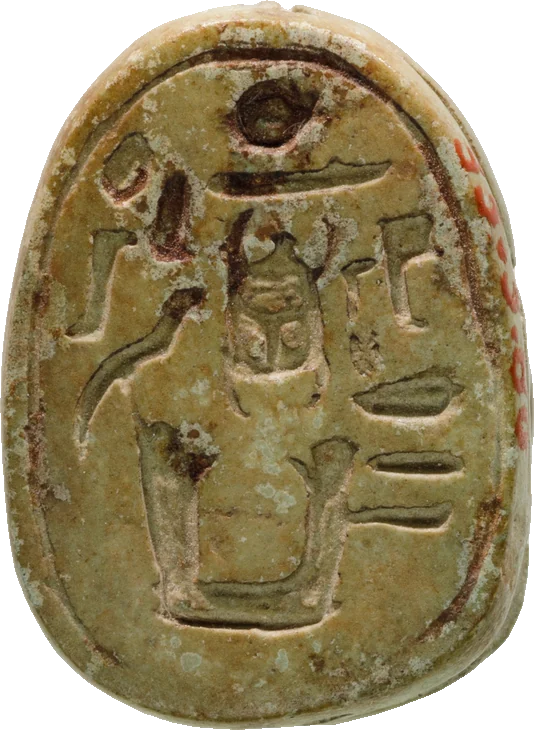 Scarab with the Throne Name of Thutmose Ica. 1504–1447 BCE
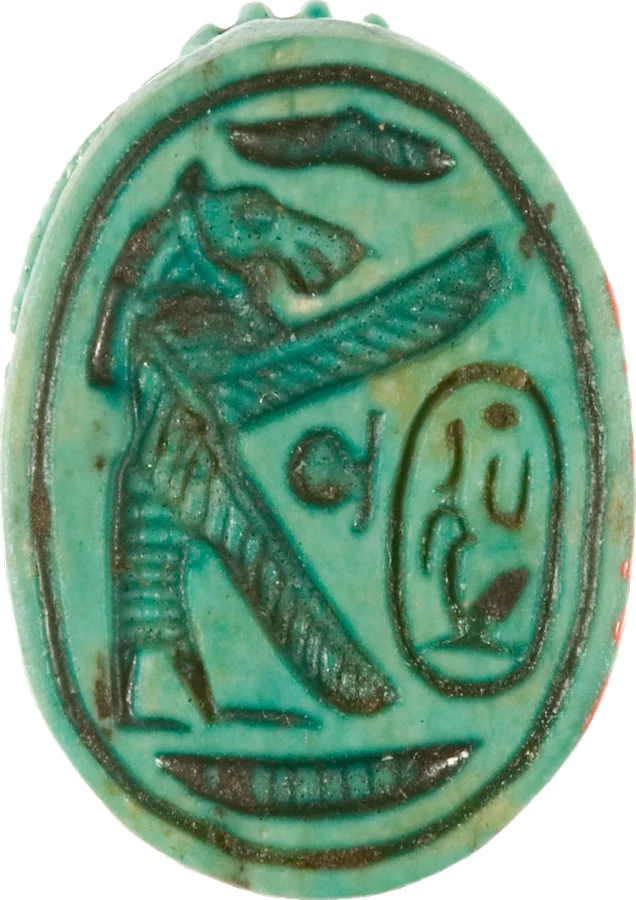 Scarab with Lion-headed Goddess Protecting Maatkareca. 1473–1458 BCE
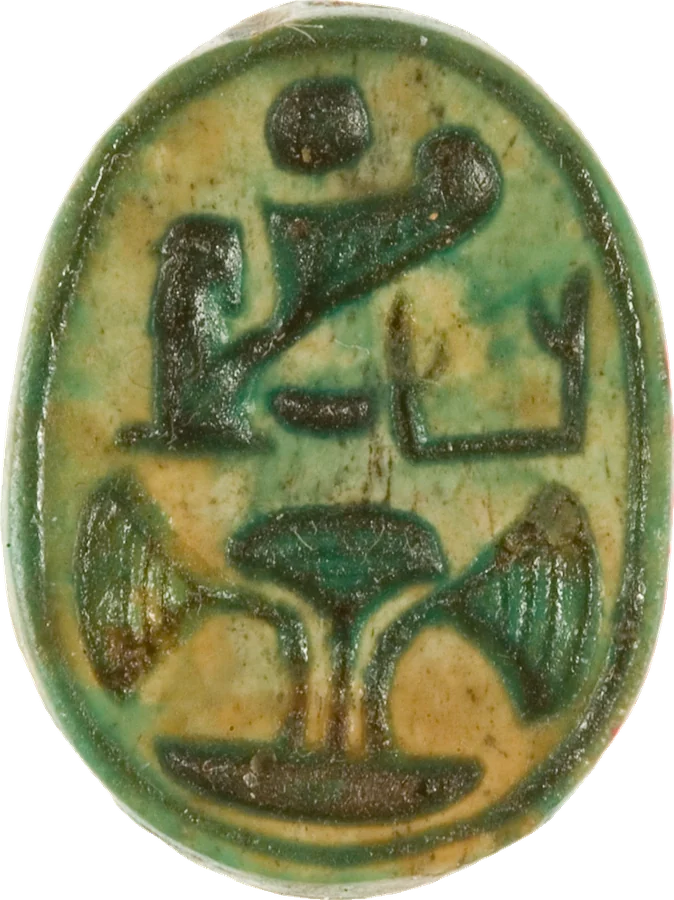 Scarab Inscribed with the Name Maatkare Over a Papyrus Thicketca. 1473–1458 BCE
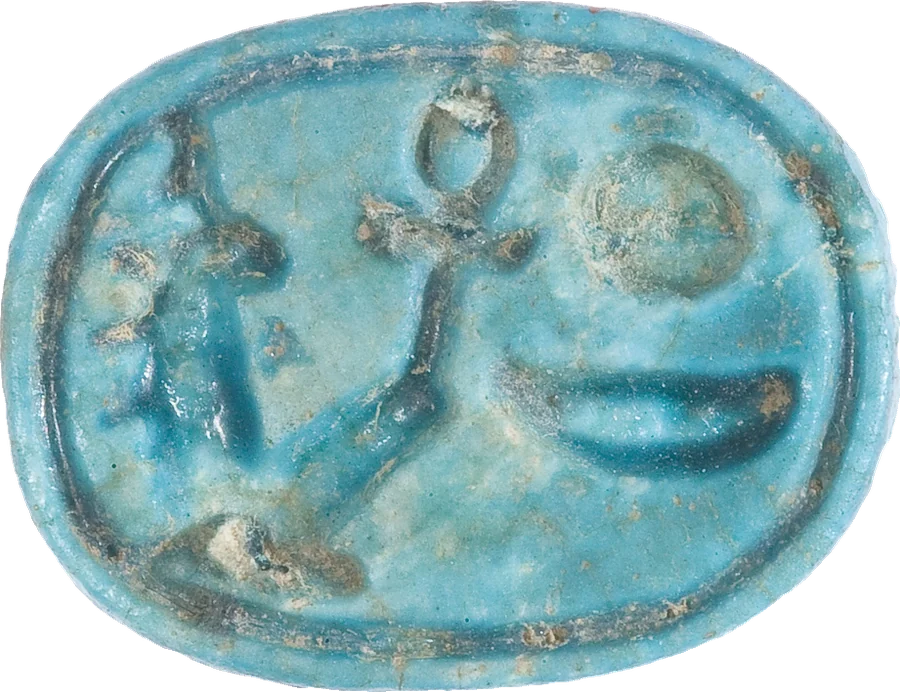 Scarab with the Throne Name of Amenhotep IIIca. 1386–1347 BCE
Related words
AmuletA small object worn for protection or luck, often in the form of a god, an animal or a symbol.Seals and sealingsCarved objects pressed into clay to mark ownership or close a container, and the clay they left.Egyptian faienceA glazed material made mostly of crushed quartz, usually bright blue or green. Not clay pottery.
Dig real sites layer by layer, sieve the soil, mend and date your finds, and build your own museum.
Play Digopolis