
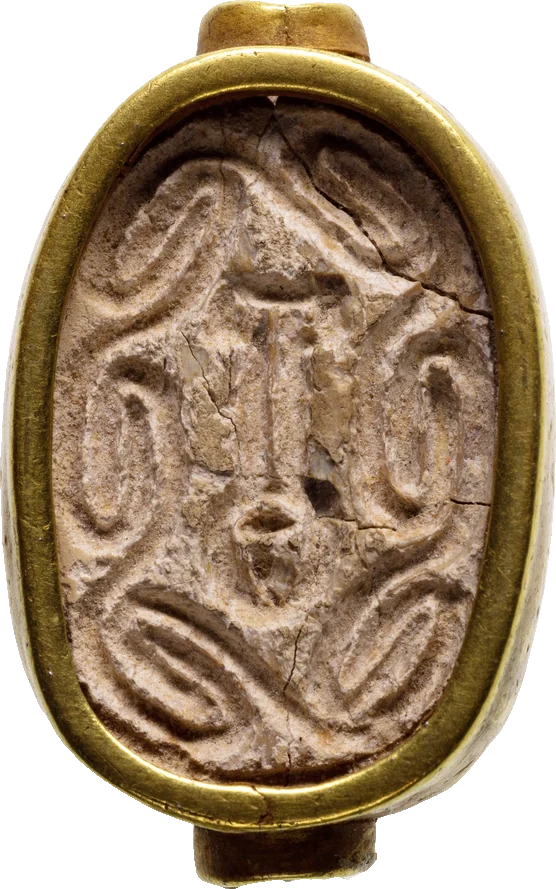
Egypt, Middle Kingdom, late Dynasty 12–Dynasty 13 · Important find
Mounted Scarab Incised with Nefer Sign in Scroll Border
This object was really found at Lisht by The Metropolitan Museum of Art's expedition. Today it is in The Metropolitan Museum of Art in New York.
What is it?
Scarab. A small Egyptian object in the shape of a dung beetle, often used as an amulet or a seal. Read more
Stone. Carved or polished stone, from soft travertine to hard gemstones.
Metal. Gold, silver, copper or bronze.
Museum record
- Object
- Scarab, nefer, scrolls, ring mounting
- Culture
- Egypt, Middle Kingdom, late Dynasty 12–Dynasty 13
- Date
- ca. 1850–1640 B.C.
- Material
- Steatite, gold
- Findspot
- MMA excavations, Cemetery, Lisht North, Memphite Region, Egypt
- Size
- L. 2.2 × W. 1.4 × H. 0.8 cm (7/8 × 9/16 × 5/16 in.)
- Museum
- The Metropolitan Museum of Art, New York
- Number
- 09.180.1227
- Credit
- Rogers Fund, 1909
Photo and record: The Metropolitan Museum of Art, Open Access (public domain, CC0), copied 2026-11-12. Background removed from the photo. Region: Nile Valley.
More about this object
Culture
Egypt, Middle Kingdom: more objects from the same culture or period, with what we know about it.
More from Lisht
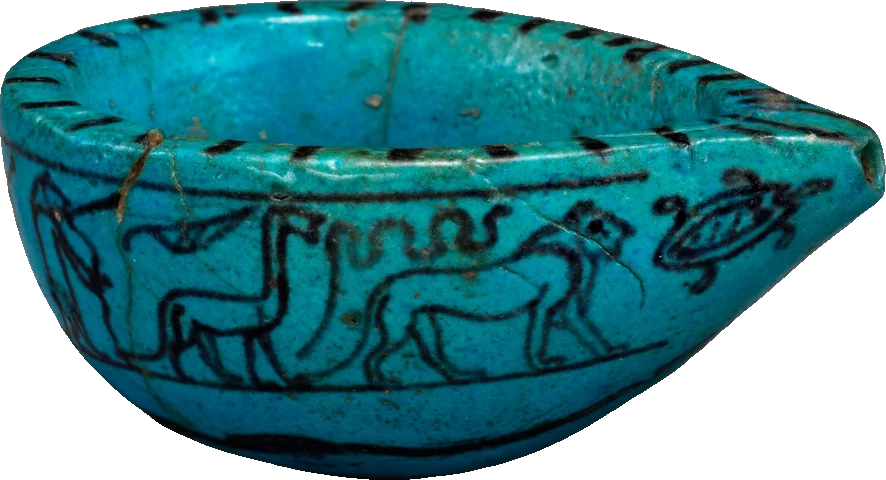 Feeding Cupca. 1850–1700 B.C.
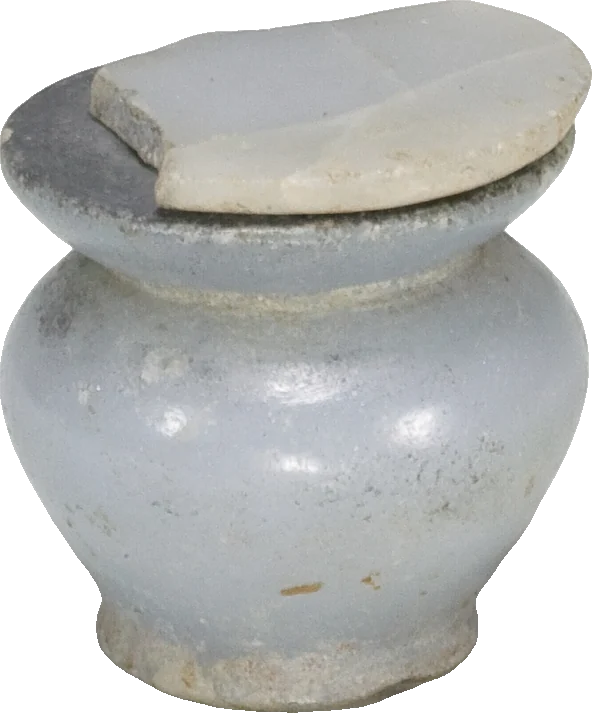 Kohl jarca. 1850–1640 B.C.
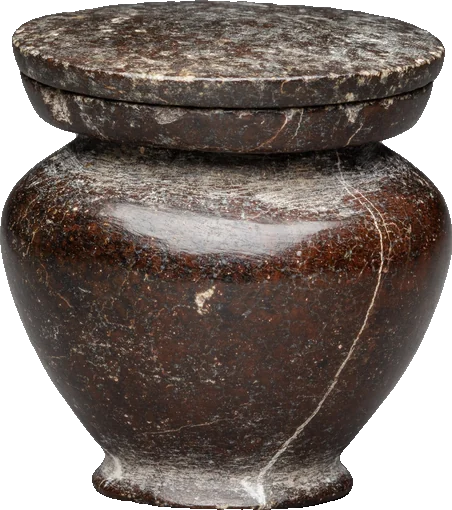 Kohl jarca. 1850–1640 B.C.
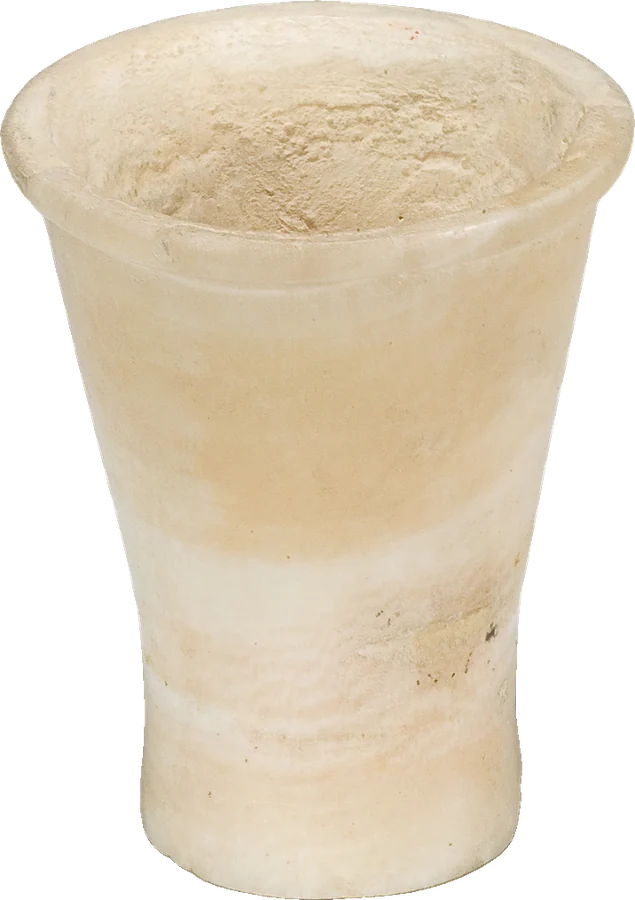 Miniature Ointment jarca. 1850–1775 B.C.
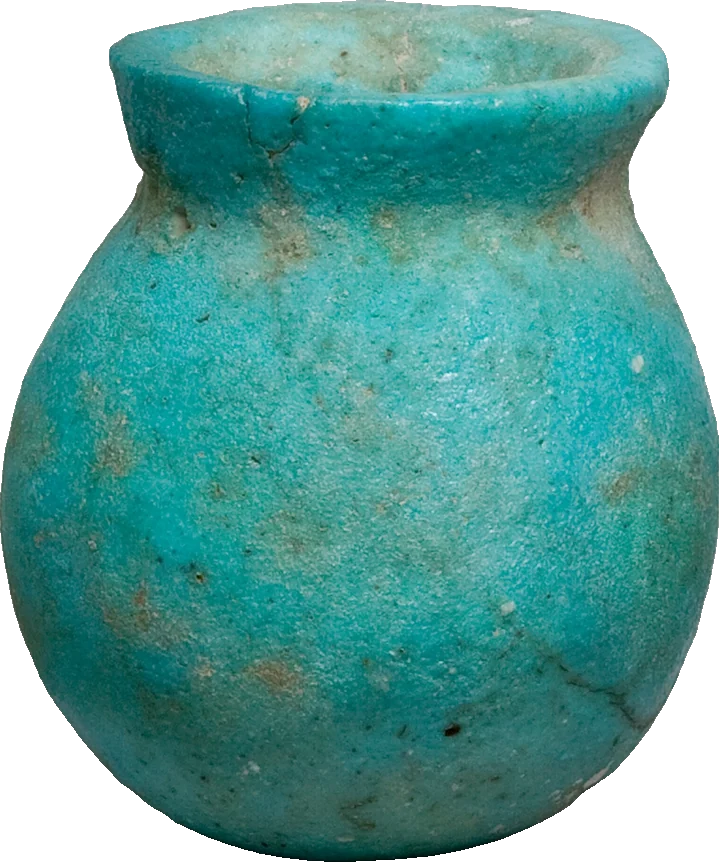 Toilet vaseca. 1850–1775 B.C.
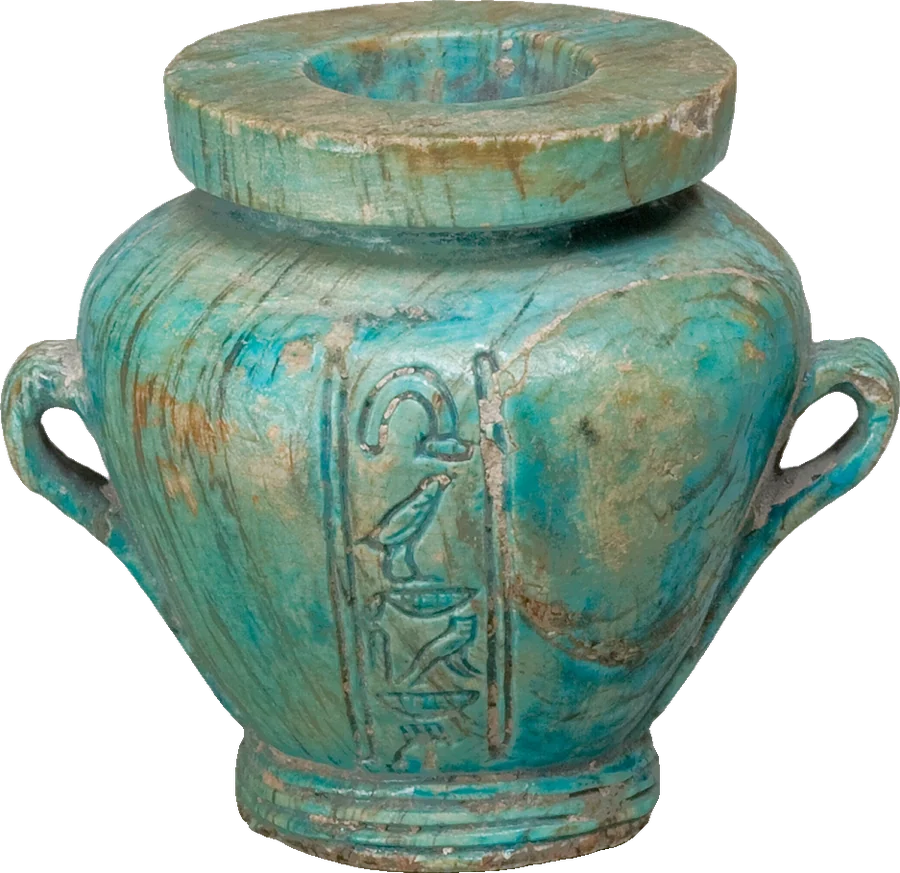 Toilet vase with two handles, inscribed for the Seal Bearer Kemesca. 1850–1775 B.C.
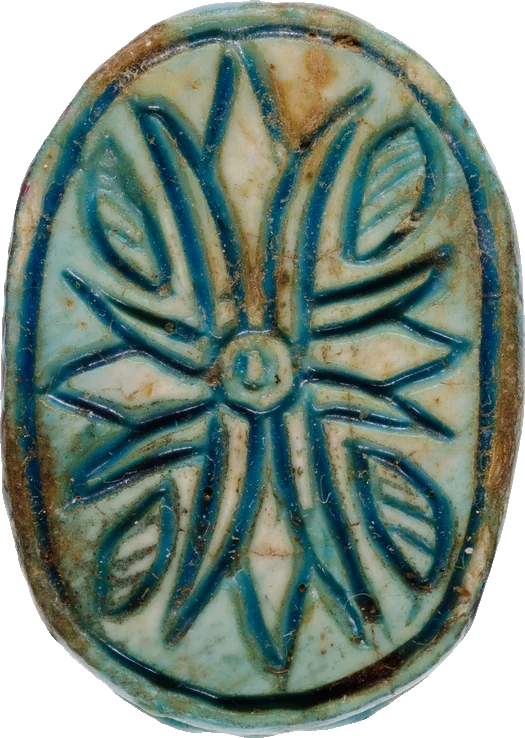 Scarab with Crucifom Lotus Flower Decorationca. 1770–1670 B.C.
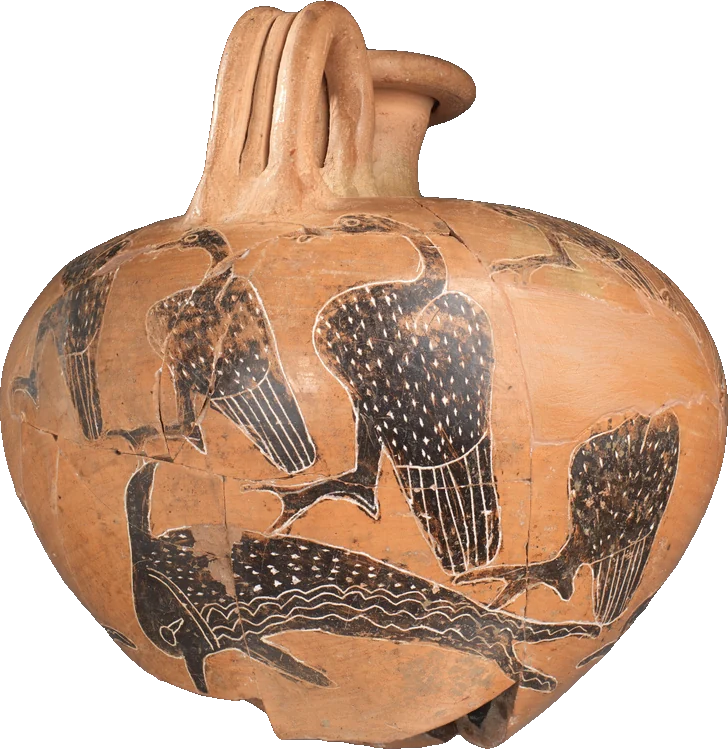 Jug Decorated with Dolphins and Birdsca. 1750–1550 B.C.