
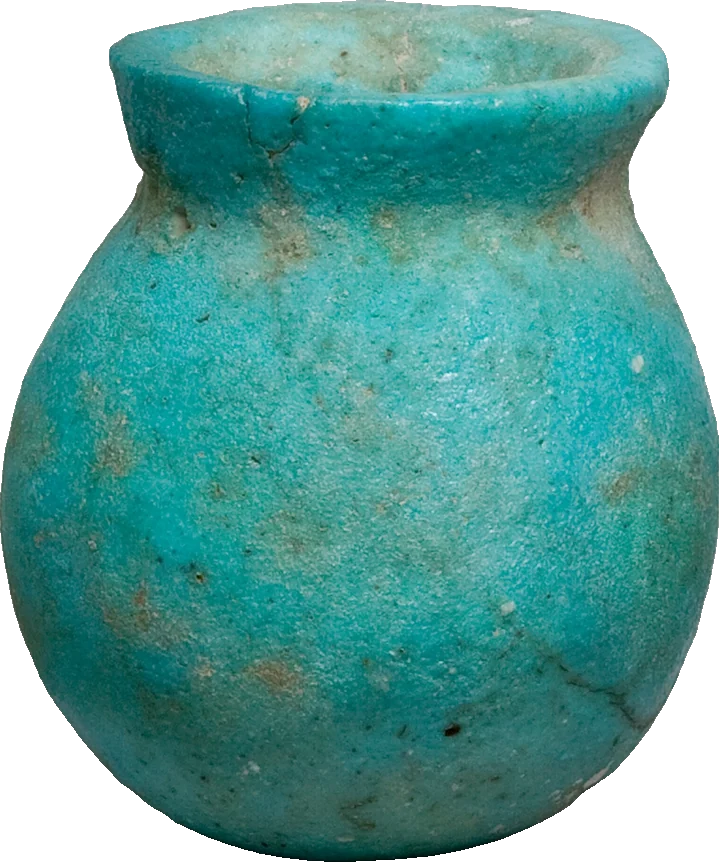
Egypt, Middle Kingdom, Dynasty 12, late–early 13 · Find
Toilet vase
This object was really found at Lisht by The Metropolitan Museum of Art's expedition. Today it is in The Metropolitan Museum of Art in New York.
What is it?
Ointment and cosmetic jar. A small container for perfumed oil, ointment or make-up. Stone and glass kept these precious contents cool and sealed. Source
Egyptian faience. A glazed material made mostly of crushed quartz, usually bright blue or green. Not clay pottery. Read more
Faience. Glazed quartz paste, often bright blue or green.
Museum record
- Object
- Toilet vase
- Culture
- Egypt, Middle Kingdom, Dynasty 12, late–early 13
- Date
- ca. 1850–1775 B.C.
- Material
- Faience
- Findspot
- MMA excavations, so-called "toilet basket I," not with burial, cemetery west of pyramid of Amenemhat I, Lisht North, Memphite Region, Egypt
- Size
- h. 3.7 cm (1 7/16 in); diam. 3.3 cm (1 5/16 in)
- Museum
- The Metropolitan Museum of Art, New York
- Number
- 44.4.1
- Credit
- Rogers Fund, 1944
Photo and record: The Metropolitan Museum of Art, Open Access (public domain, CC0), copied 2026-11-12. Background removed from the photo. Region: Nile Valley.
More from Lisht
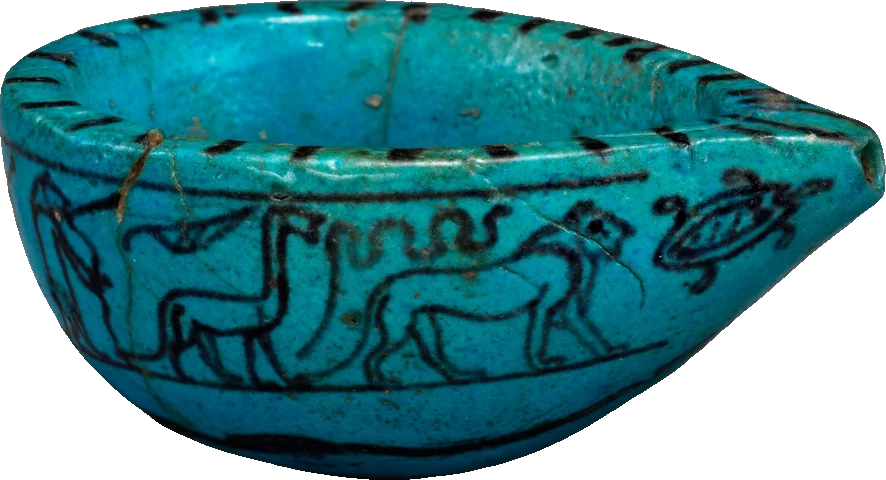 Feeding Cupca. 1850–1700 B.C.
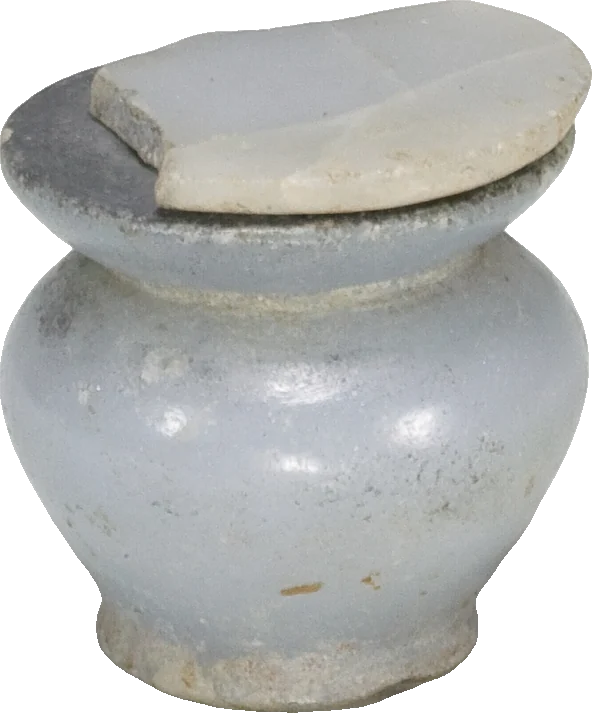 Kohl jarca. 1850–1640 B.C.
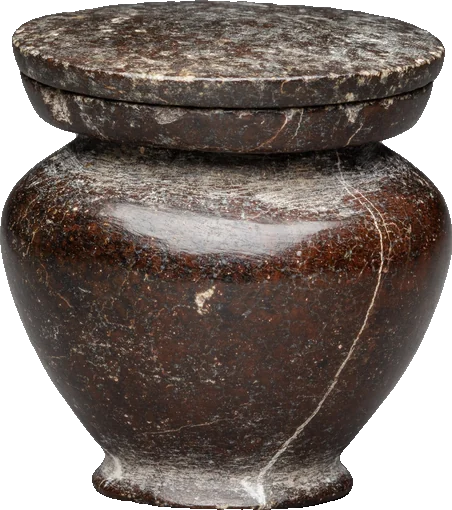 Kohl jarca. 1850–1640 B.C.
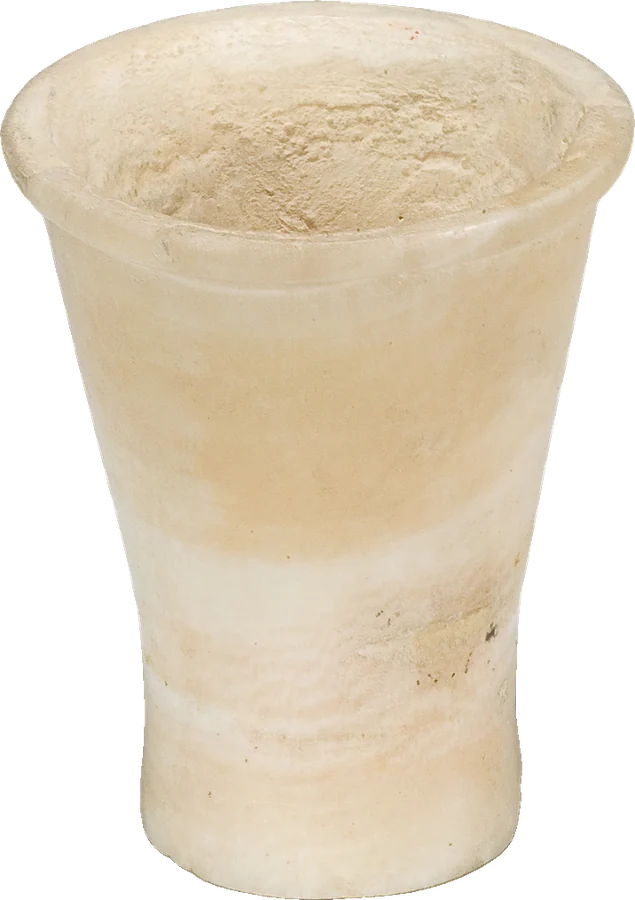 Miniature Ointment jarca. 1850–1775 B.C.
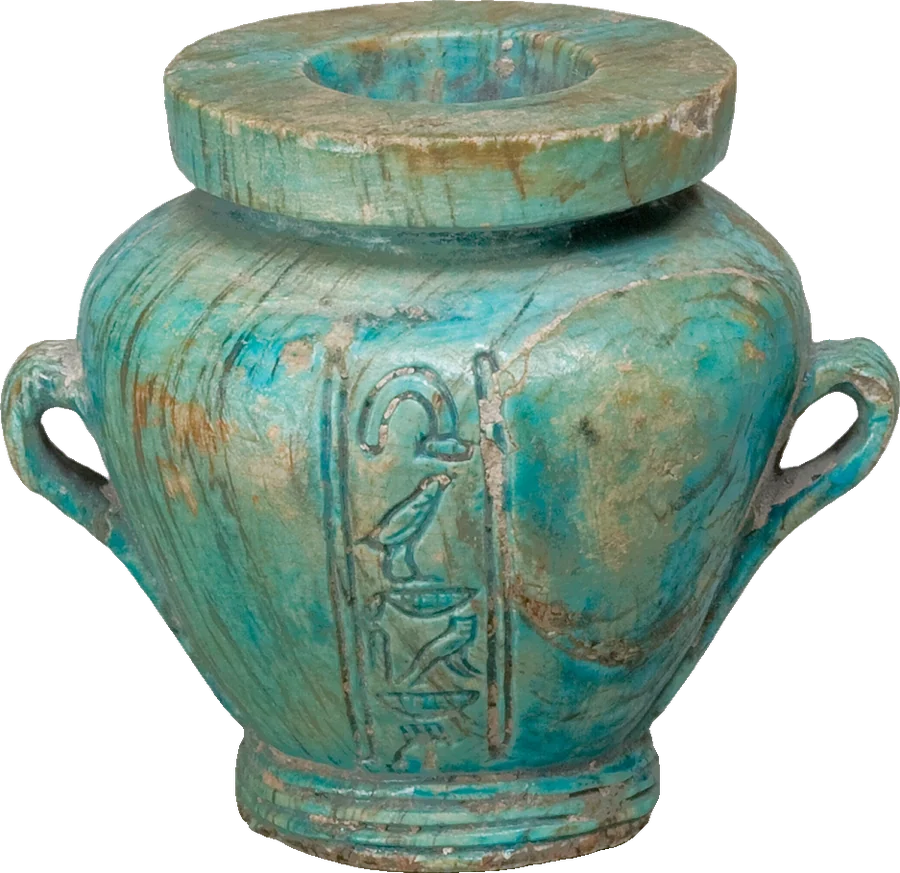 Toilet vase with two handles, inscribed for the Seal Bearer Kemesca. 1850–1775 B.C.
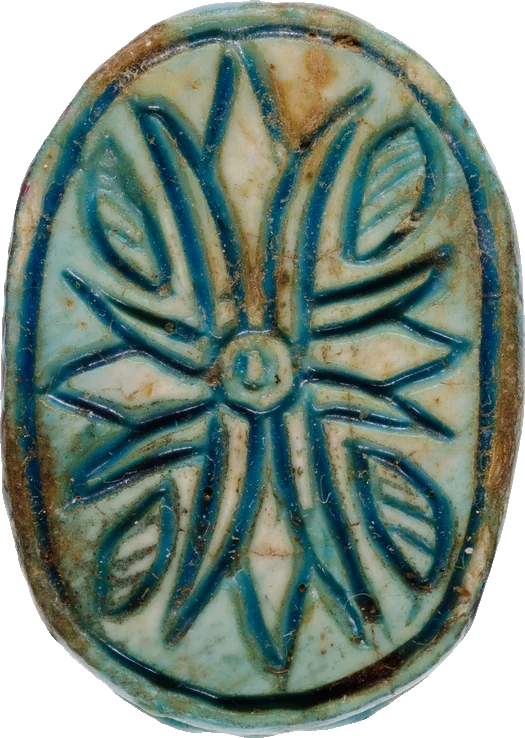 Scarab with Crucifom Lotus Flower Decorationca. 1770–1670 B.C.
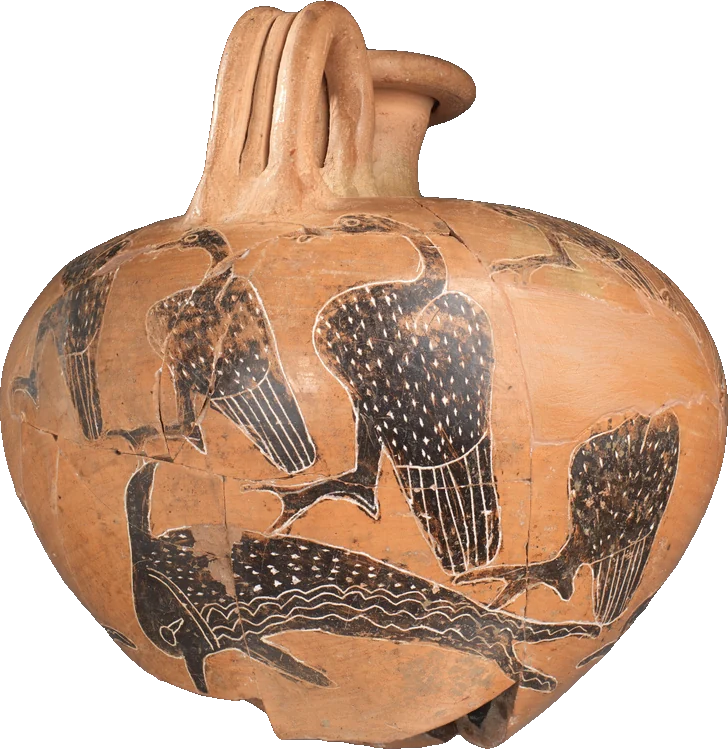 Jug Decorated with Dolphins and Birdsca. 1750–1550 B.C.
 Scarab with the Representation of a Hippoca. 1740–1640 B.C.