
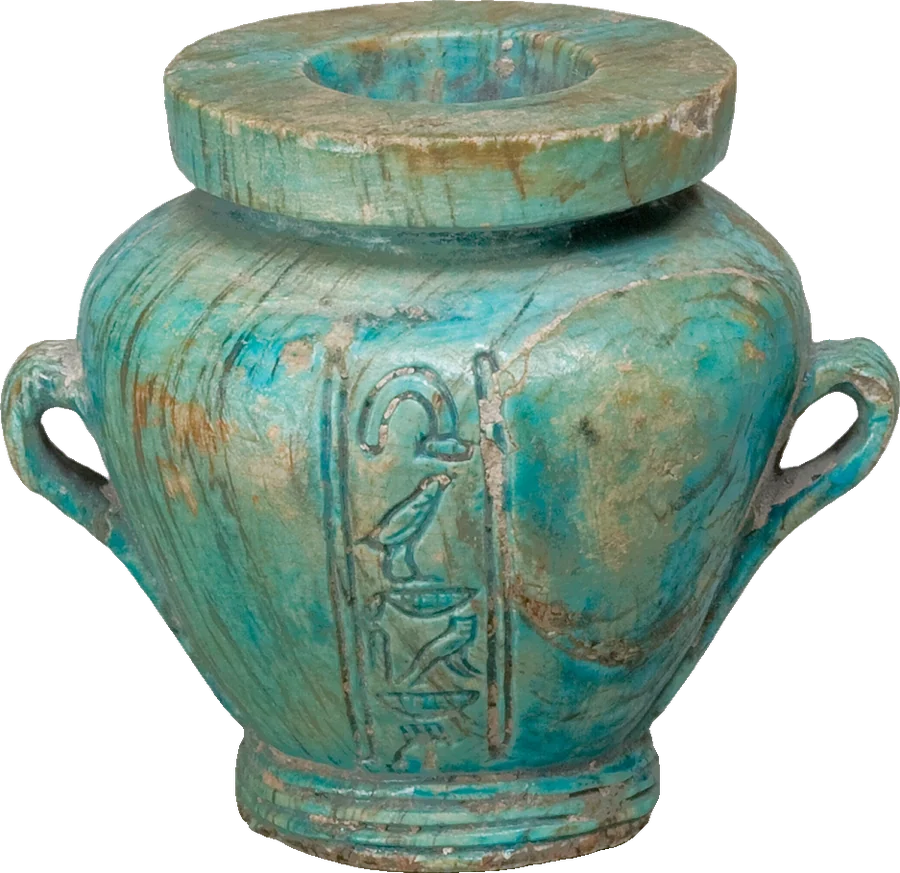
Egypt, Middle Kingdom, Dynasty 12, late–early 13 · Important find
Toilet vase with two handles, inscribed for the Seal Bearer Kemes
This object was really found at Lisht by The Metropolitan Museum of Art's expedition. Today it is in The Metropolitan Museum of Art in New York.
What is it?
Ointment and cosmetic jar. A small container for perfumed oil, ointment or make-up. Stone and glass kept these precious contents cool and sealed. Source
Stone. Carved or polished stone, from soft travertine to hard gemstones.
Museum record
- Object
- Toilet vase
- Culture
- Egypt, Middle Kingdom, Dynasty 12, late–early 13
- Date
- ca. 1850–1775 B.C.
- Material
- Glazed steatite
- Findspot
- MMA excavations, so-called "toilet basket I," not with burial, cemetery west of pyramid of Amenemhat I, Lisht North, Memphite Region, Egypt
- Size
- h. 3.3 cm (1 5/16 in); diam. 3.1 cm (1 1/4 in)
- Museum
- The Metropolitan Museum of Art, New York
- Number
- 44.4.2
- Credit
- Rogers Fund, 1944
Photo and record: The Metropolitan Museum of Art, Open Access (public domain, CC0), copied 2026-11-12. Background removed from the photo. Region: Nile Valley.
More about this object
Culture
Egypt, Middle Kingdom: more objects from the same culture or period, with what we know about it.
More from Lisht
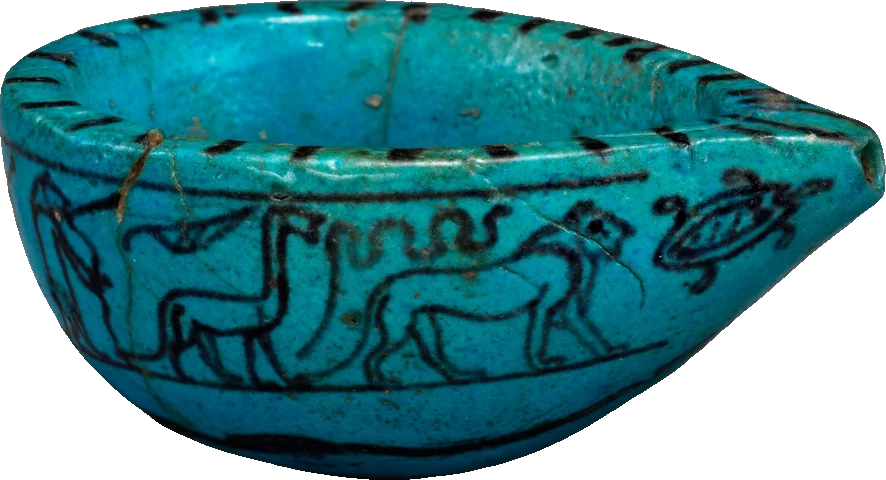 Feeding Cupca. 1850–1700 B.C.
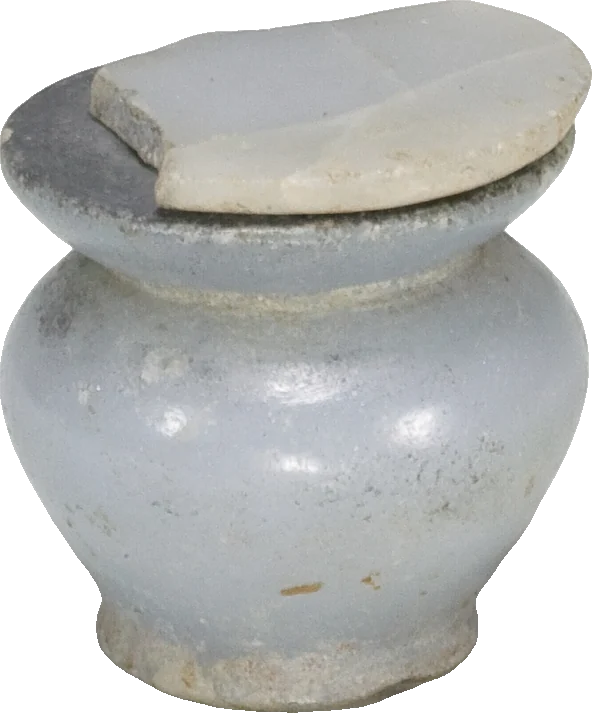 Kohl jarca. 1850–1640 B.C.
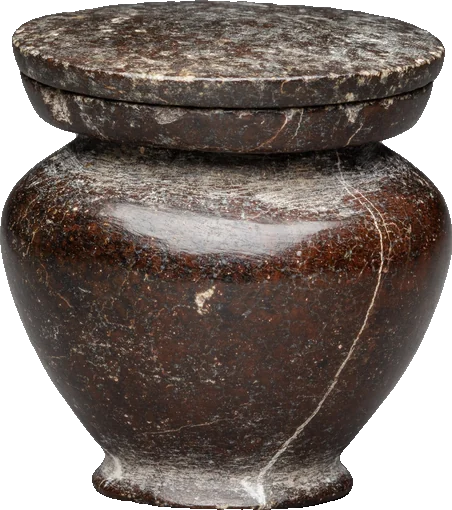 Kohl jarca. 1850–1640 B.C.
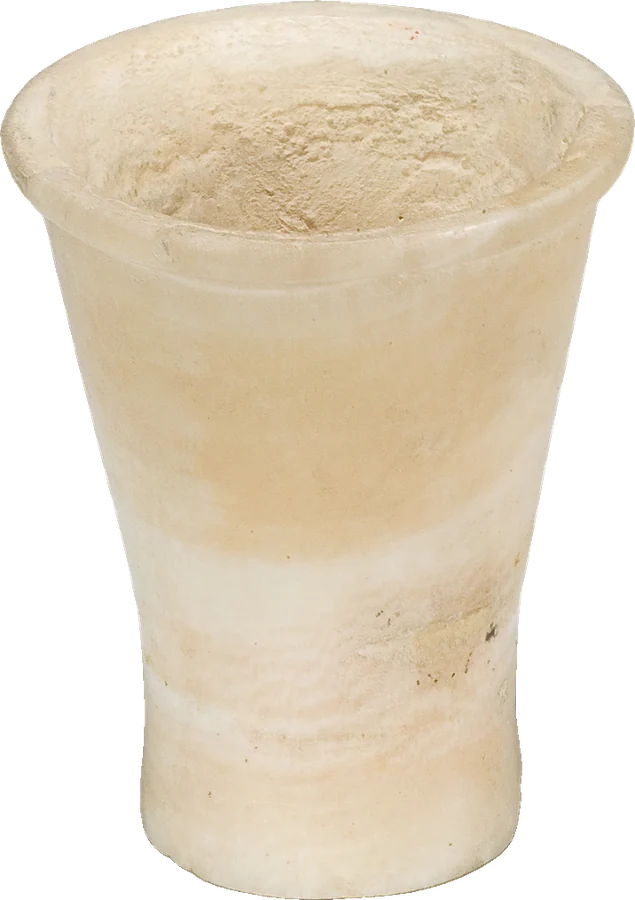 Miniature Ointment jarca. 1850–1775 B.C.
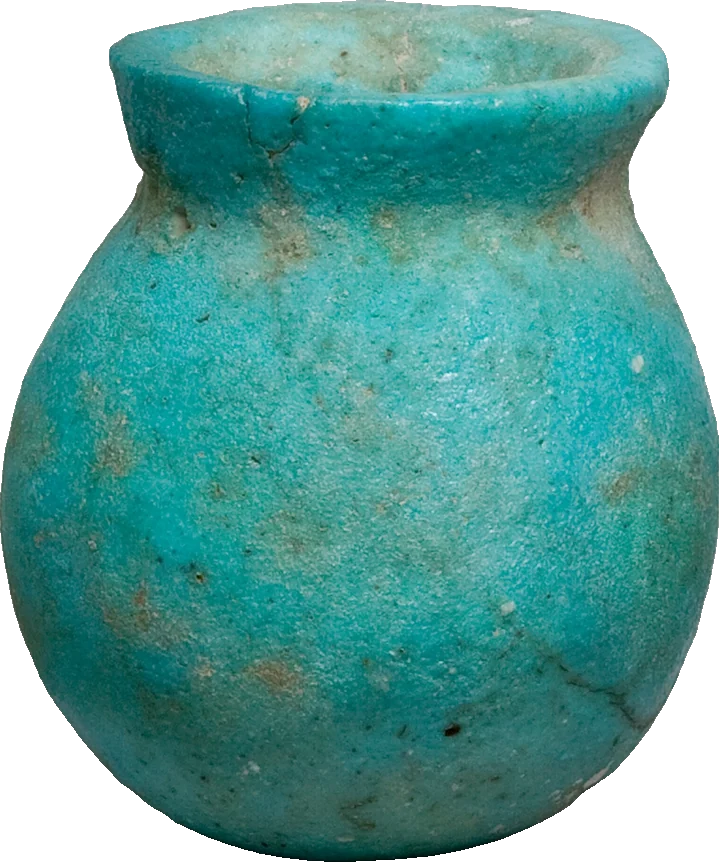 Toilet vaseca. 1850–1775 B.C.
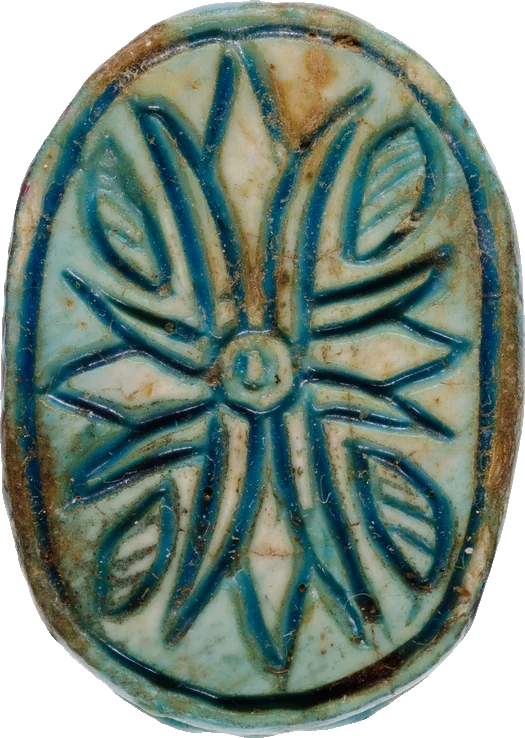 Scarab with Crucifom Lotus Flower Decorationca. 1770–1670 B.C.
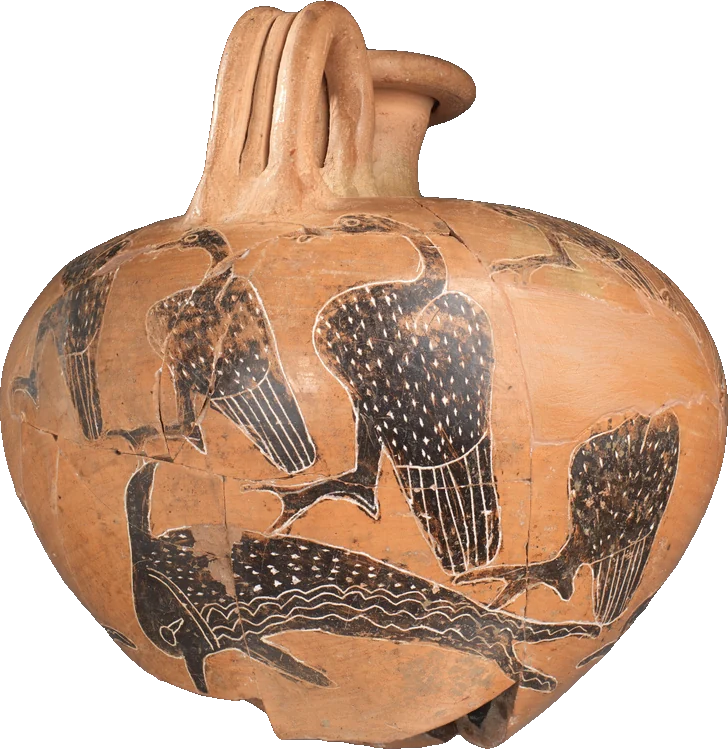 Jug Decorated with Dolphins and Birdsca. 1750–1550 B.C.
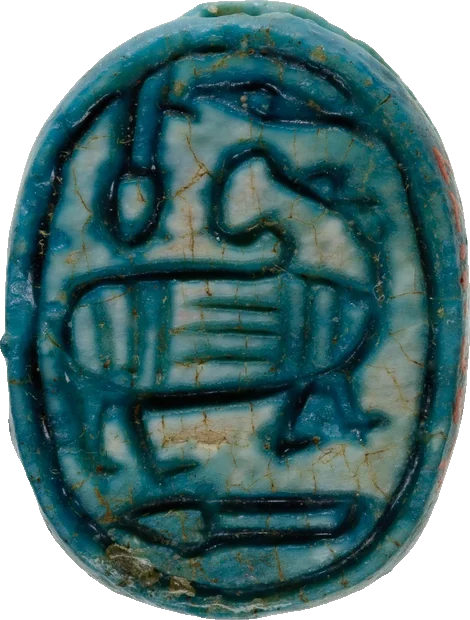 Scarab with the Representation of a Hippoca. 1740–1640 B.C.