
The mystery of Nimrud · Iraq
How was the great Assyrian capital of Kalhu forgotten?
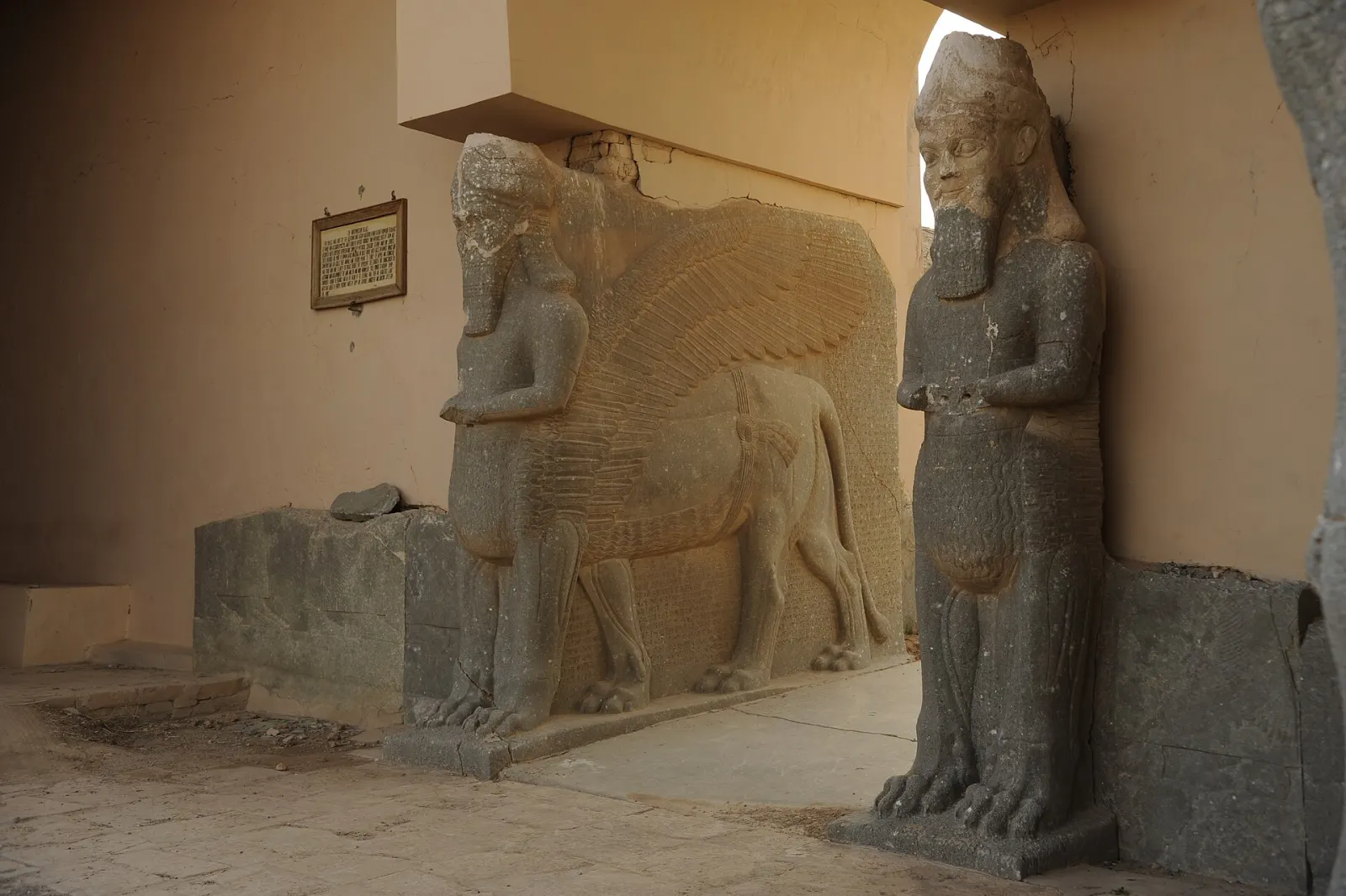
Nimrud, the ancient city of Kalhu on the Tigris River in northern Iraq, was the capital of the Assyrian empire in the 9th and 8th centuries BCE. Ashurnasirpal II built a great palace here. From 1949 to 1963 the British School of Archaeology in Iraq dug at Nimrud and found thousands of carved ivories. The Met helped pay for several seasons and received a share of the finds. Source
- 1. A king builds a capital
- 2. Treasures from far away
- 3. The capital moves away
- 4. The fall of Kalhu
- 5. The answer: the name was lost
Chapter 1
A king builds a capital
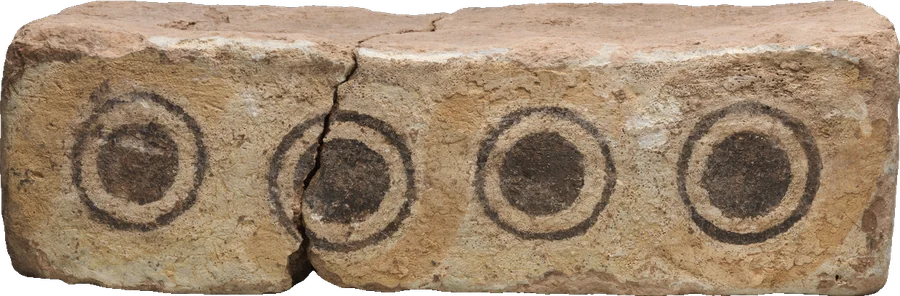
King Ashurnasirpal II, who ruled from 883 to 859 BCE, made Kalhu (today called Nimrud) the capital of Assyria and built the Northwest Palace. Its walls were lined with huge stone reliefs that were once brightly painted. Glazed bricks show the bold geometric patterns that decorated the palace.
The clue
Brick with guilloche design, ca. 9th century BCE. A 9th-century BCE glazed brick from Nimrud; The Met's essay names it as an example of the palace's geometric designs.
Sources for this chapter (2)
- metmuseum.org: "established Nimrud (ancient Kalhu) as his capital and undertook impressive building works, including the Northwest Palace."
- metmuseum.org: "The reliefs were originally brightly painted, and in some places traces of pigment still survive"
Chapter 2
Treasures from far away
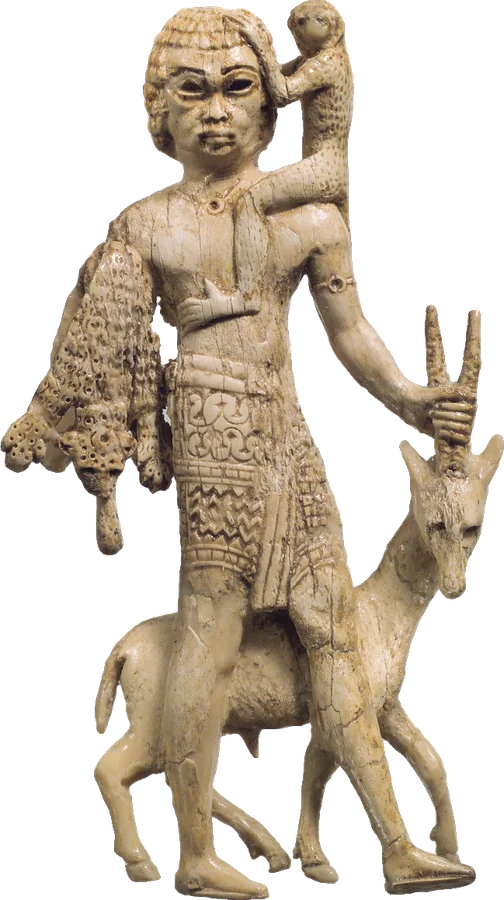
Nimrud is famous for its carved ivories: furniture inlays, small boxes and fittings for horses. Only a small share of them look Assyrian. Most are Phoenician or Syrian in style and may have reached the palaces as loot or as tribute.
The clue
Figure of a man with an oryx, a monkey, and a leopard skin, ca. 8th century BCE. An 8th-century BCE carved ivory from Nimrud; The Met's essay names it among the furniture inlays.
Sources for this chapter (2)
- metmuseum.org: "only a small proportion of the ivories appear to be Assyrian"
- metmuseum.org: "Most are Phoenician or Syrian in style (their exact groupings remain the subject of debate), and may have reached the palaces of Nimrud as booty or tribute."
Chapter 3
The capital moves away
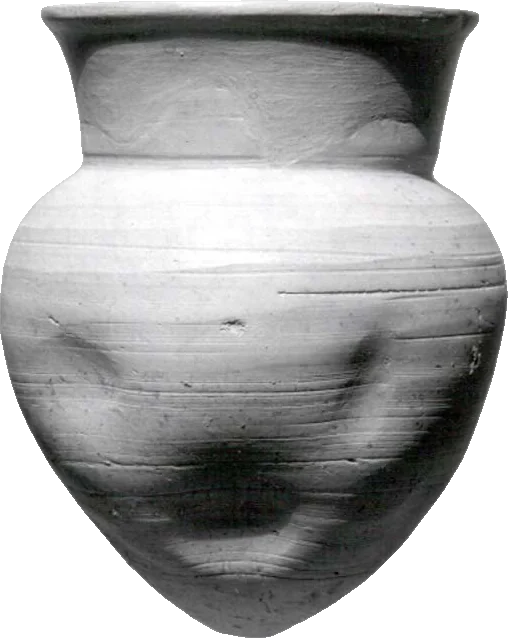
Kalhu was the capital until 706 BCE, when King Sargon II moved the government to his new city, Dur-Sharrukin. The capital later moved again, to Nineveh. Even so, Nimrud's palaces stayed in use and the city remained important.
The clue
Palace Ware beaker, ca. 8th–7th century BCE. A Palace Ware beaker from Nimrud dated to the 8th to 7th century BCE, a range that reaches into the years after the capital moved.
Sources for this chapter (2)
- en.wikipedia.org: "when Sargon II shifted the seat of government to his newly founded city, Dur-Sharrukin."
- metmuseum.org: "Nimrud’s palaces continued in use, and the city remained an important Assyrian center."
Chapter 4
The fall of Kalhu
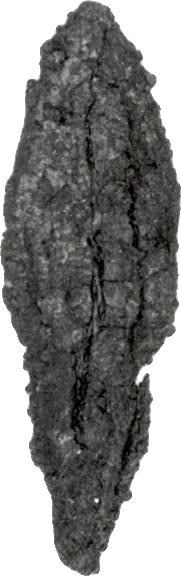
At the end of the 600s BCE, the Assyrian empire collapsed under attacks by the Babylonians and the Medes. Nimrud was destroyed twice, first in 614 BCE and again in 612 BCE. Some ivories were burned, apparently when buildings were destroyed.
The clue
Arrowhead, ca. 612 BCE. An iron arrowhead from Nimrud that its record dates to about 612 BCE, the year of the final destruction.
Sources for this chapter (2)
- metmuseum.org: "Nimrud was destroyed twice, first in 614 and again in 612 B.C."
- metmuseum.org: "Some were burned in antiquity, in some cases apparently as buildings were destroyed"
Chapter 5
The answer: the name was lost
After the fall, some people came back for a while and lived among the ruins. By the time the Greek writer Xenophon passed by in about 401 BCE, the name Kalhu had already been forgotten. Later, local people called the mound Nimrud and linked it with the biblical figure Nimrod, and its rediscovery in the 1800s was one of the great archaeological events of that century.
The clue
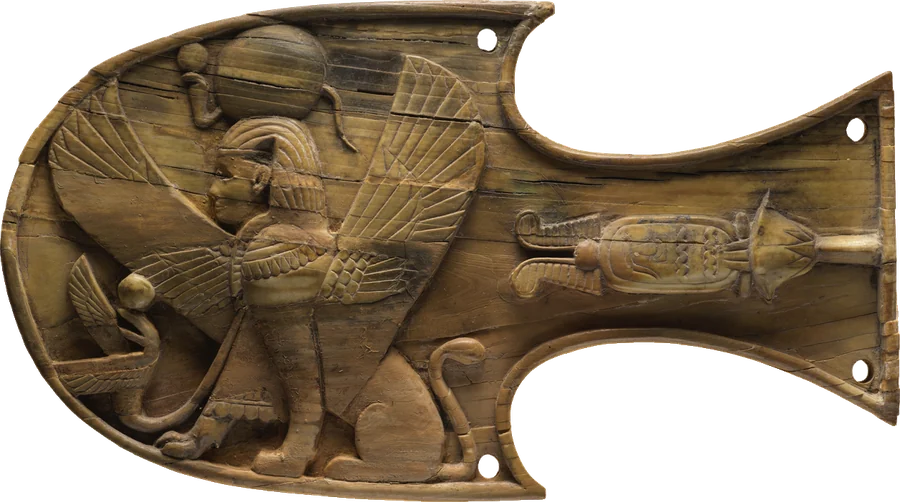
Horse blinker carved in relief with a seated sphinx, ca. 8th century BCE. An 8th-century BCE ivory horse blinker from Nimrud, found in the 1950s excavations; The Met's essay names it among the horse fittings.
Sources for this chapter (3)
- metmuseum.org: "the name of Kalhu had already been forgotten"
- en.wikipedia.org: "The name Nimrud was recorded as the local name by Carsten Niebuhr in the mid-18th century."
- metmuseum.org: "The rediscovery of Nimrud and its sculptures was one of the great archaeological events of the nineteenth century"
Every sentence above is checked against the quoted source. Spotted a mistake? Tell us. More about the site, its finds and who dug there: Nimrud.
Next mystery: How did a capital of kings become a field of ruins?
In the game the chapters of this mystery open as you dig up the objects of Nimrud.
Dig at Nimrud