
The mystery of Ctesiphon · Iraq
How did a capital of kings become a field of ruins?
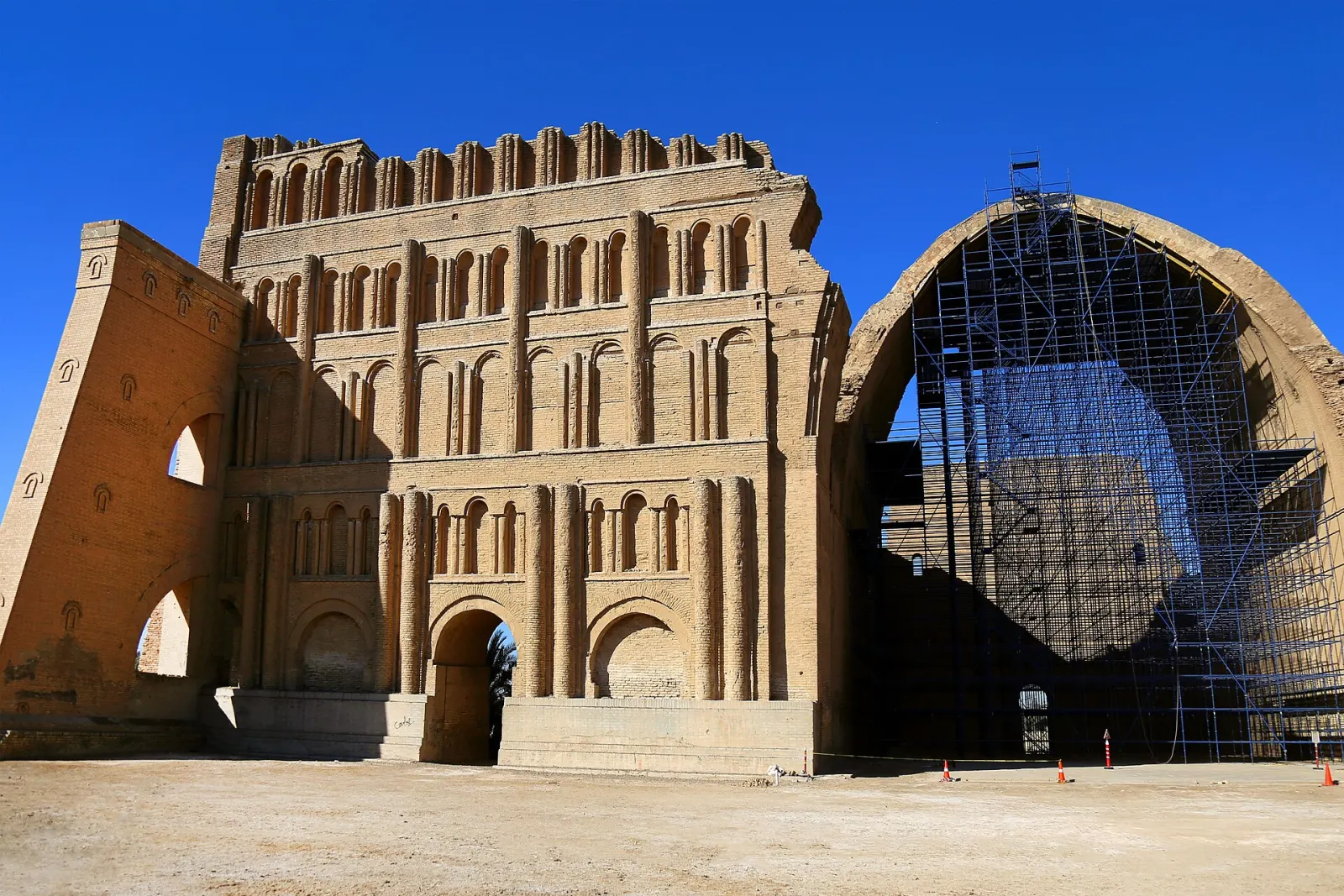
Ctesiphon, on the Tigris River south of Baghdad, was a capital of the Parthian and then the Sasanian kings of Iran for about 800 years. The great brick arch of the Taq Kasra still stands. In 1931 and 1932 The Metropolitan Museum of Art and the Berlin State Museums dug here together for one season and found Sasanian houses with carved plaster walls and the ground plan of the palace. Source
- 1. A camp across the river
- 2. Kings crowned, many faiths
- 3. A wonder of the ancient world
- 4. A house of carved plaster
- 5. The answer: a new city took its bricks
Chapter 1
A camp across the river
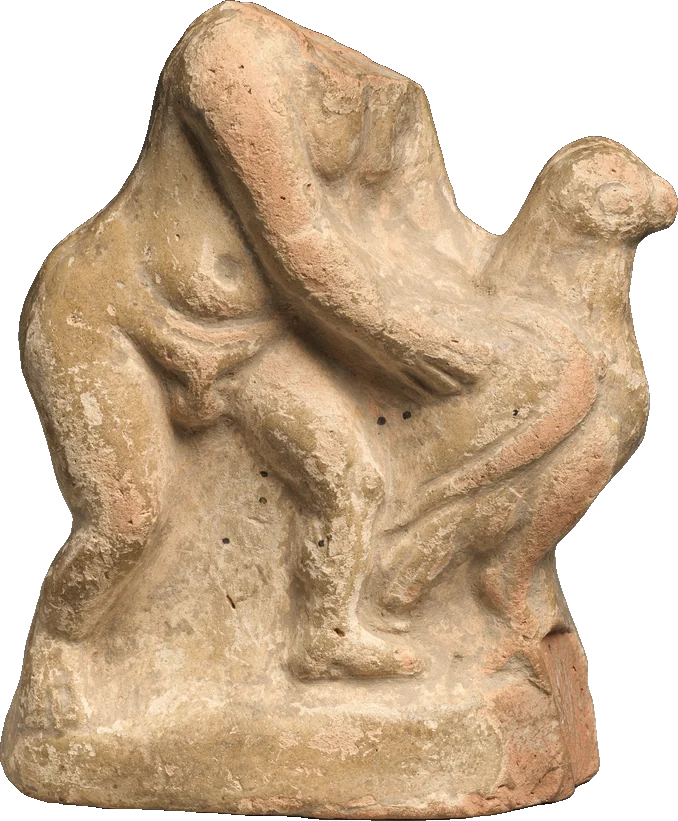
In 140 BCE the Parthians conquered Seleucia, a city on the west bank of the Tigris River. Across the river, on the east bank, they built a garrison in a village called Ctesiphon. Ctesiphon most likely became the Parthian capital in the 1st century BCE.
The clue
Figure, ca. 1st–2nd century A.D. A Parthian clay figure from Ctesiphon, dated to the 1st to 2nd century CE, when the city was the Parthian capital.
Sources for this chapter (2)
- metmuseum.org: "across the river on the east bank, they constructed a garrison in the village of Ctesiphon."
- metmuseum.org: "Ctesiphon became the Parthian capital most likely in the first century B.C."
Chapter 2
Kings crowned, many faiths
Roman armies invaded several times, and in 165 CE a Roman general destroyed the royal palace. In 226 CE the Sasanian king Ardashir I was crowned here, and the city grew into a huge capital on both sides of the Tigris. Zoroastrians, Jews and Christians all lived here.
Sources for this chapter (2)
- metmuseum.org: "the Roman general Avidius Cassius destroyed the royal palace in 165 A.D."
- metmuseum.org: "the Sasanian king Ardashir I was crowned in the city in 226 A.D."
Chapter 3
A wonder of the ancient world
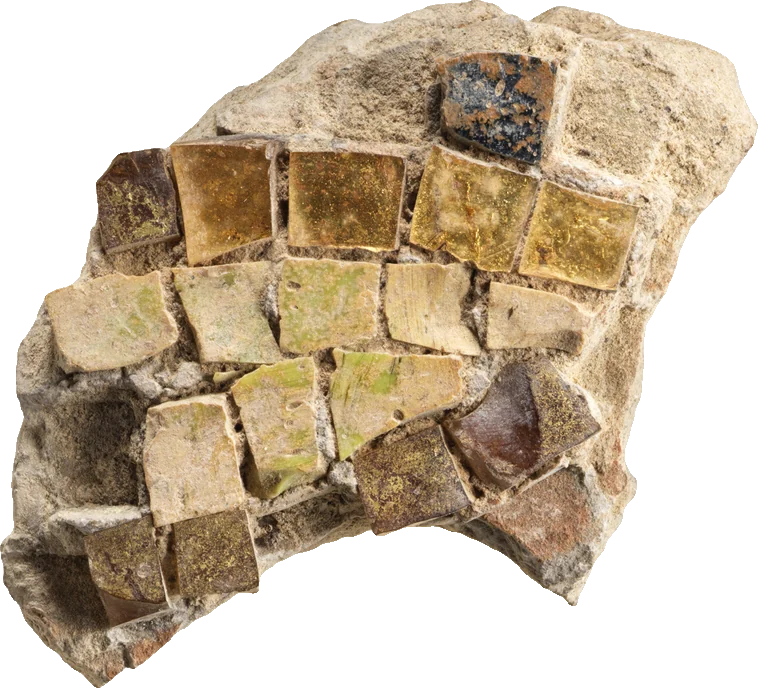
King Khusrau I, who ruled from 531 to 579 CE, built a palace here called Taq-i Kisra. Its brick throne hall is 115 feet (35 m) high, and its great arch is the world's largest parabolic barrel vault. Pieces of mosaic with bright colors and gold were found in the palace grounds.
The clue
Mosaic fragment, ca. 3rd–7th century CE. A Sasanian mosaic fragment of glass and stucco from Ctesiphon, one of the palace mosaic pieces The Met's essay names.
Sources for this chapter (2)
- metmuseum.org: "the royal palace built at Ctesiphon by the Sasanian king Khusrau I"
- metmuseum.org: "Mosaic fragments with vibrant colors and gilding were discovered in the palace precinct."
Chapter 4
A house of carved plaster
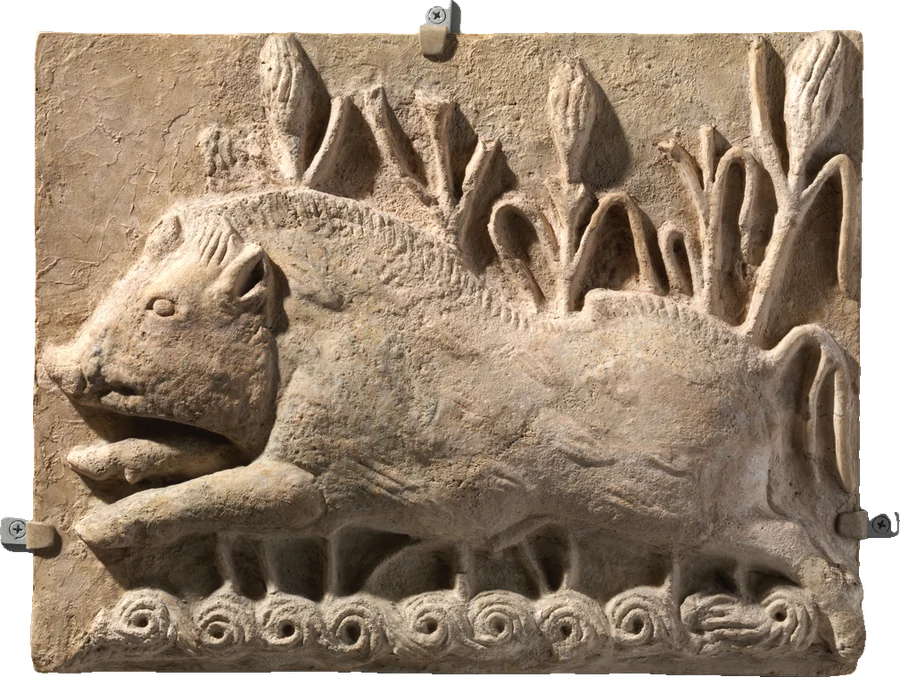
East of the palace, the 1931 to 1932 dig found a large mud brick house built around a courtyard. Its walls were decorated with plaster reliefs of plants, shapes, animals and people. Workers used molds to make many identical panels, which was a new technique, and traces of red and blue paint remain.
The clue
Wall panel with a charging boar, ca. 6th century CE. A 6th-century stucco panel with a charging boar from this house; The Met's essay names it among the reliefs.
Sources for this chapter (2)
- metmuseum.org: "the discovery of a large private house built of mud brick, centered around a rectangular courtyard"
- metmuseum.org: "The use of molds to produce multiple panels with identical decoration was a new technique. Some traces of red and blue color remain."
Chapter 5
The answer: a new city took its bricks
In March 637 CE Arab Muslim armies under Sa'd bin Abi Waqqas conquered Ctesiphon, and the Sasanian royal family and many others fled. Once Baghdad was founded nearby, Ctesiphon declined by 763 CE, and people took its ruins apart for building material. Today the great arch is all that remains above ground.
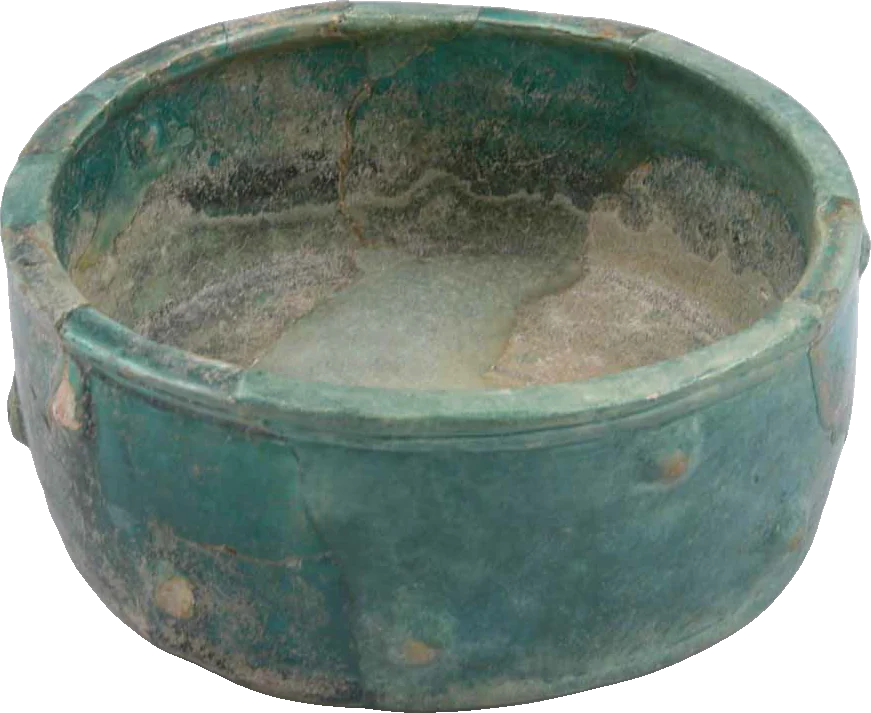
The clue
Dish, 8th century. A glazed dish found at Ctesiphon and dated to the 8th century, after the conquest of 637.
Sources for this chapter (2)
- metmuseum.org: "The newly established city of Baghdad resulted in Ctesiphon’s decline by 763 A.D., and its ruins were used as a quarry for building materials."
- en.wikipedia.org: "The Taq Kasra is now all that remains above ground of a city"
Every sentence above is checked against the quoted source. Spotted a mistake? Tell us. More about the site, its finds and who dug there: Ctesiphon.
Next mystery: Why did the busy city of Dura-Europos empty out all at once?
In the game the chapters of this mystery open as you dig up the objects of Ctesiphon.
Dig at Ctesiphon