Sasanian · Important find
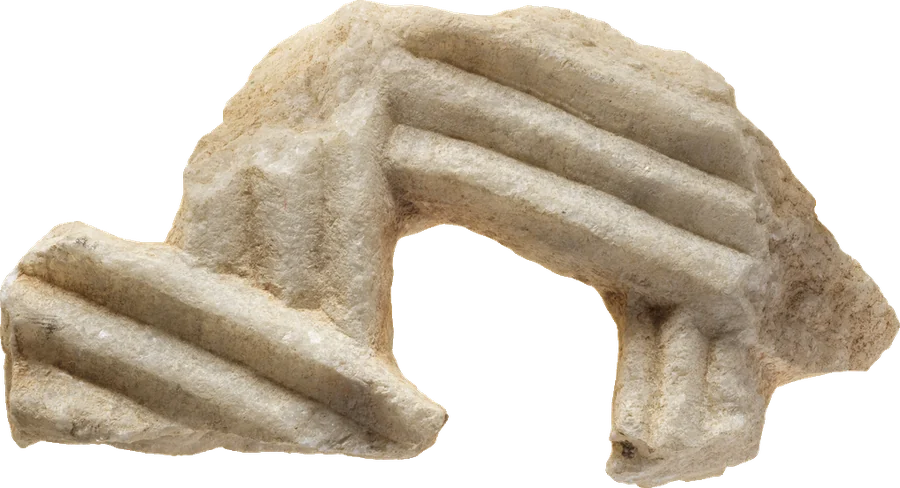
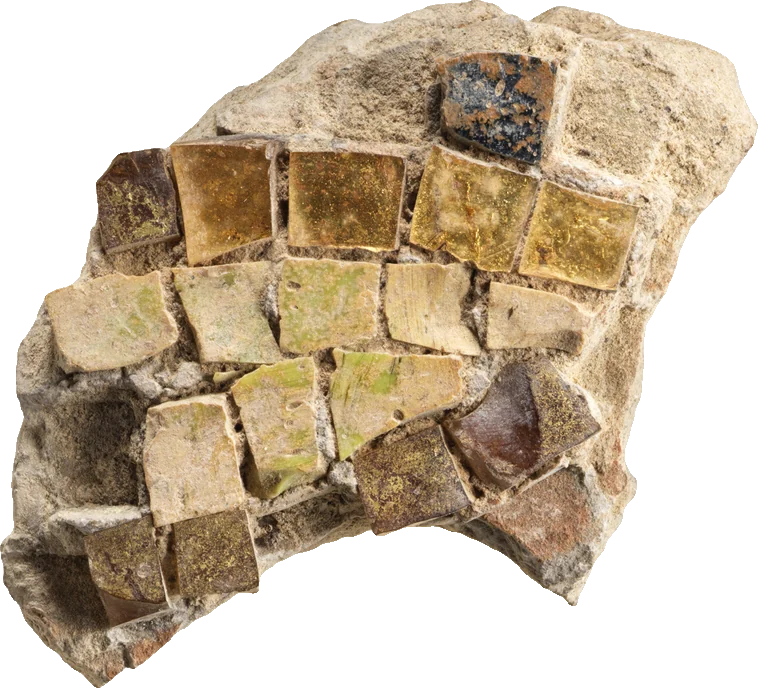
Mosaic fragment
This object was really found at Ctesiphon by the joint expedition of The Metropolitan Museum of Art and the Berlin State Museums. Today it is in The Metropolitan Museum of Art in New York.
What is it?
Wall painting. Walls were plastered and painted, and floors were set with mosaics of small stones or glass. Fragments still show their colors. Source
Stucco. Plaster used to decorate walls, molded or carved into patterns and figures. Read more
Glass. Melted sand and minerals, shaped while hot.
Stucco. Lime or gypsum plaster, carved or pressed in molds to decorate walls.
Museum record
- Object
- Mosaic
- Culture
- Sasanian
- Date
- ca. 3rd–7th century CE
- Material
- Glass, stucco, gilding (?)
- Findspot
- Ctesiphon, Mesopotamia
- Size
- 1.37 x 2 in. (3.48 x 5.08 cm)
- Museum
- The Metropolitan Museum of Art, New York
- Number
- 32.150.213
- Credit
- Rogers Fund, 1932
Photo and record: The Metropolitan Museum of Art, Open Access (public domain, CC0), copied 2026-11-12. Background removed from the photo. Region: Mesopotamia.
More about this object
A clue in the mystery of Ctesiphon
How did a capital of kings become a field of ruins? In chapter 3, "A wonder of the ancient world", this object is the clue: A Sasanian mosaic fragment of glass and stucco from Ctesiphon, one of the palace mosaic pieces The Met's essay names. Read the mystery
Culture
Sasanian: more objects from the same culture or period, with what we know about it.