
Mesopotamia · Iraq
Nimrud
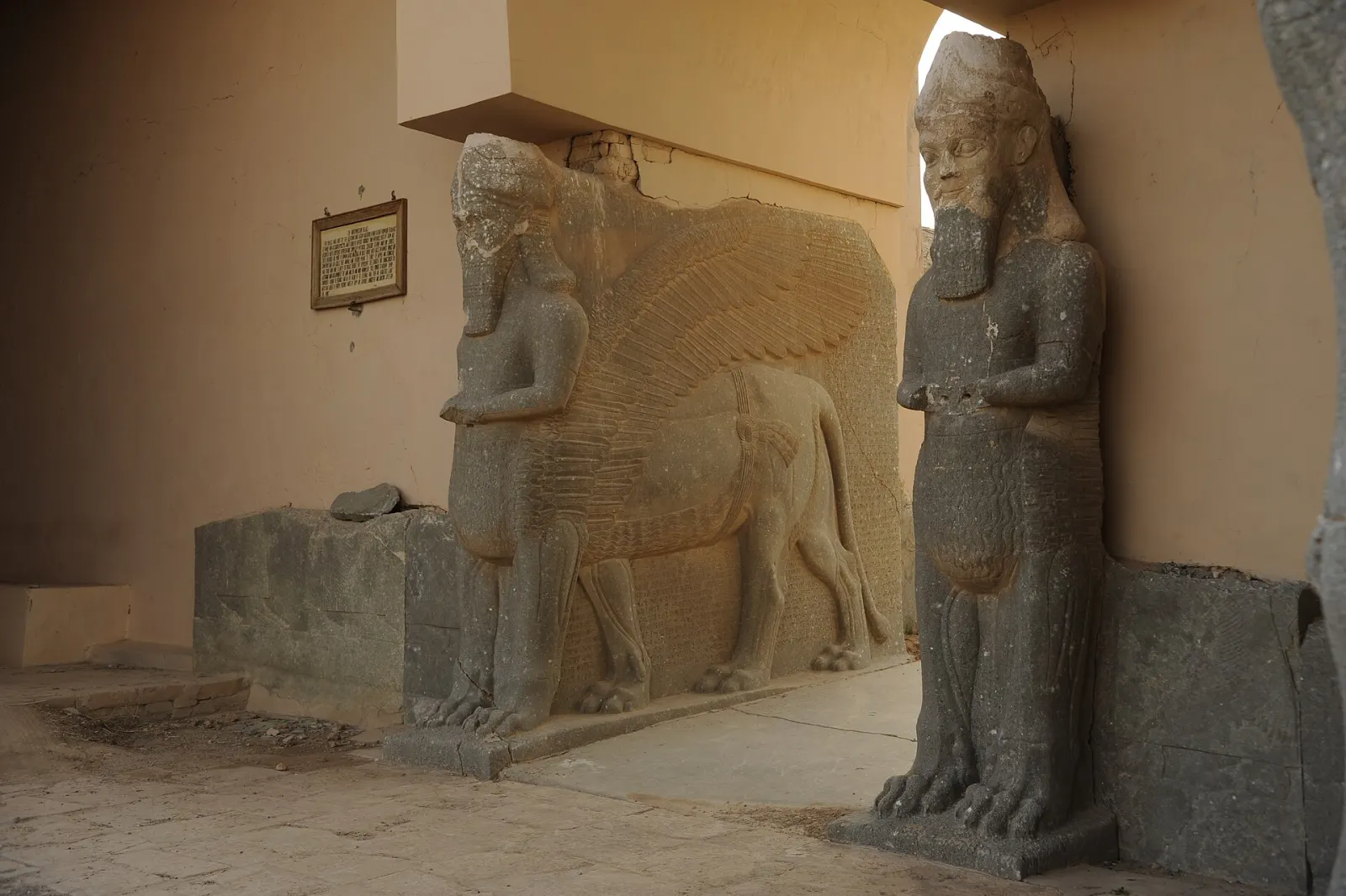
Nimrud, the ancient city of Kalhu on the Tigris River in northern Iraq, was the capital of the Assyrian empire in the 9th and 8th centuries BCE. Ashurnasirpal II built a great palace here. From 1949 to 1963 the British School of Archaeology in Iraq dug at Nimrud and found thousands of carved ivories. The Met helped pay for several seasons and received a share of the finds. Source
Dig seasons The Met helped pay for: 1951 to 1953, 1956 to 1958 and 1960 to 1963.
35 objects found here
Each one was found at Nimrud by the British School of Archaeology in Iraq, in a dig The Met helped pay for. Today they are in The Metropolitan Museum of Art. Oldest first.
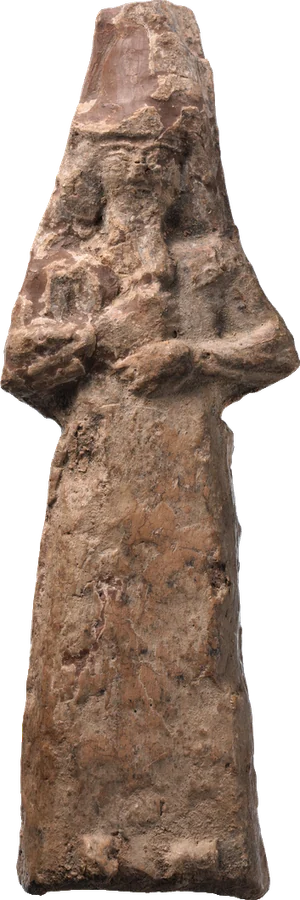 Apkallu figure: male with a fish-skin hoodca. 9th–8th century BCE
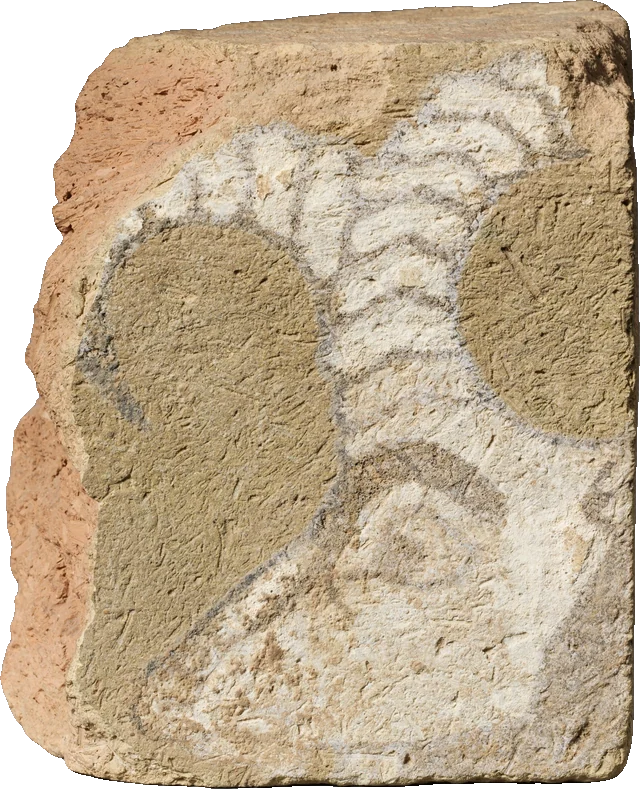 Brick fragment with the head of an ibexca. 9th century BCE
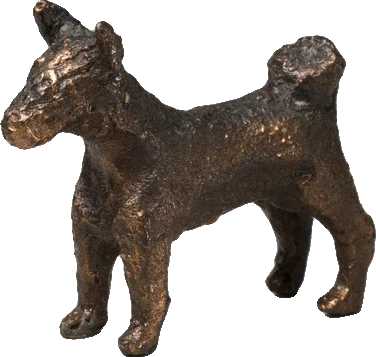 Dogca. 9th–8th century BCE
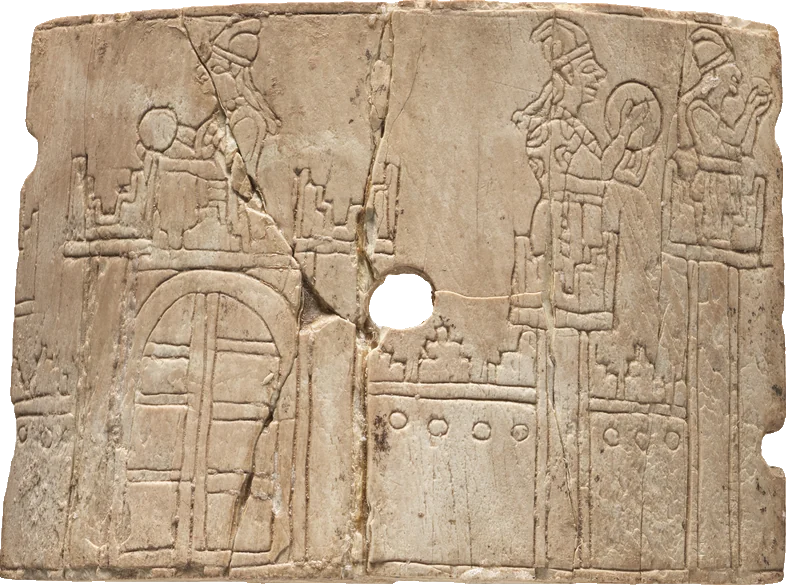 Incised cosmetic box fragments with a warrior and four womenca. 9th–8th century BCE
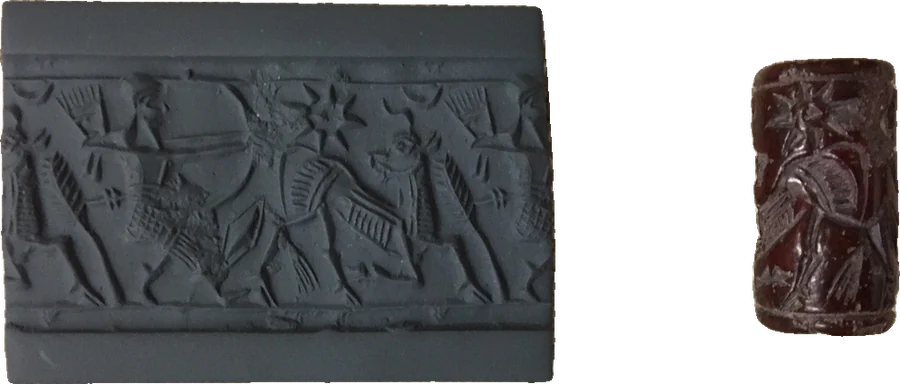 Cylinder seal with hunting sceneca. 9th–8th century BCE
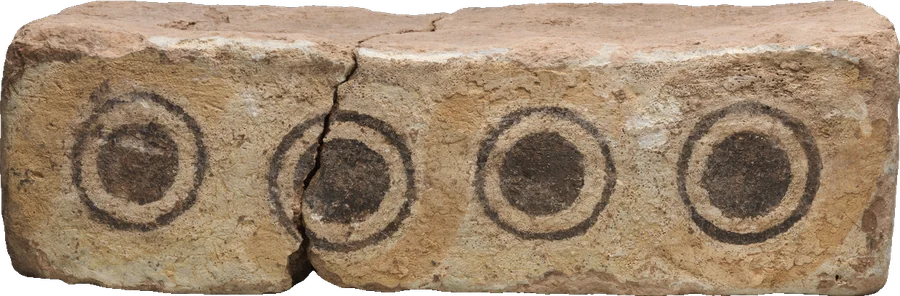 Brick with guilloche designca. 9th century BCE
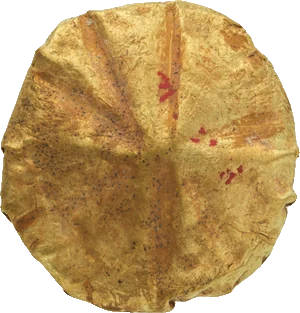 Buttonca. early 1st millennium BCE
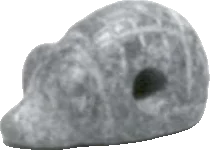 Hedgehog amuletca. 9th–7th century BCE
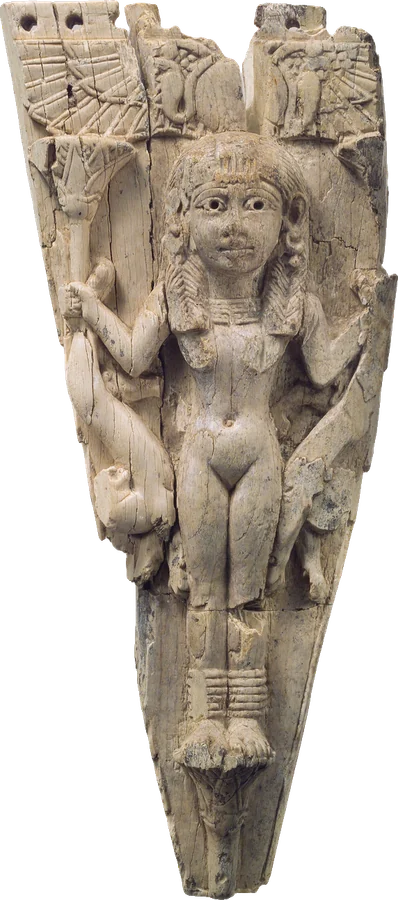 Horse frontlet carved in relief with a female figure flanked by lionsca. 9th–8th century BCE
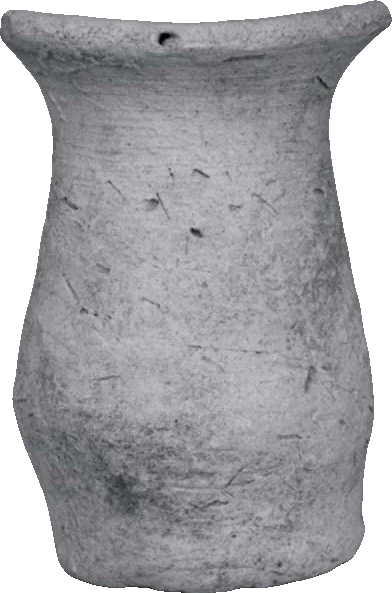 Drinking vessel ("istikan")ca. 9th–7th century BCE
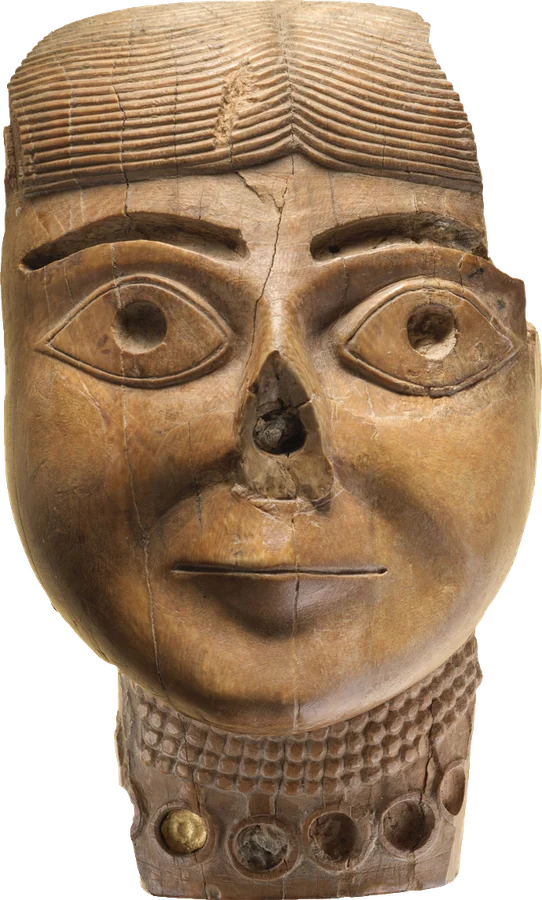 Head of a female or goddess wearing a necklaceca. 9th–8th century BCE
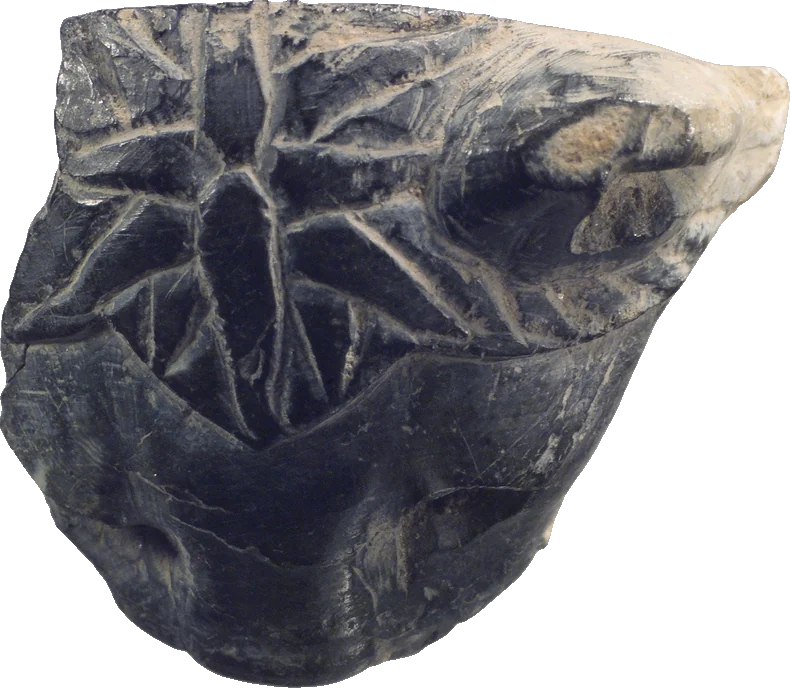 Lion head fragmentca. 9th–7th century BCE
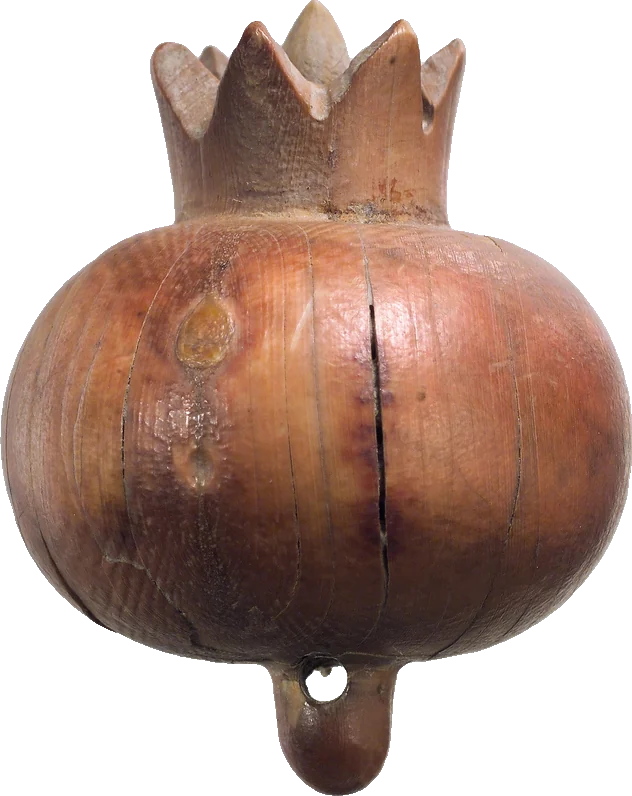 Pomegranate carved in the roundca. 9th–8th century BCE
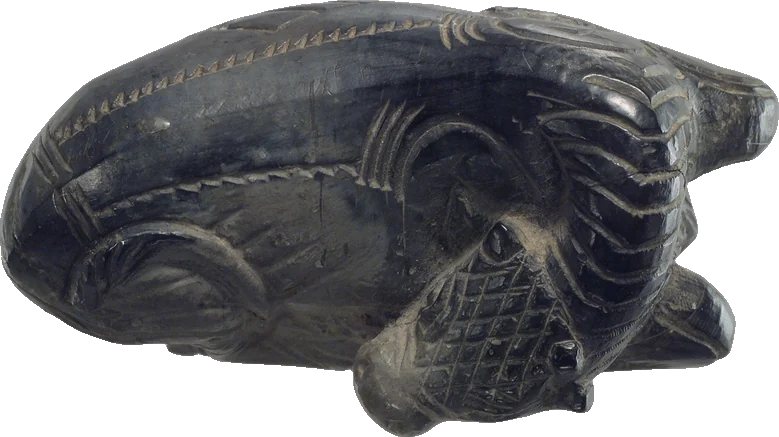 Reclining calf: lid attachmentca. 9th–8th century BCE
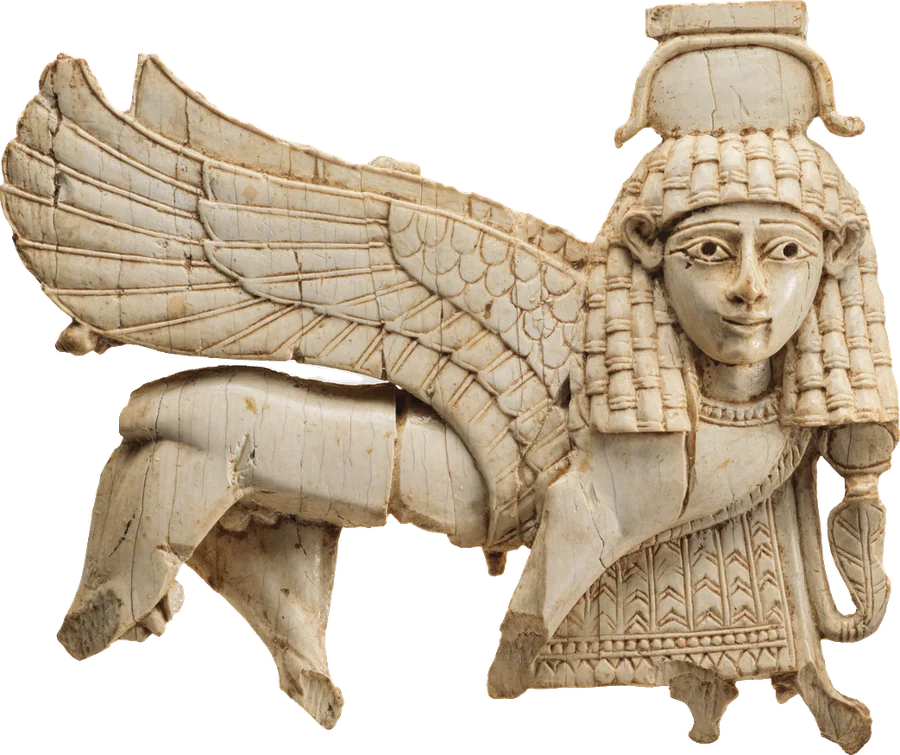 Openwork plaque with a striding sphinxca. 9th–8th century BCE
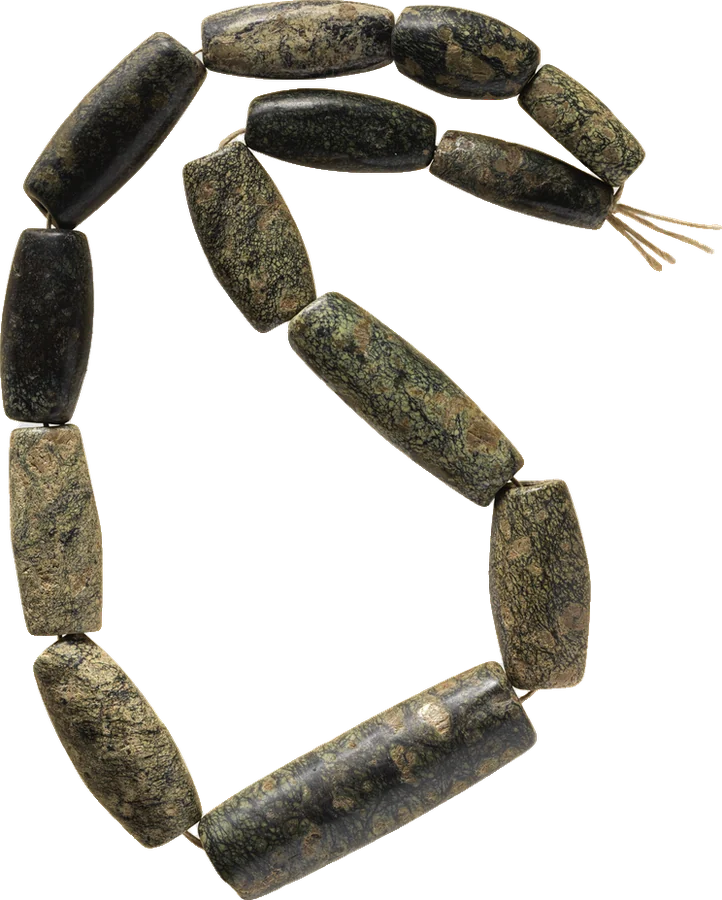 Beadsca. 9th–7th century BCE
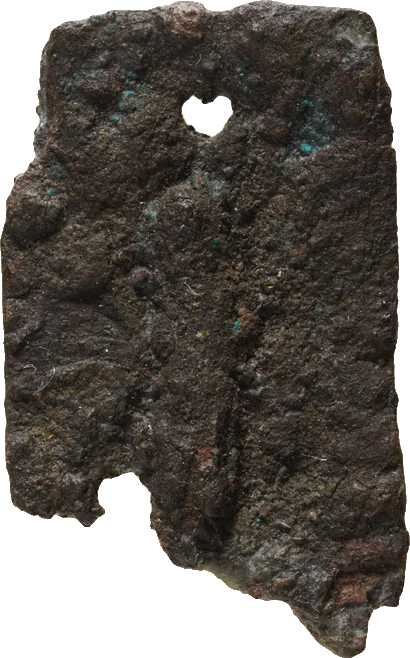 Armor plateca. late 8th–late 7th century BCE
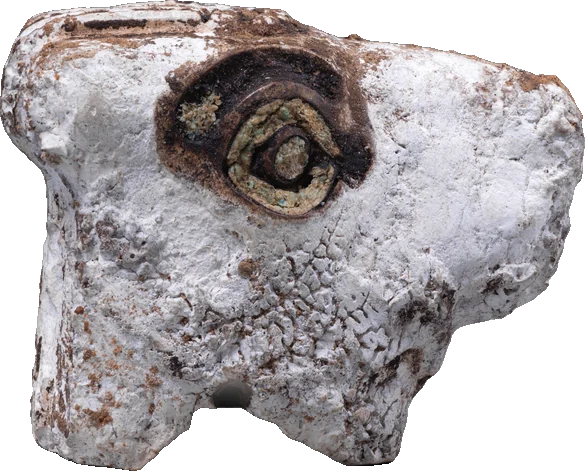 Bull's headca. late 8th century BCE
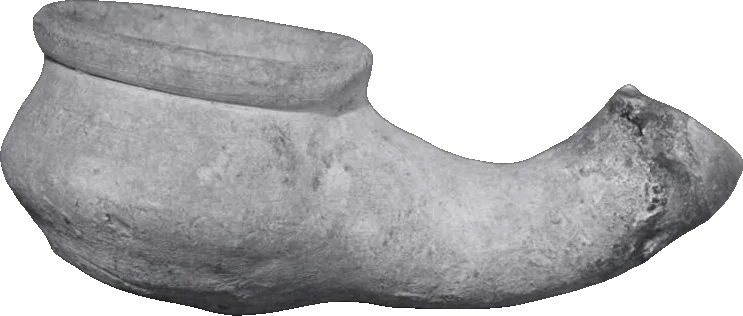 Lampca. 8th–7th century BCE
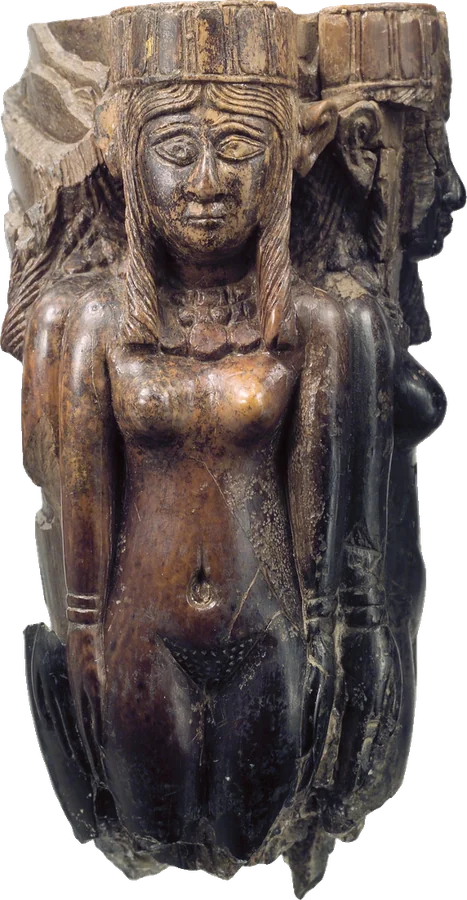 Fan or fly-whisk handle in the form of four female figuresca. 8th–7th century BCE
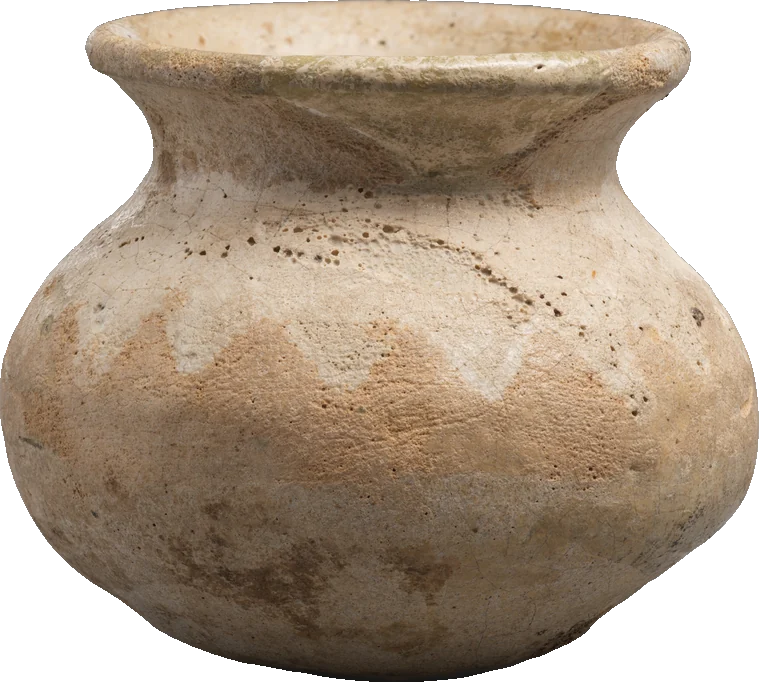 Jar with geometric decorationca. 8th–7th century BCE
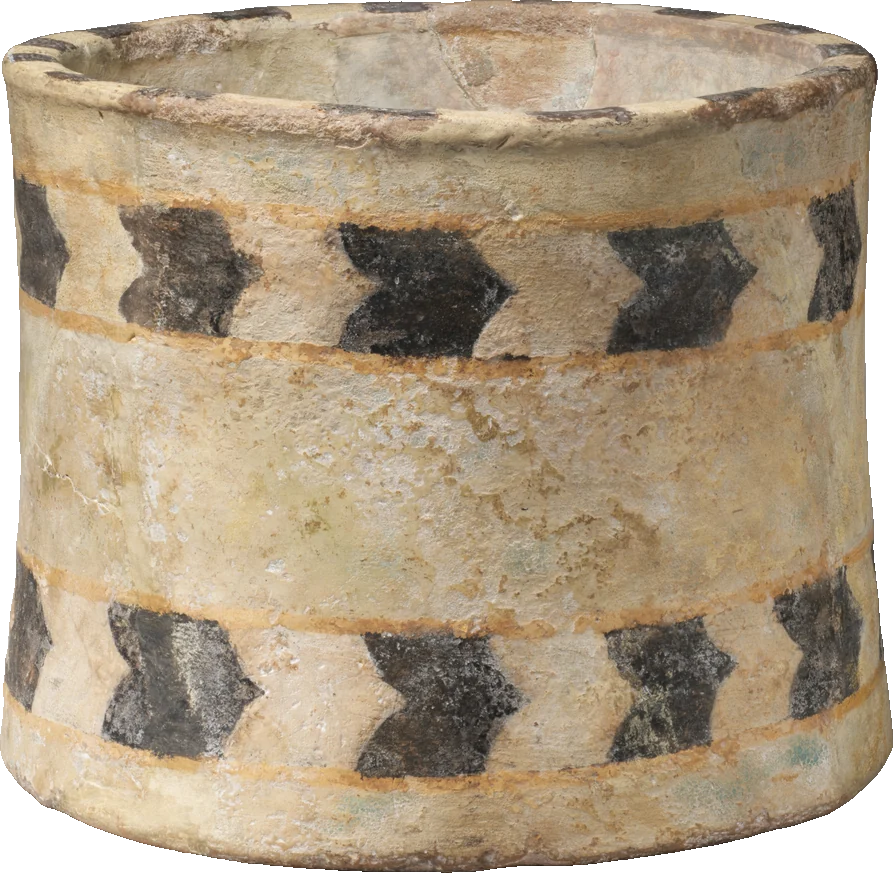 Tub-like vessel with geometric decorationca. 8th–7th century BCE
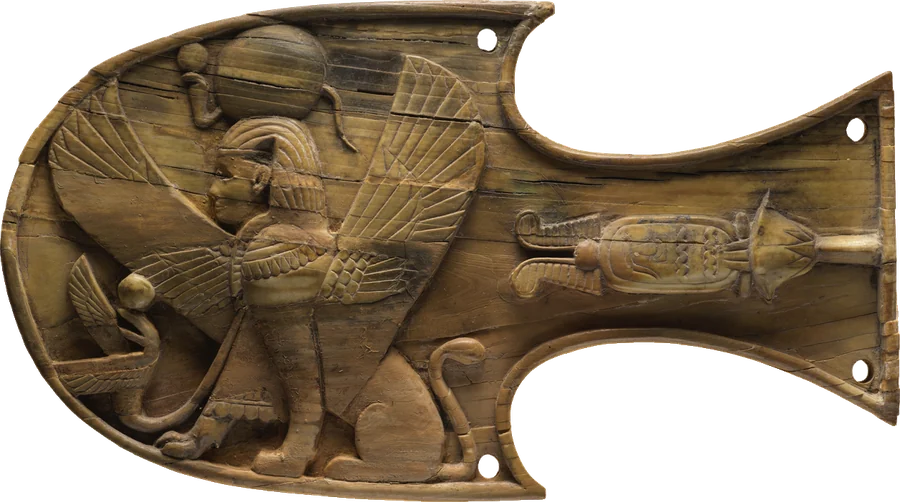 Horse blinker carved in relief with a seated sphinxca. 8th century BCE
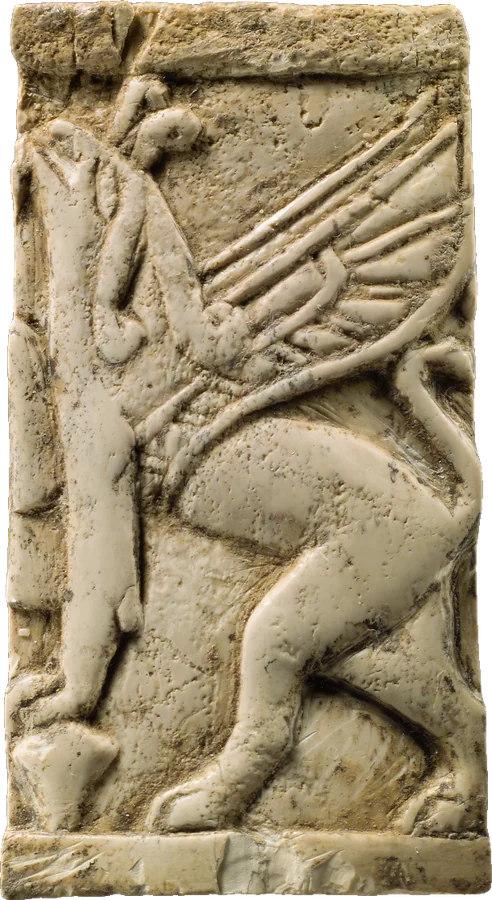 Plaque with griffinca. 8th–7th century BCE
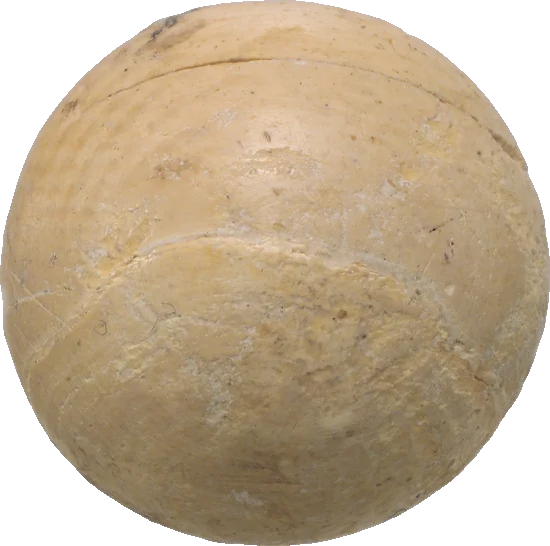 Knobca. 8th century BCE
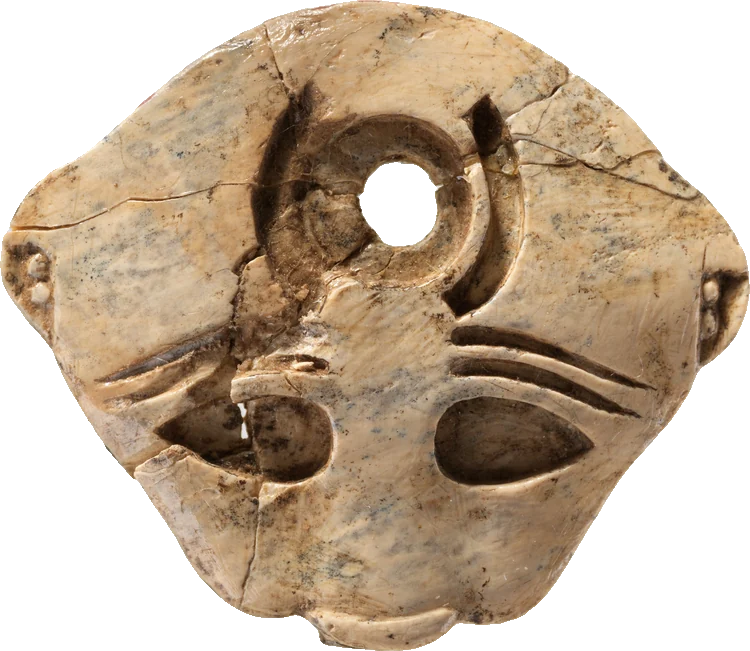 Lioness headca. 8th–7th century BCE
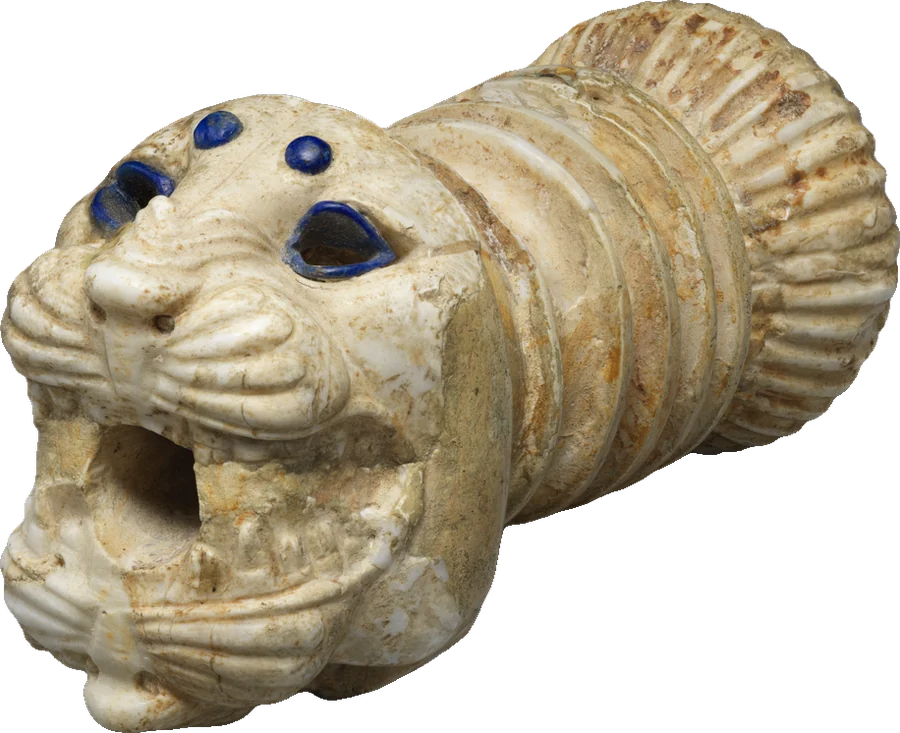 Ornament with heads of roaring lions, possibly the terminal of a sword or dagger hiltca. 8th century BCE
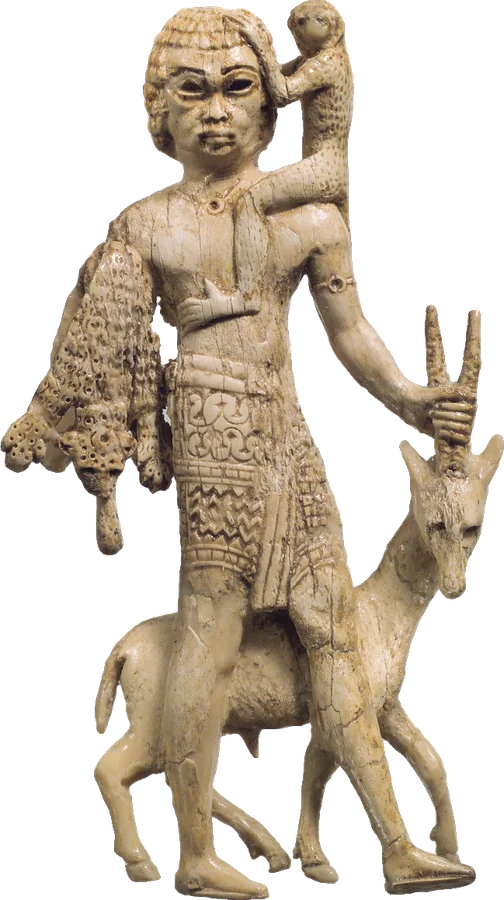 Figure of a man with an oryx, a monkey, and a leopard skinca. 8th century BCE
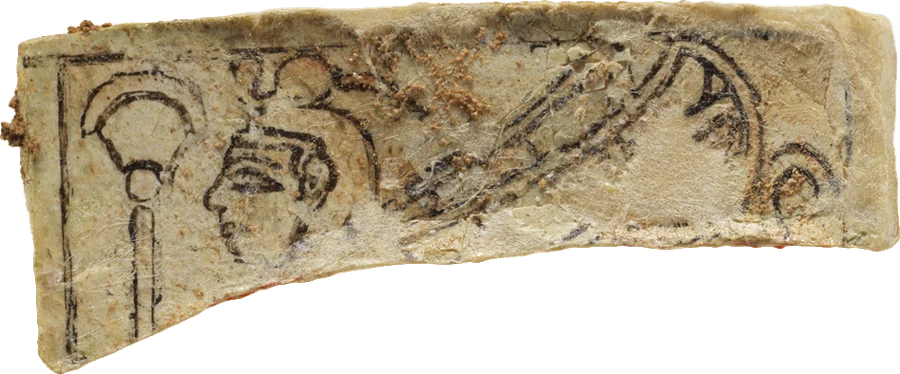 Painted glass fragmentca. 8th–7th century BCE
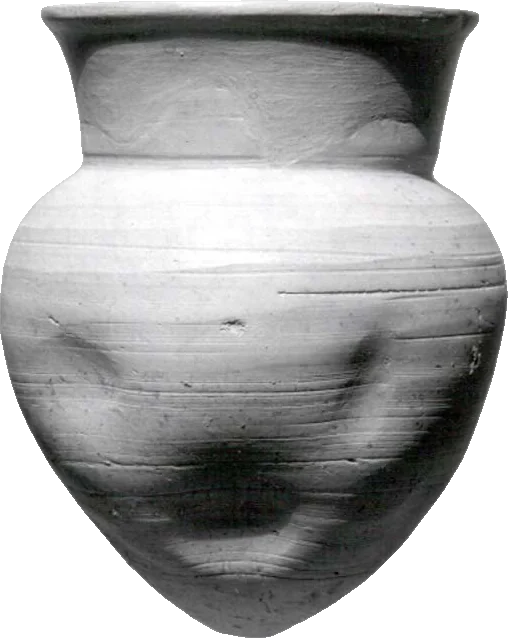 Palace Ware beakerca. 8th–7th century BCE
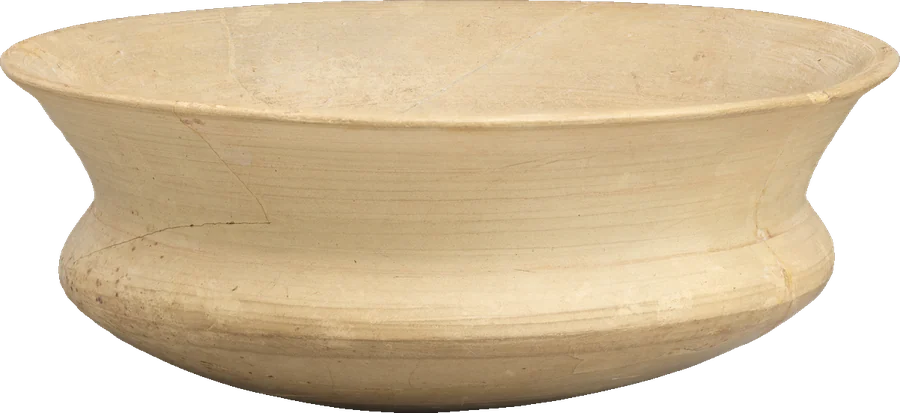 Palace Ware bowlca. 8th–7th century BCE
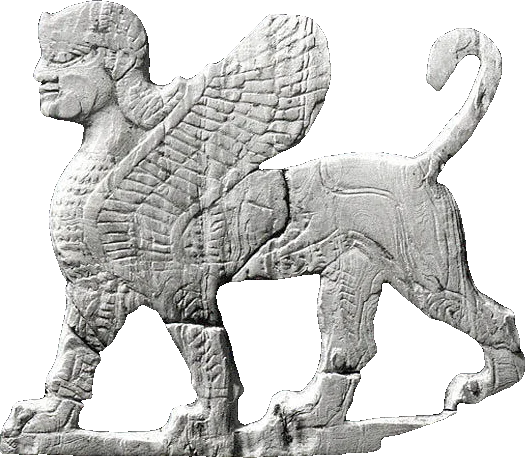 Plaque with a striding sphinxca. 8th century BCE
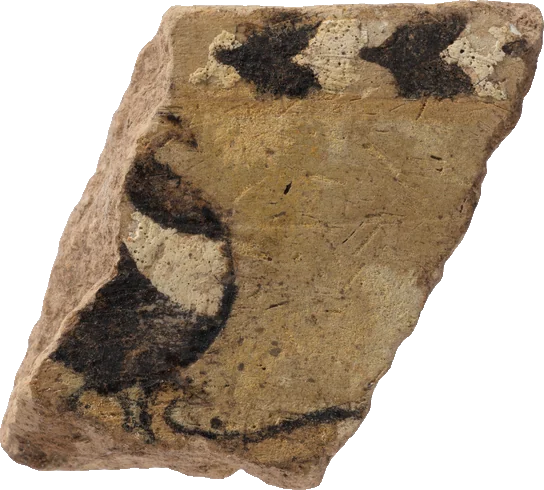 Vessel sherd with pomegranate and geometric decorationca. 8th–7th century BCE
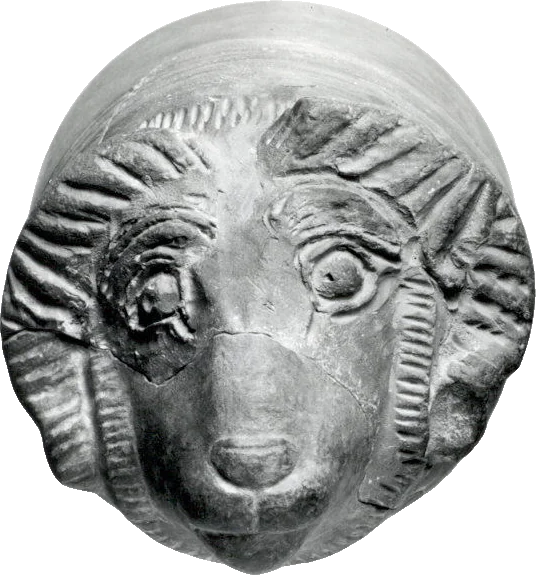 Drinking vessel in the form of a ram's headca. 7th century BCE
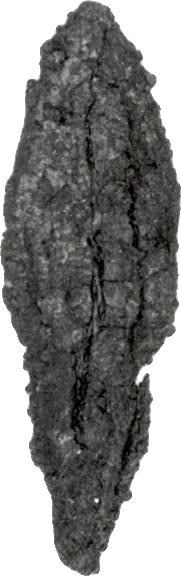 Arrowheadca. 612 BCE
12 fun facts about Nimrud
- The Met's stone guardian bull from Nimrud has five legs. From the front it seems to stand still, and from the side it seems to stride forward. metmuseum.org
- To celebrate his new capital, Ashurnasirpal II held a feast for 69,574 guests that lasted ten days. His inscription lists 10,000 jugs of beer and 10,000 skins of wine. en.wikipedia.org
- The novelist Agatha Christie joined her husband Max Mallowan's digs. She cleaned some ivories with a fine knitting needle and a jar of face cream, including the famous carving called the "Mona Lisa" of Nimrud. oracc.museum.upenn.edu
- Tiny alphabet letters scratched in hidden spots on ivory pieces told workers how to fit furniture together, an early kind of do-it-yourself instructions. oracc.museum.upenn.edu
- In one storeroom of Fort Shalmaneser, twenty ivory-covered chairs or couches were found stacked in neat rows, just as they were left when the city was sacked in 612 B.C. metmuseum.org
- When Nimrud was sacked in 612 B.C., attackers ripped the gold off ivory treasures and threw huge numbers of them down the wells of the palace. oracc.museum.upenn.edu
- The ivory came from elephant tusks and hippopotamus teeth from Egypt and Nubia. Most of the carving was done in Phoenician and Syrian workshops along the Mediterranean coast. oracc.museum.upenn.edu
- More than 6,000 ivory pieces have been found at Nimrud. Austen Henry Layard began finding them on only his second day of digging, in 1845. oracc.museum.upenn.edu
- Ashurnasirpal II planted botanical gardens with foreign plants brought back from his campaigns, and he built a zoo. en.wikipedia.org
- A tribute list of Ashurnasirpal II includes a large female monkey and a small female monkey, sent by Mediterranean coastal cities along with ebony and hippopotamus ivory. oracc.museum.upenn.edu
- The Black Obelisk of Shalmaneser III, found by Layard in 1846, stands six and a half feet (2 m) tall and has 24 carved panels of the king's campaigns. It is in the British Museum. en.wikipedia.org
- In 2024, a Penn and Iraqi team uncovered two shrines in Nimrud's Ninurta Temple. One held a stone platform for a god's statue, about 12 by 9.5 feet (3.7 by 2.9 m). penntoday.upenn.edu
In the game these unlock one by one as you dig here.
The name
The Assyrians called the city Kalhu, and the Bible calls it Calah. Nimrud is the local name that the traveler Carsten Niebuhr wrote down in 1760. It ties the ruins to Nimrod, a figure in the Book of Genesis, a link that archaeologists later saw was mistaken. en.wikipedia.org
Life here
Ivory furniture was the height of fashion for Assyrian kings and their courtiers at Kalhu. Carved ivory thrones stood in the temple of Nabu, and rich homes along the citadel wall had ivory fittings too. Most of the ivory, though, arrived as tribute or war booty and was stored away in palace storerooms, where it lay untouched for decades or even centuries. oracc.museum.upenn.edu
Who dug here
Austen Henry Layard dug at Nimrud from 1845, and others continued until 1879. After almost 60 quiet years, Max Mallowan's British team returned in 1949 and found the 244 letters known as the Nimrud Letters. Iraqi archaeologists carried the work on, and in 1988 they discovered four tombs of Assyrian queens. en.wikipedia.org
Nimrud today
In 2015, Islamic State militants bulldozed and blew up parts of Nimrud. When Iraqi forces retook the site in November 2016, about 90 percent of the excavated area had been destroyed. Recovery work began in 2017 with UNESCO's support, and teams are training Iraqi archaeologists to protect what remains. en.wikipedia.org
A record
Ashurnasirpal II left so many inscriptions at Nimrud that we know more about him than about any other ruler of his time. en.wikipedia.org
Nimrud today and in the past
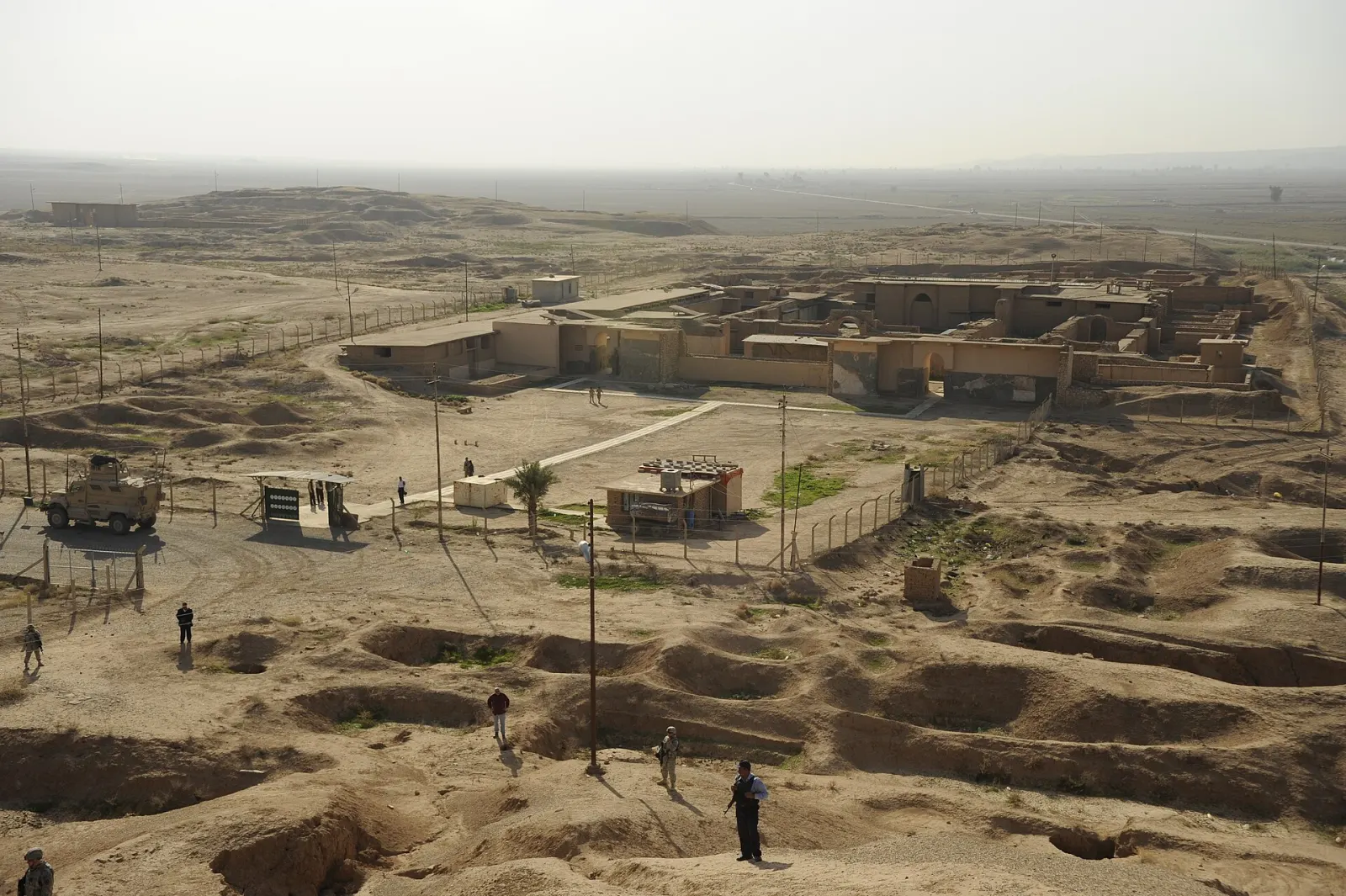
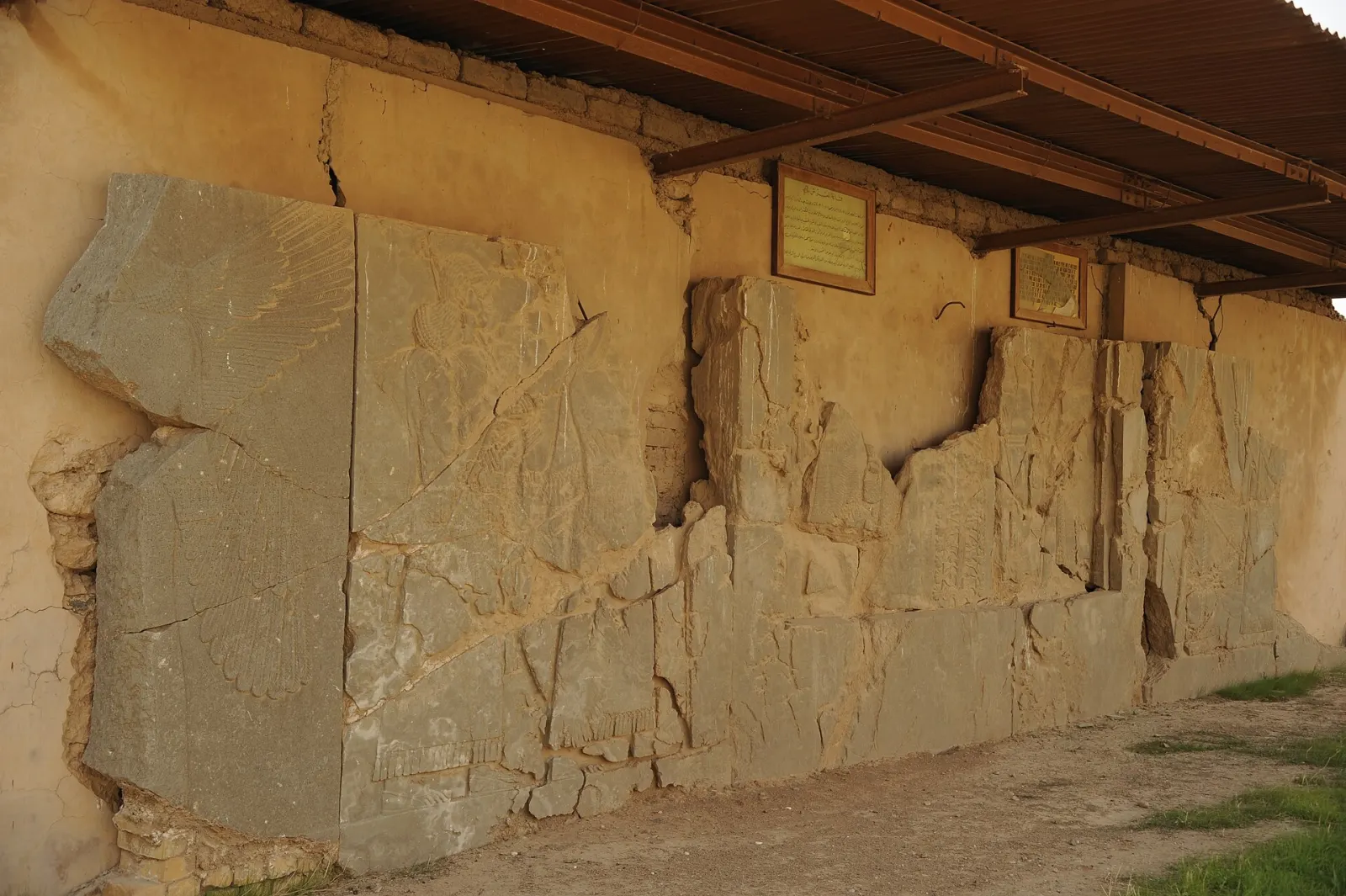
Dig at Nimrud yourself: open a trench, brush the soil away layer by layer and find these objects in the game.
Dig at Nimrud