
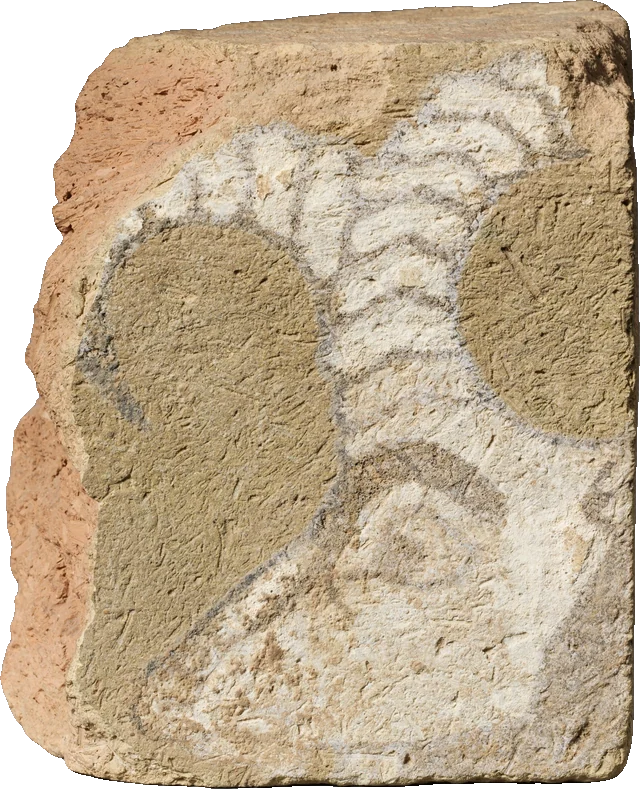
Assyrian, Neo-Assyrian · Find
Brick fragment with the head of an ibex
This object was really found at Nimrud by the British School of Archaeology in Iraq, in a dig The Met helped pay for. Today it is in The Metropolitan Museum of Art in New York.
What is it?
Brick and tile. Most houses were built of mudbrick, clay dried in the sun. Fired bricks and roof tiles were stronger and were used for baths, roofs and walls. Source
Glaze. A glassy coat fused to pottery or brick in the kiln, for color and to keep water in. Read more
Pottery. Clay shaped by hand or on a wheel, then fired.
Museum record
- Object
- Brick
- Culture
- Assyrian, Neo-Assyrian
- Date
- ca. 9th century BCE
- Material
- Ceramic, glaze
- Findspot
- Nimrud (ancient Kalhu), Mesopotamia
- Size
- 4 3/4 × 4 7/16 × 4 3/4 in. (12.1 × 11.2 × 12 cm)
- Museum
- The Metropolitan Museum of Art, New York
- Number
- 57.27.28
- Credit
- Rogers Fund, 1957
Photo and record: The Metropolitan Museum of Art, Open Access (public domain, CC0), copied 2026-11-12. Background removed from the photo. Region: Mesopotamia.
More from Nimrud
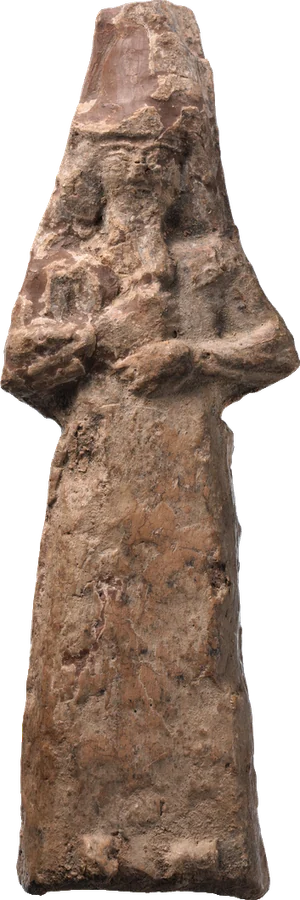 Apkallu figure: male with a fish-skin hoodca. 9th–8th century BCE
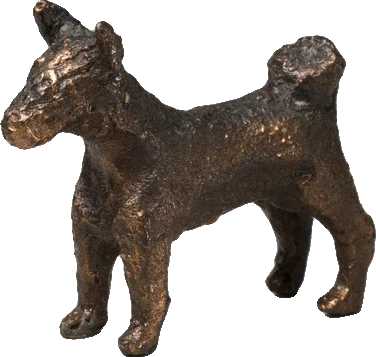 Dogca. 9th–8th century BCE
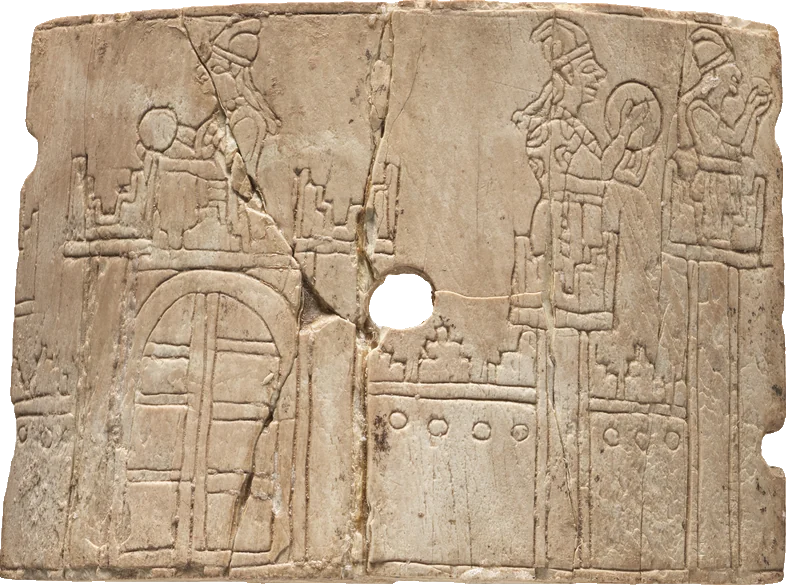 Incised cosmetic box fragments with a warrior and four womenca. 9th–8th century BCE
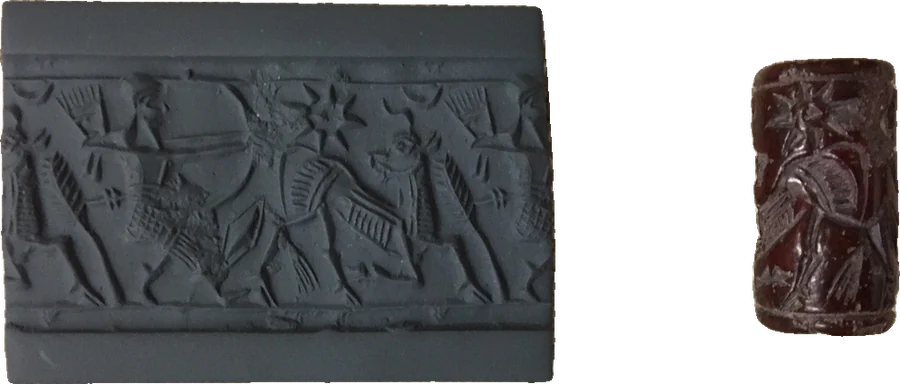 Cylinder seal with hunting sceneca. 9th–8th century BCE
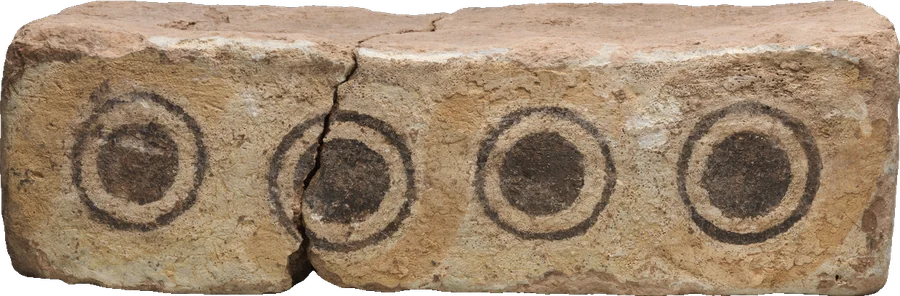 Brick with guilloche designca. 9th century BCE
 Buttonca. early 1st millennium BCE
 Hedgehog amuletca. 9th–7th century BCE
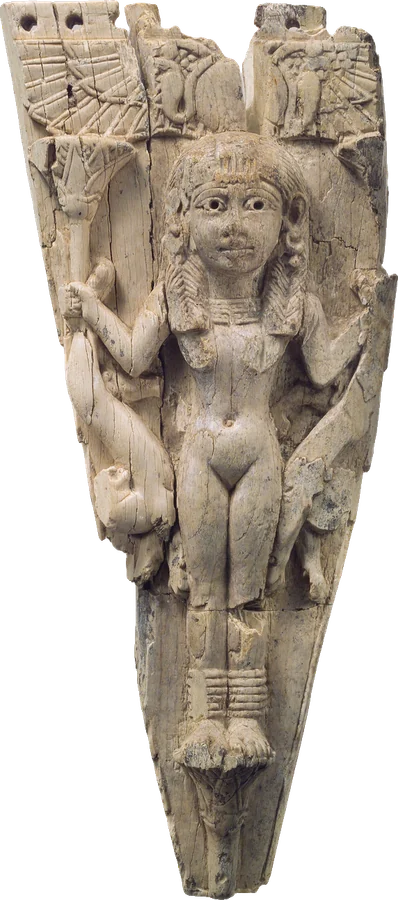 Horse frontlet carved in relief with a female figure flanked by lionsca. 9th–8th century BCE