
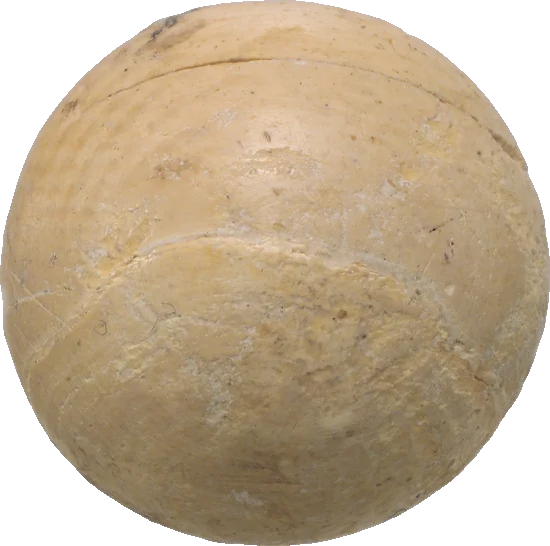
Assyrian, Neo-Assyrian · Find
Knob
This object was really found at Nimrud by the British School of Archaeology in Iraq, in a dig The Met helped pay for. Today it is in The Metropolitan Museum of Art in New York.
What is it?
Knob, handle and button. Small fittings like knobs, handles and buttons came from boxes, furniture, vessels and clothes. Bronze ones survive well in the ground. Source
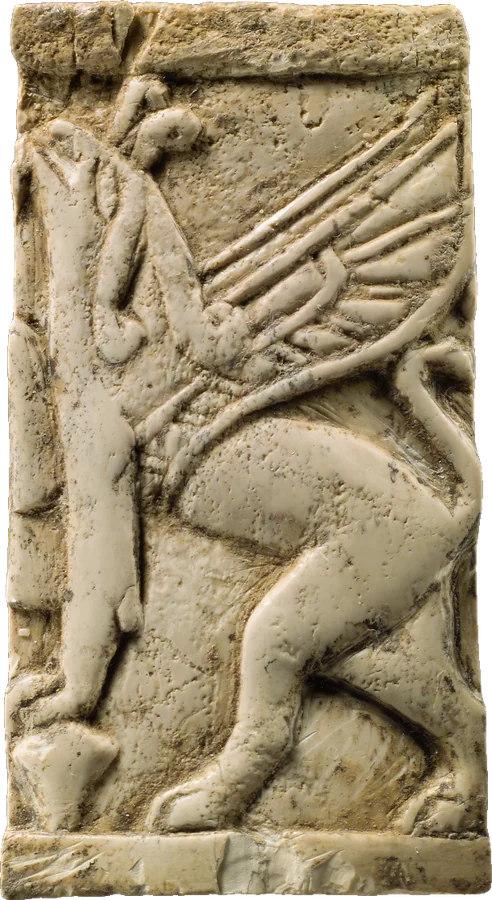
Ivory. Tooth and tusk, carved into small luxury objects: furniture inlays, combs, boxes and handles. Read more
Ivory. Carved tusk or tooth.
Museum record
- Object
- Knob
- Culture
- Assyrian, Neo-Assyrian
- Date
- ca. 8th century BCE
- Material
- Ivory
- Findspot
- Nimrud (ancient Kalhu), Mesopotamia
- Size
- 0.35 in. (0.89 cm)
- Museum
- The Metropolitan Museum of Art, New York
- Number
- 58.31.16
- Credit
- Rogers Fund, 1958
Photo and record: The Metropolitan Museum of Art, Open Access (public domain, CC0), copied 2026-11-12. Background removed from the photo. Region: Mesopotamia.
More from Nimrud
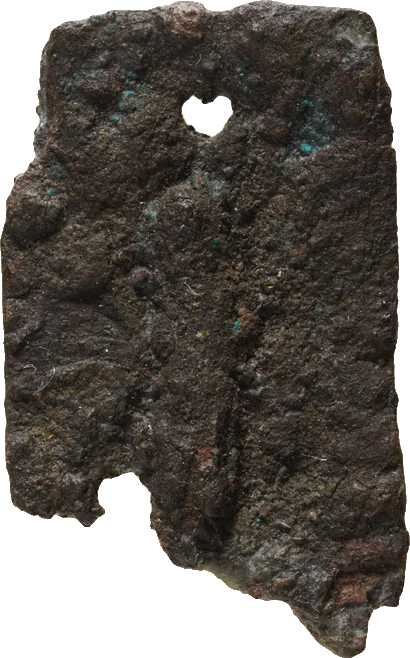 Armor plateca. late 8th–late 7th century BCE
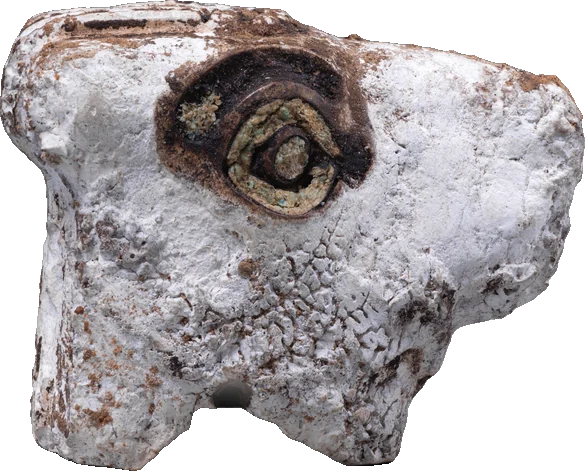 Bull's headca. late 8th century BCE
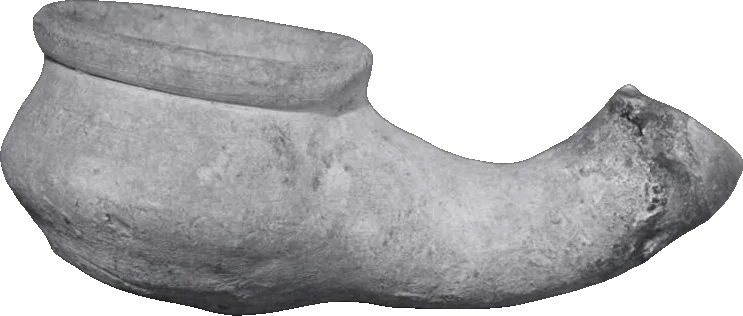 Lampca. 8th–7th century BCE
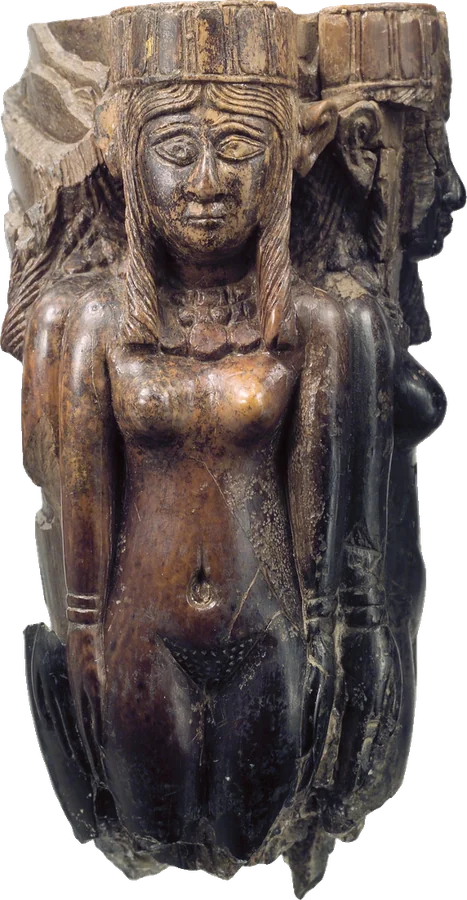 Fan or fly-whisk handle in the form of four female figuresca. 8th–7th century BCE
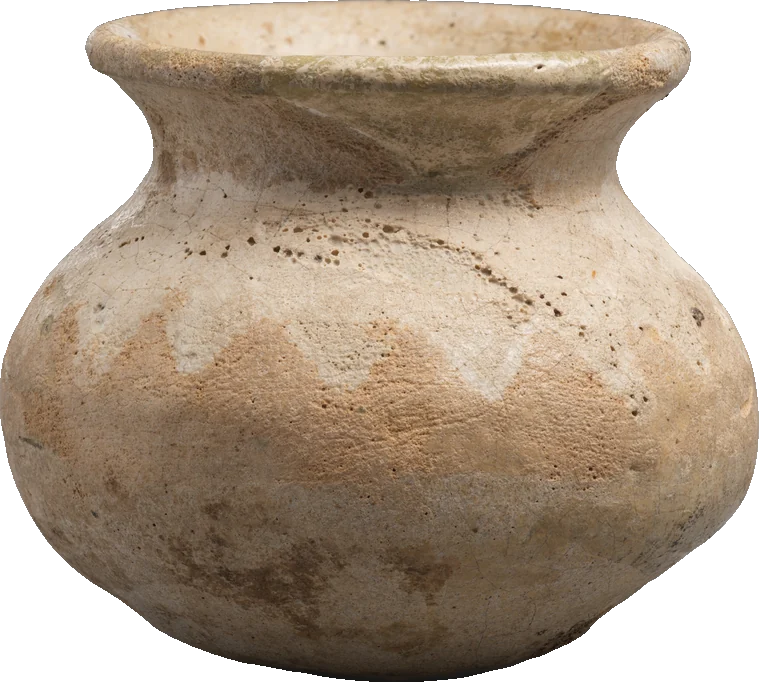 Jar with geometric decorationca. 8th–7th century BCE
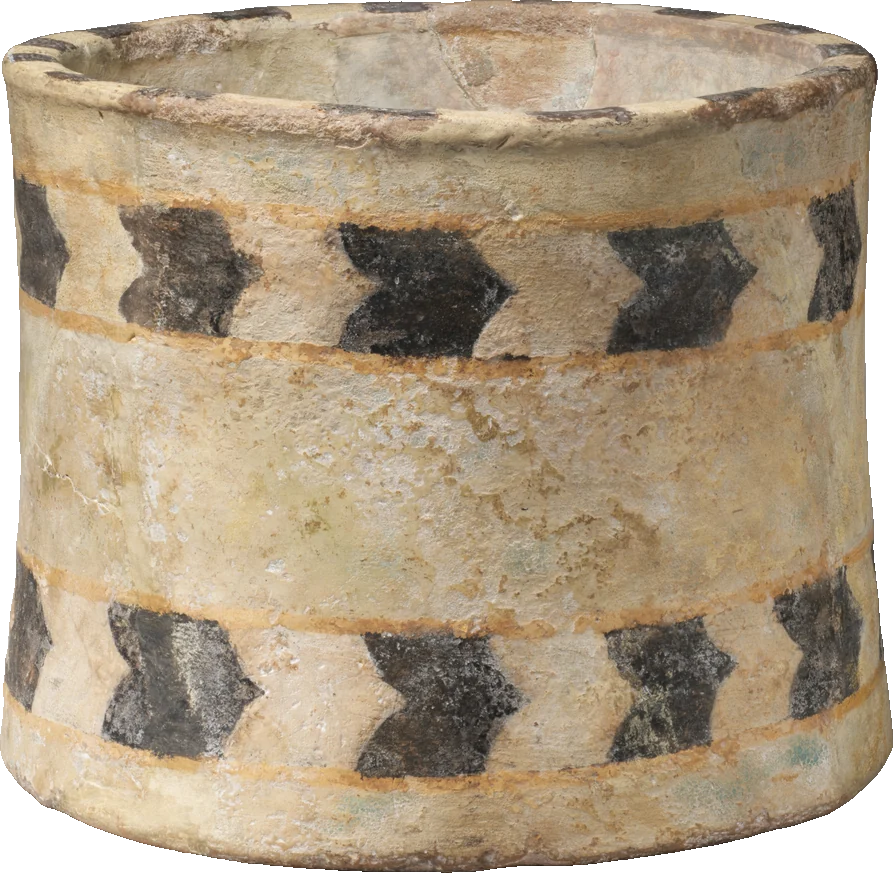 Tub-like vessel with geometric decorationca. 8th–7th century BCE
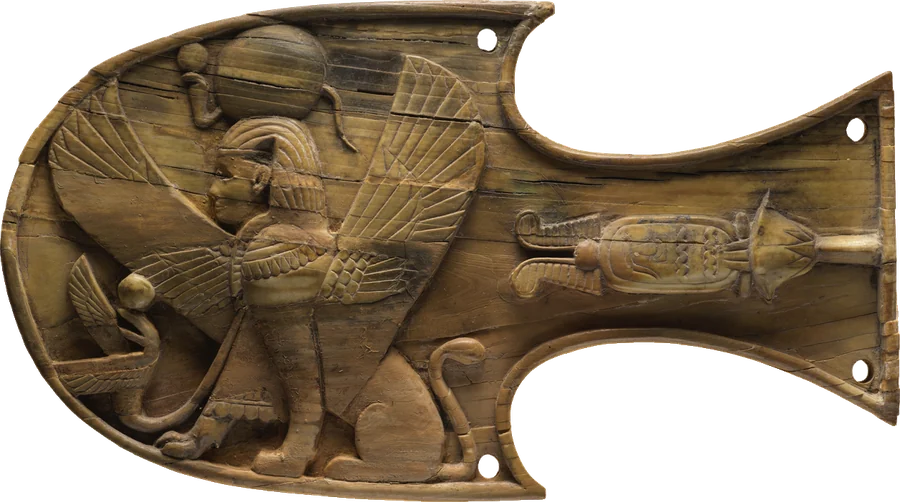 Horse blinker carved in relief with a seated sphinxca. 8th century BCE
 Plaque with griffinca. 8th–7th century BCE