
The mystery of Nishapur · Iran
What happened to the rich city of Nishapur?
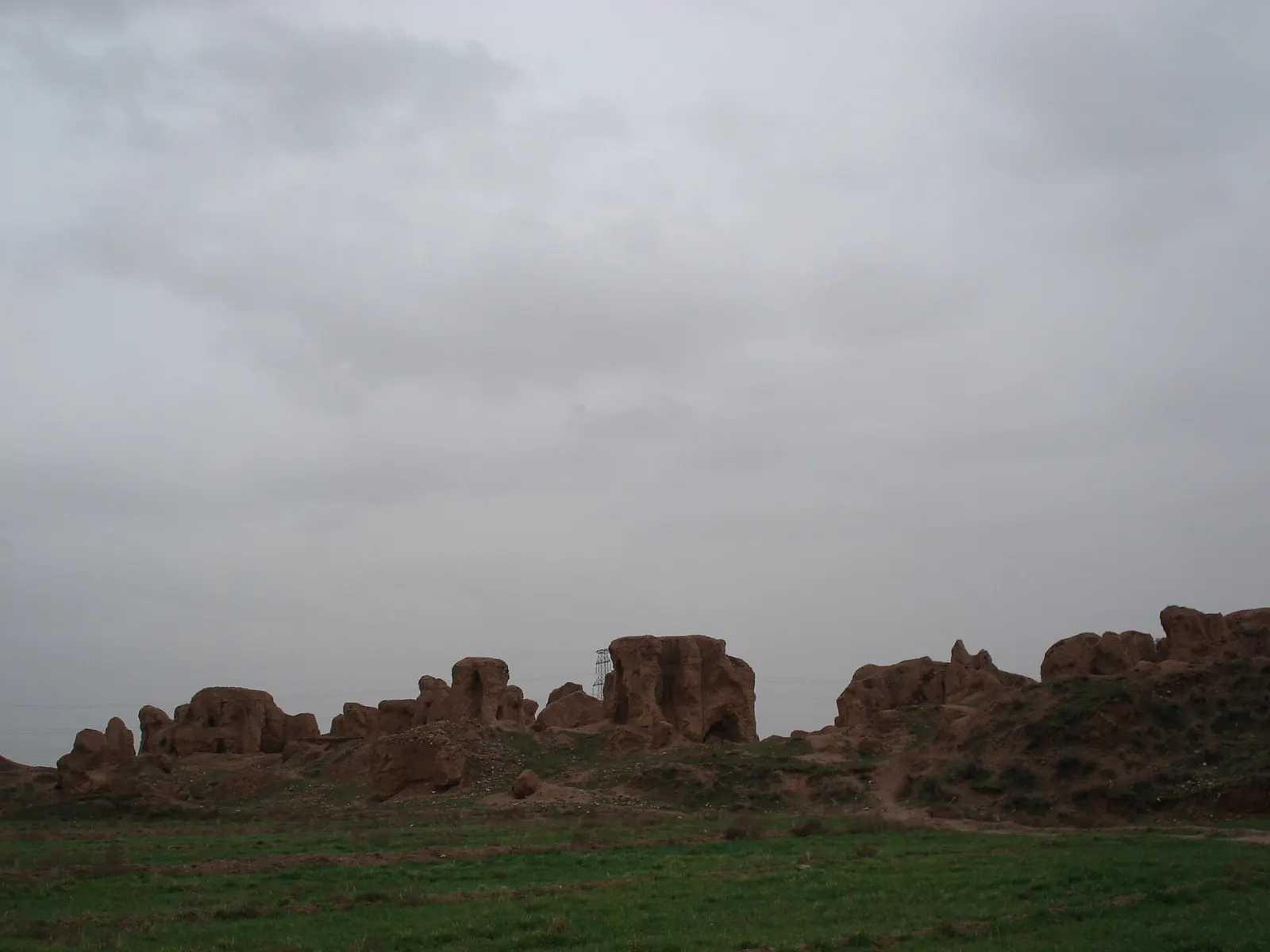
Nishapur in northeastern Iran was founded by the Sasanian king Shapur I in the 3rd century CE. In the 10th century it was one of the richest cities of the region, famous for its glazed pottery, until Mongol armies destroyed it in 1221. The Metropolitan Museum of Art excavated here from 1935 to 1940 and again in 1947 to 1948. Source
- 1. A new city for a king
- 2. What made Nishapur rich?
- 3. Pottery only Nishapur made
- 4. Who lived in the houses?
- 5. The answer: invasions, earthquakes, and silence
Chapter 1
A new city for a king
Nishapur, in northeastern Iran, was founded in the 200s CE by the Sasanian king Shapur I. It began as the capital of a Sasanian province called Abarshahr. It grew into a major city in the 700s CE.
Sources for this chapter (2)
- en.wikipedia.org: "The city was founded in the 3rd century by Shapur I as a capital city of Sasanian satrapy known as Abarshahr or Nishapur."
- metmuseum.org: "Nishapur is a city in northeastern Iran that was founded around the third century A.D., grew to prominence in the eighth century"
Chapter 2
What made Nishapur rich?
Nishapur sat on the Silk Road, the trade route that ran from China to the Mediterranean Sea. Turquoise came from here, and the city grew cotton and made cloth from it. At its peak, about 100,000 to 200,000 people lived here.
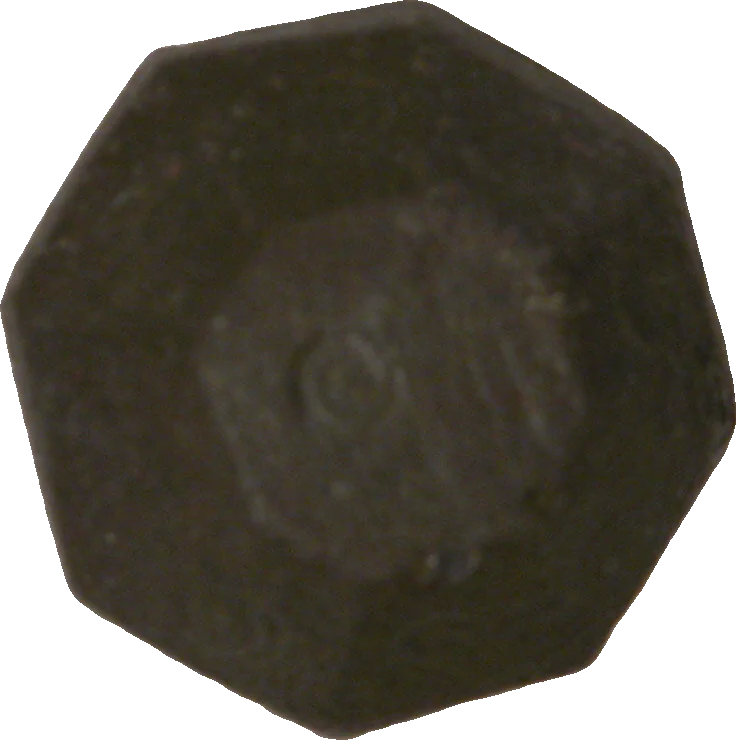
The clue
Weight, 9th–10th century. A bronze weight for trade, excavated in Nishapur and dated by its record to the 9th to 10th century, the city's peak years.
Sources for this chapter (2)
- metmuseum.org: "Nishapur was located on the trade route known as the Silk Road, which ran from China to the Mediterranean Sea"
- metmuseum.org: "At its peak between the ninth and thirteenth centuries, Nishapur had a population of approximately 100,000 to 200,000 people"
Chapter 3
Pottery only Nishapur made
In the 900s CE, under the Samanid rulers, Nishapur was at its richest. Its potters made kinds of pottery whose decoration was unique to this part of Iran, with bold patterns in colored slips made of diluted clay. This pottery was traded around the region and has been found at Herat, Merv and Samarqand.
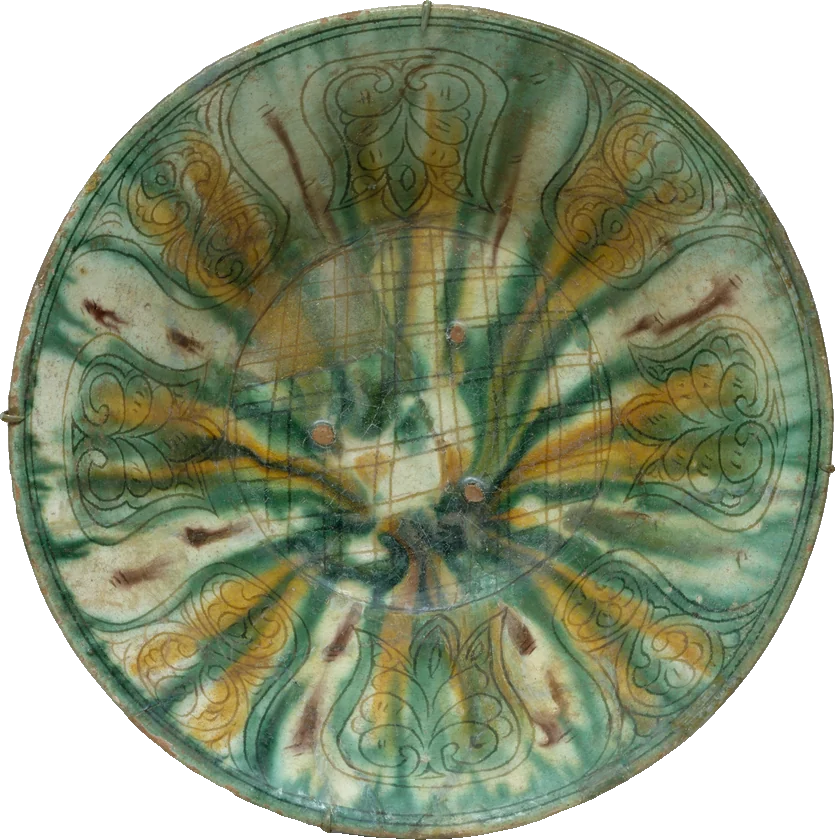
The clue
Bowl with Green, Yellow, and Brown Splashed Decoration, 10th century. A 10th-century slip-decorated bowl excavated in Nishapur; The Met's essay on Nishapur names it among these wares.
Sources for this chapter (2)
- en.wikipedia.org: "Nishapur reached the height of its prosperity under the Samanids in the 10th century"
- metmuseum.org: "The distinctive ceramics produced in Nishapur were traded around the region, and have been found at Herat, Merv, and Samarqand."
Chapter 4
Who lived in the houses?
One neighborhood the diggers called Sabz Pushan, meaning "green mound," was lived in from the 800s to the 1100s CE. Its houses had three or four rooms and were joined by small alleys. Toys, game pieces, musical instruments and beads found across the city show what daily life was like.
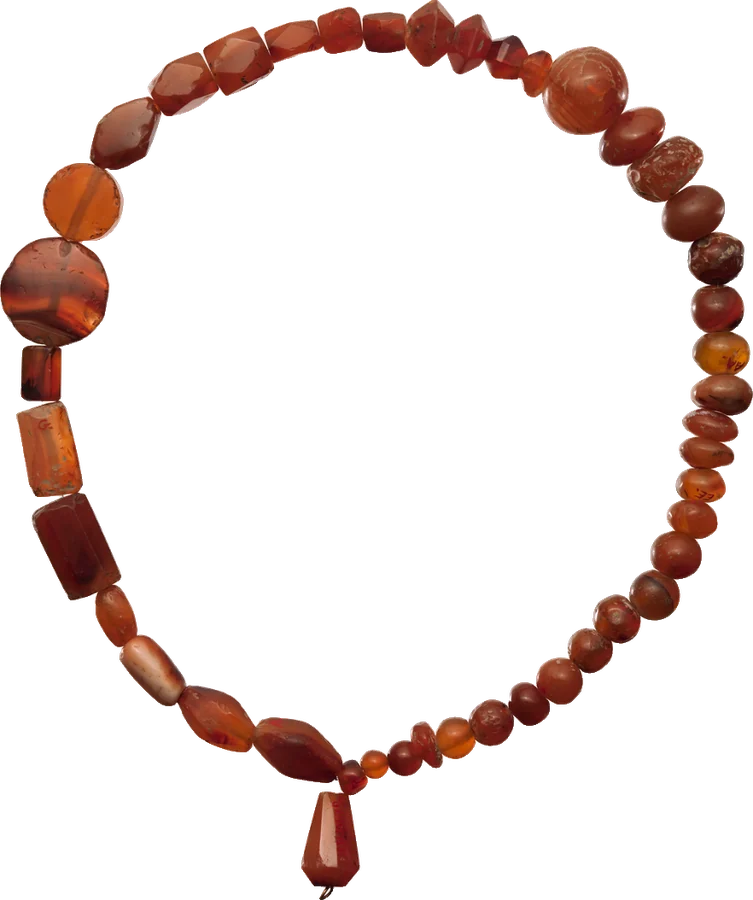
The clue
Strand of Beads, 9th–12th century. Carnelian beads excavated in Nishapur, 9th to 12th century; The Met's essay names this strand among the small everyday finds.
Sources for this chapter (2)
- metmuseum.org: "had been a thriving residential neighborhood occupied between the ninth and twelfth centuries, with houses of three to four rooms connected by small alleys."
- metmuseum.org: "Smaller items such as toys, game pieces, musical instruments, and beads throw light on everyday activities in Nishapur"
Chapter 5
The answer: invasions, earthquakes, and silence
Hard times came in the 1100s and 1200s: Oghuz Turks sacked Nishapur in 1154, earthquakes ruined it in the 12th and 13th centuries, and in 1221 Mongol armies destroyed it. Afterward a much smaller town grew just north of the old one. The great city lay underground until a Met team dug there from 1935 to 1940 and again in 1947 to 1948.
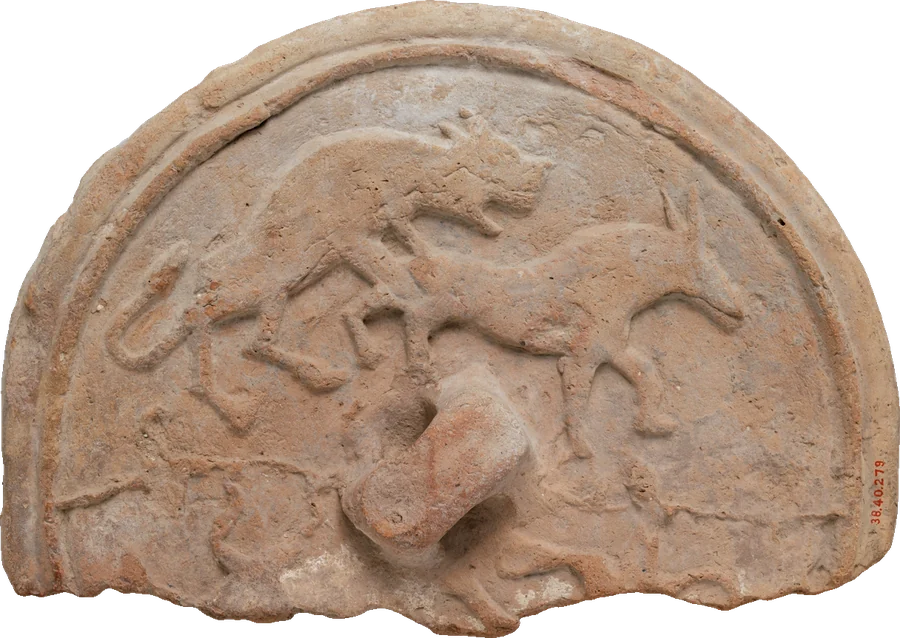
The clue
Lid with a Lion attacking a Bull, 12th century. A molded lid excavated in Nishapur and dated to the 12th century, made in the century before the old city was ruined.
Sources for this chapter (3)
- en.wikipedia.org: "Nishapur was sacked by the Oghuz Turks in 1154"
- en.wikipedia.org: "the historical earthquakes that ruined the city in the 12th and 13th centuries."
- metmuseum.org: "After that time, a much smaller settlement was established just north of the ancient town, and the once bustling metropolis lay underground"
Every sentence above is checked against the quoted source. Spotted a mistake? Tell us. More about the site, its finds and who dug there: Nishapur.
Next mystery: What was the small burned fortress near Shiraz?
In the game the chapters of this mystery open as you dig up the objects of Nishapur.
Dig at Nishapur