
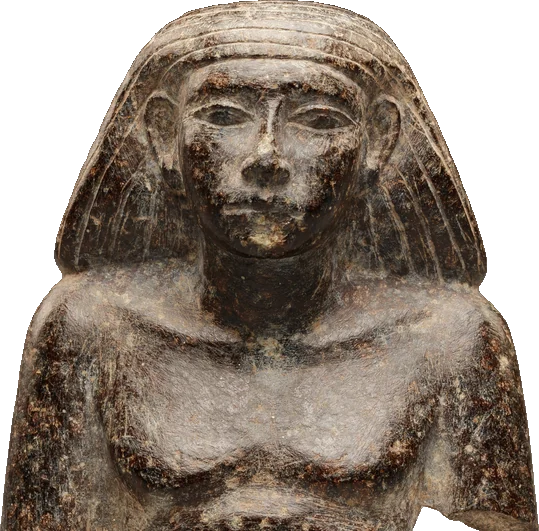
Egypt, Middle Kingdom, Dynasty 12–13 · Important find
Bust of upper part of man
This object was really found at Lisht by The Metropolitan Museum of Art's expedition. Today it is in The Metropolitan Museum of Art in New York.
What is it?
Statue. Statues stood in temples, tombs and public places. Many were meant to hold the spirit of a god, a king or the dead person they show. Source
Stone. Carved or polished stone, from soft travertine to hard gemstones.
Museum record
- Object
- Bust, man, upper part
- Culture
- Egypt, Middle Kingdom, Dynasty 12–13
- Date
- ca. 1981–1640 B.C.
- Material
- Serpentinite
- Findspot
- MMA excavations, 1906–07, Lisht North, Memphite Region, Egypt
- Size
- H.6.7 × W.6.5 × D.3.9 cm (2 5/8 × 2 9/16 × 1 9/16 in.)
- Museum
- The Metropolitan Museum of Art, New York
- Number
- 15.3.579
- Credit
- Rogers Fund, 1915
Photo and record: The Metropolitan Museum of Art, Open Access (public domain, CC0), copied 2026-11-12. Background removed from the photo. Region: Nile Valley.
More about this object
Culture
Egypt, Middle Kingdom: more objects from the same culture or period, with what we know about it.
More from Lisht
 String of Carnelian Beadsca. 1981–1295 B.C.
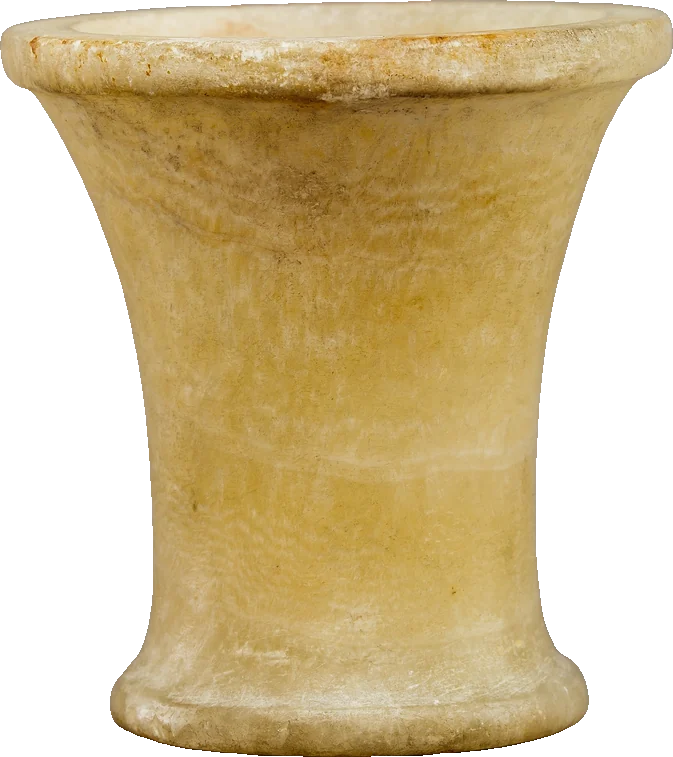 Ointment jarca. 1981–1952 B.C.
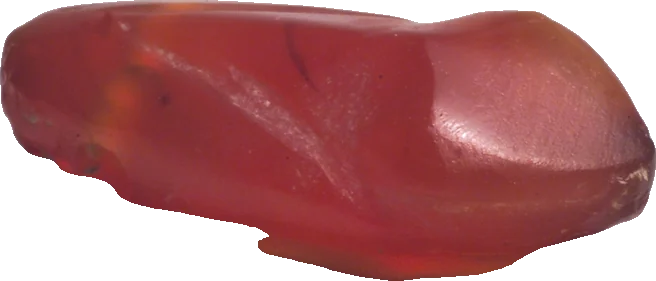 Snake-head Amuletca. 1981–1640 B.C.
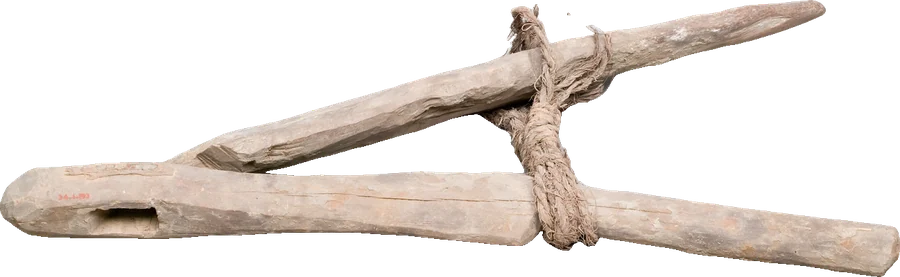 Hoeca. 1961–1917 B.C.
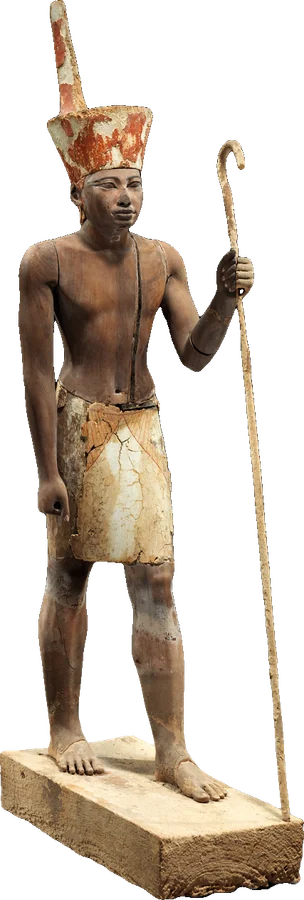 Guardian Figureca. 1919–1885 B.C.
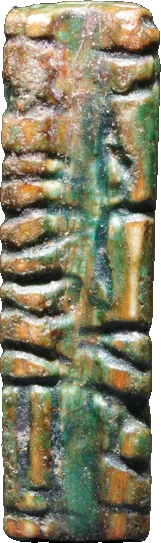 Cylinder seal of Senwosret IIIca. 1878–1840 B.C.
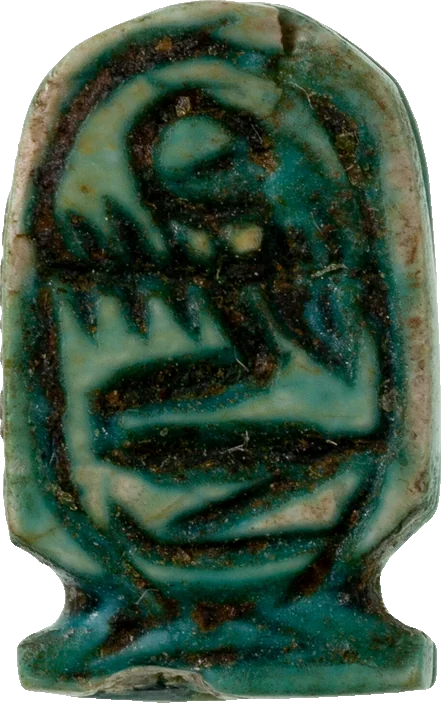 Cartouche amulet of Amenemhat IIIca. 1859–1813 B.C.
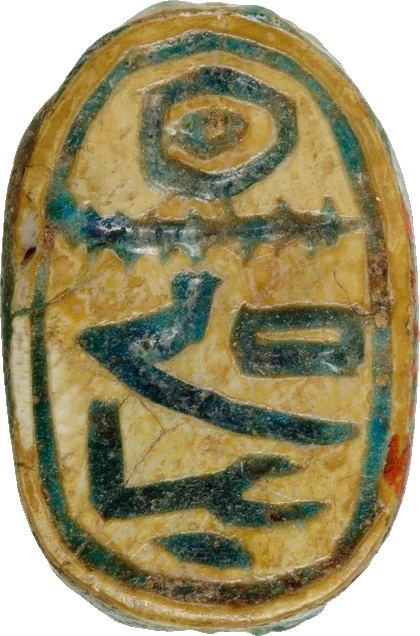 Scarab of Amenemhat IIIca. 1859–1813 B.C.