Egypt, Late Period, Saite, Dynasty 26 · Find
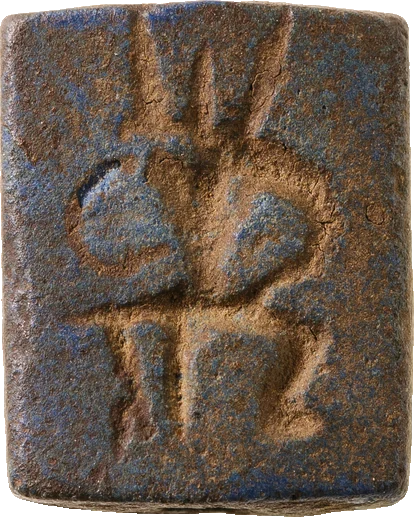
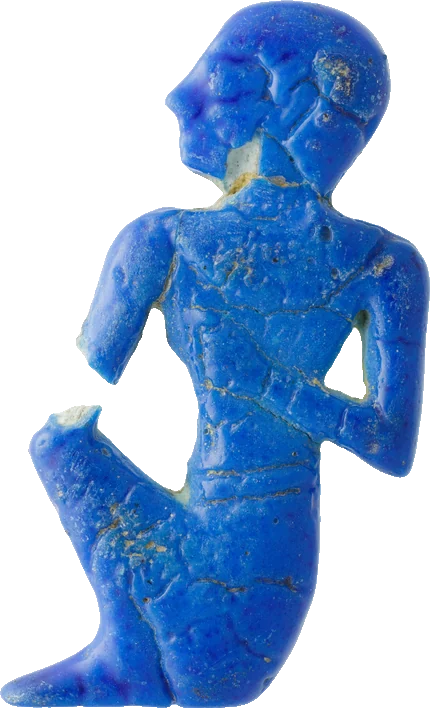
Inlay, hieroglyph
This object was really found at Deir el-Bahri by The Metropolitan Museum of Art's expedition. Today it is in The Metropolitan Museum of Art in New York.
What is it?
Inlay. Small pieces of stone, glass, ivory or metal decorated furniture, boxes and walls. They were set into wood or plaster, which has often rotted away. Source
Egyptian faience. A glazed material made mostly of crushed quartz, usually bright blue or green. Not clay pottery. Read more
Faience. Glazed quartz paste, often bright blue or green.
Museum record
- Object
- Inlay, hieroglyph
- Culture
- Egypt, Late Period, Saite, Dynasty 26
- Date
- 664–610 BCE
- Material
- Faience
- Findspot
- MMA excavations, 1922–23, Tomb of Nespekashuty (TT 312, MMA 509), Deir el-Bahri, Upper Egypt, Thebes, Egypt
- Size
- H. 5 cm (1 15/16 in.); W. 2.5 cm (1 in.)
- Museum
- The Metropolitan Museum of Art, New York
- Number
- 26.3.164m
- Credit
- Rogers Fund, 1926
Photo and record: The Metropolitan Museum of Art, Open Access (public domain, CC0), copied 2026-11-12. Background removed from the photo. Region: Nile Valley.