Egypt, New Kingdom, Dynasty 18 · Rare find
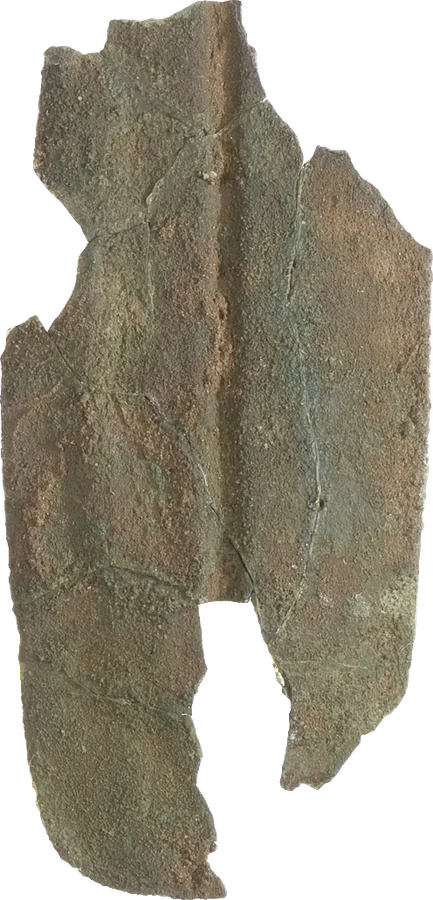
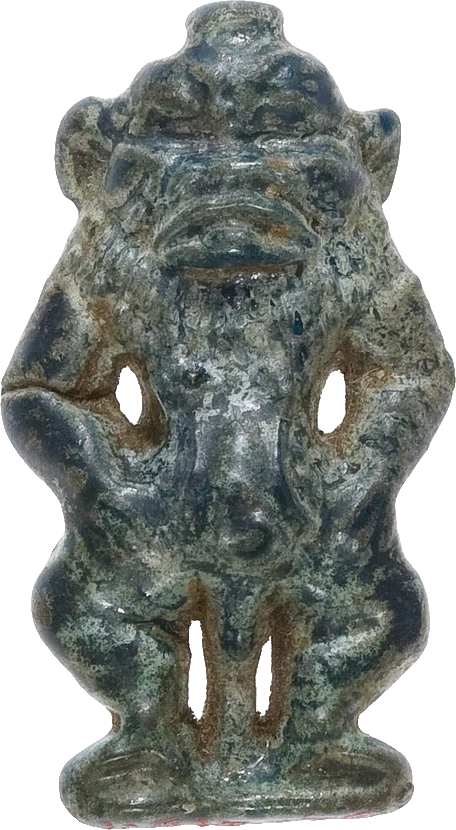
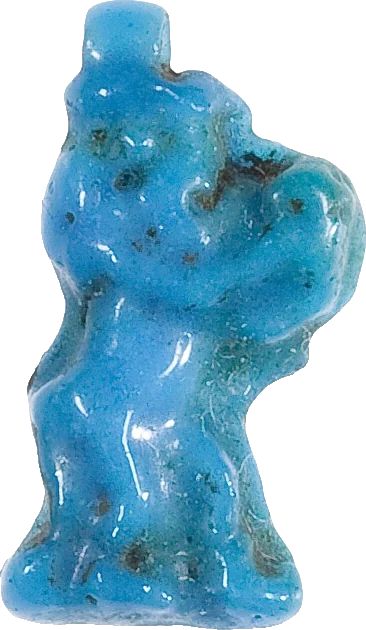
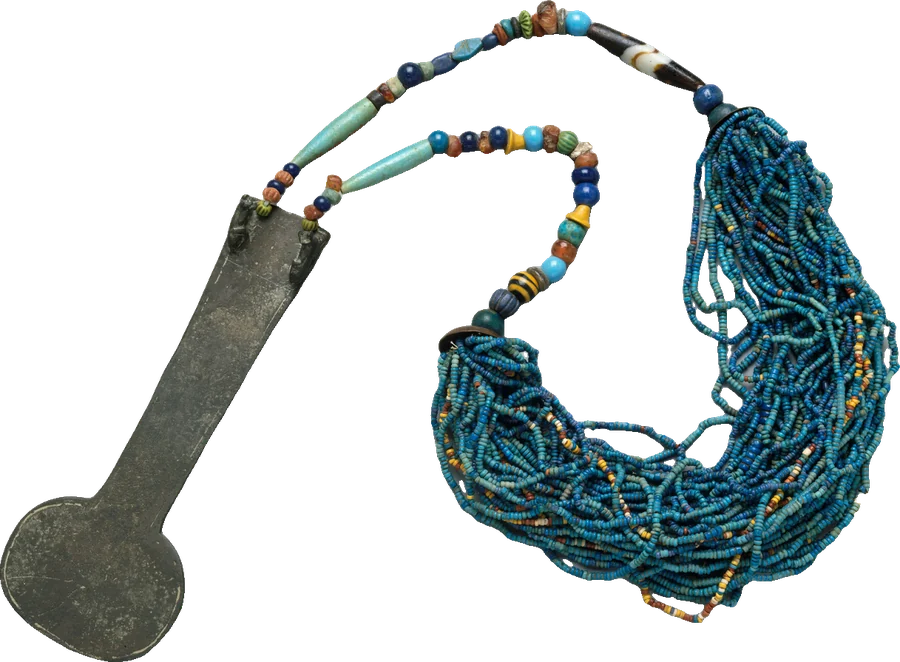
Menat necklace from Malqata
This object was really found at Malqata by The Metropolitan Museum of Art's expedition. Today it is in The Metropolitan Museum of Art in New York.
What is it?
Jewelry. Jewelry showed wealth and rank, and often protected its wearer. Gold, silver, faience, glass and shell were favorite materials. Source
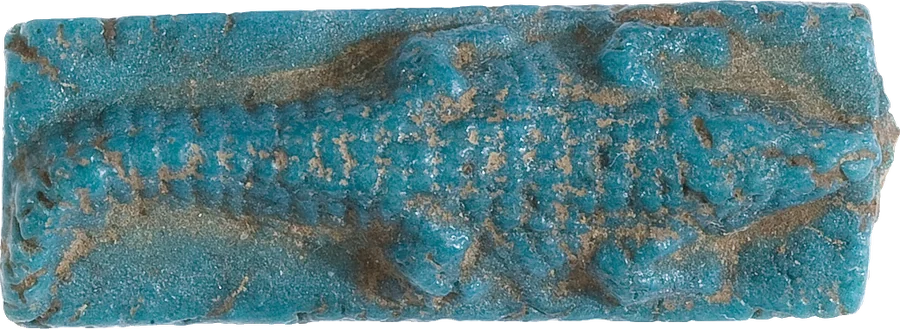
Egyptian faience. A glazed material made mostly of crushed quartz, usually bright blue or green. Not clay pottery. Read more
Faience. Glazed quartz paste, often bright blue or green.
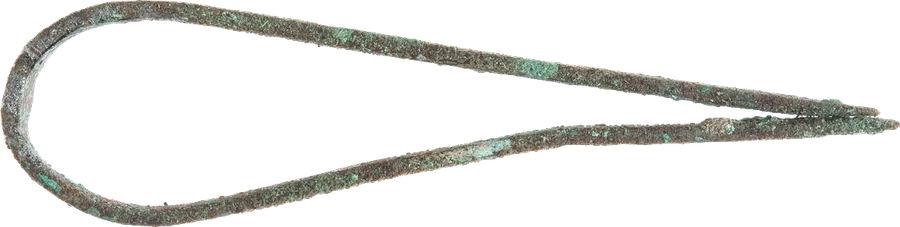
Metal. Gold, silver, copper or bronze.
Museum record
- Object
- Music, menat, cat
- Culture
- Egypt, New Kingdom, Dynasty 18
- Date
- ca. 1386–1347 BCE
- Material
- Faience, bronze or copper alloy, glass, agate, carnelian, lapis lazuli, turquoise
- Findspot
- MMA excavations, 1911–12, Private House B, Birket Habu Mound B 1, Malqata, Upper Egypt, Thebes, Egypt
- Size
- L. of counterpoise 14.7 cm (5 13/16 in.)
- Museum
- The Metropolitan Museum of Art, New York
- Number
- 11.215.450
- Credit
- Rogers Fund, 1911
Photo and record: The Metropolitan Museum of Art, Open Access (public domain, CC0), copied 2026-11-12. Background removed from the photo. Region: Nile Valley.
More about this object
From the museum
A menat necklace was often carried by women in religious ceremonies and shaken like a percussion instrument, making a soothing sound that was thought to calm a god or goddess. The Met
A beaded menat necklace and two other necklaces were found together in the corner of a room in a house near the palace. Traces of the linen bag they were packed in could still be seen. The Met
A clue in the mystery of Malqata
Why did King Amenhotep III build a whole palace city at Malqata? In chapter 4, "A harbor dug by hand", this object is the clue: A menat necklace found in a private house on the Birket Habu mounds at Malqata, one of the homes by the harbor. Read the mystery
Culture
Egypt, New Kingdom: more objects from the same culture or period, with what we know about it.